
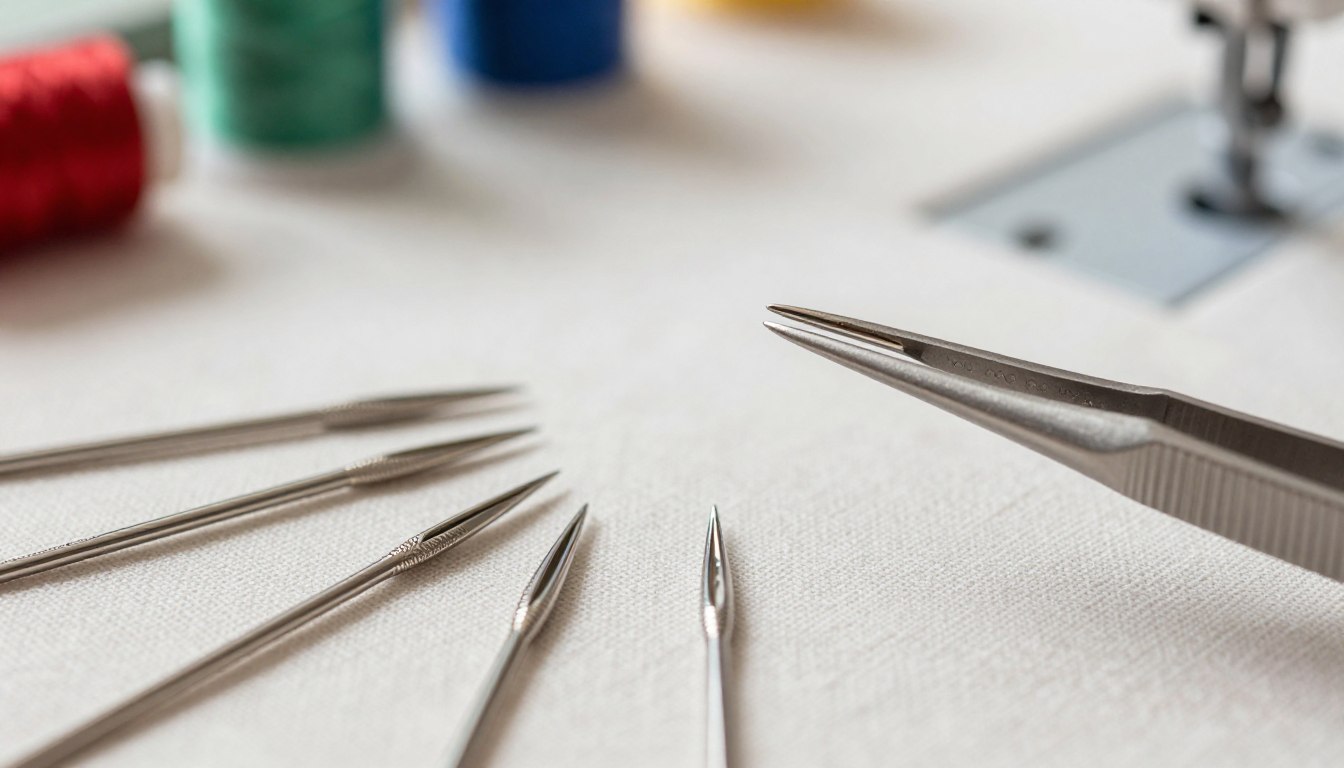
When it comes to embroidery, the right needle is key to precise stitches. You might wonder, why is needle choice so important? The answer is simple. Different needles are made for different fabrics and threads. Using the wrong one can cause uneven tension, puckering, or even damage your material.
Starting your embroidery journey? Knowing about needle choice is crucial. There are many types of needles, each with its own features. Choosing the right one can make your stitching better and your designs look professional. With the right needle, creating beautiful, detailed designs becomes easier.
Key Takeaways
- Needle choice affects stitch precision and overall embroidery quality.
- Different needles are designed for specific fabrics and threads.
- Using the right needle can prevent uneven tension and material damage.
- Understanding needle characteristics is crucial for achieving professional-looking results.
- Choosing the right needle improves the stitching experience.
Why Your Needle Choice Makes or Breaks Your Stitching
The type of needle you use is key for both beginners and experienced cross stitchers. It can greatly affect your stitching quality. Things like needle material, size, and type play a big role.
The Hidden Influence of Needles on Stitch Quality
Needles are crucial for the quality of your cross stitch. A good needle leads to smooth, even stitches. But, a bad choice can cause cross stitch mistakes like uneven tension or thread damage.
How the Right Needle Transforms Your Work
Choosing the right needle can change your cross stitch experience. For example, a smooth needle surface reduces friction, making stitching easier. Also, a needle with the right eye size keeps your thread from fraying, enhancing your work’s quality.
Some key benefits of choosing the right needle include:
- Improved stitch precision
- Reduced thread wear and tear
- Easier stitching experience
- Better overall stitch quality
Debunking Common Needle Selection Myths
Many think any needle will do, but this is not true. A common myth is that needle material doesn’t matter. But, the material affects how well the needle glides through fabric. Needles with sharp points and smooth surfaces, like high-quality steel or coated ones, greatly improve your stitching.
As a beginner, knowing these details helps you avoid common cross stitch mistakes. It ensures you use the best cross stitch tools for your projects. By picking the right needle, you unlock needlework secrets that elevate your stitching.
The Complete Guide to CROSS STITCH Needle Types
Knowing the different needles for cross stitch is key to better stitching. The right needle can greatly improve your work, whether you’re new or experienced.
Tapestry Needles: Understanding the Cross Stitcher’s Best Friend
Tapestry needles are the top choice for cross stitch. They have blunt tips and big eyes, perfect for cross stitch fabric. The blunt tip helps avoid splitting threads, and the large eye fits thicker threads like DMC floss.
Decoding Needle Size Numbers
Needle size numbers can seem tricky, but they’re important. The number shows the needle’s diameter: higher numbers mean smaller needles. For most projects, start with a size 24 or 26 tapestry needle.
When to Choose Blunt vs. Sharp Tips
Blunt-tipped needles, like tapestry needles, are great for cross stitch techniques that need thread counting. Sharp-tipped needles are better for detailed work or backstitching techniques where you need precision.
Specialty Needles Worth Investing In
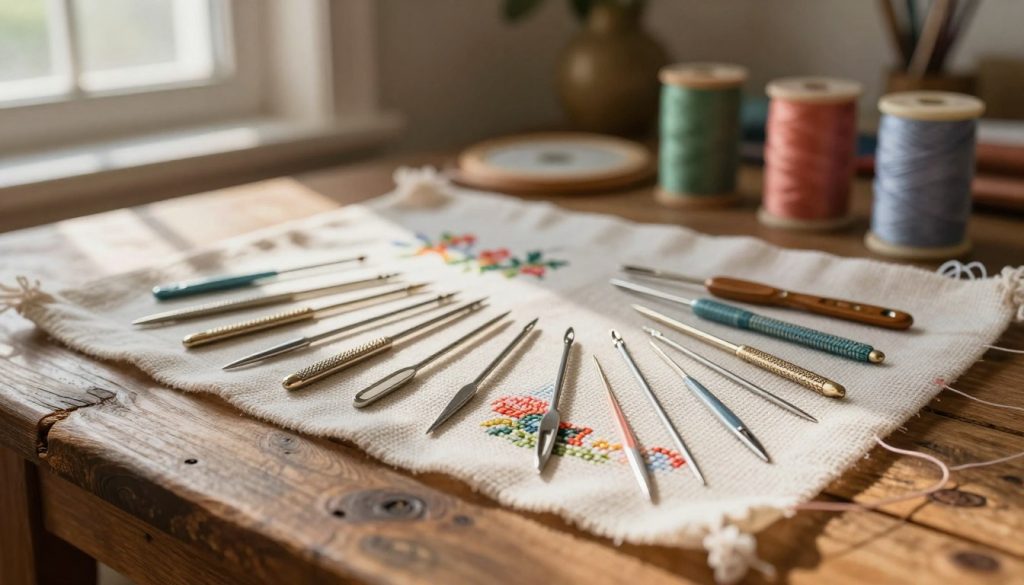
While tapestry needles are versatile, some specialty needles can make stitching better. These include petite needles for detailed work and gold-plated and coated needles for smooth stitching.
Petite Needles for Detailed Work
Petite needles are perfect for detailed stitching. Their small eyes and fine tips are great for precise work on cross stitch fabric.
Gold-Plated and Coated Needles: Benefits Beyond Luxury
Gold-plated and coated needles offer a luxurious stitching experience. The coating makes the needle slide smoothly through fabric, ideal for projects with lots of stitching.
How Needle Material Affects Your Stitching Experience
The needle’s material can greatly affect your stitching. Needles made from quality materials like steel or nickel-plated brass are durable and less likely to bend. Some prefer needles with a smooth coating for easier stitching.
By knowing the different needles and their features, you can pick the best one for your project. This will improve your stitching experience.
Achieving Perfect Stitches: The Technical Impact of Needle Properties
The technical features of your needle are crucial for precise stitching. In counted cross stitch, the needle is more than a tool. It’s a key element that impacts your work’s quality.
How Needle Diameter Affects Hole Size and Stitch Appearance
The needle’s diameter greatly affects hole size and stitch look. A thick needle can make big holes, changing the fabric and thread tension. A thin needle might not hold the thread well, leading to uneven stitches.
The Relationship Between Eye Design and Thread Tension
The needle’s eye design is vital for thread tension. A good eye design lets threads pass smoothly, reducing wear. This is crucial in cross stitch gridding for even stitches.
Needle Length: Finding Your Comfort Zone for Precision Work
Needle length affects your comfort and precision. Longer needles might be more comfortable but risk tangling threads. Shorter needles offer better control but need more rethreading.
Surface Finish: Why Smooth Movement Creates Even Stitches
The needle’s surface finish impacts its glide through fabric. A smooth finish reduces friction, leading to even stitches. This is key for embroidery hacks to improve stitch quality.
Needle Choice for Flawless Backstitching Techniques
Backstitching needs a needle that handles reverse stitching well. A needle with the right strength and finesse is essential. This is vital for cross stitch organization, where detail matters a lot.
Understanding needle properties can greatly improve your cross stitch work. It helps achieve precision and quality that enhances your projects.
Selecting the Perfect Needle for Every Project
Choosing the right needle is key to great cross stitching. The perfect needle can greatly improve your work’s quality. Each fabric and thread needs a specific needle for the best results.
Fabric Count-Specific Needle Recommendations
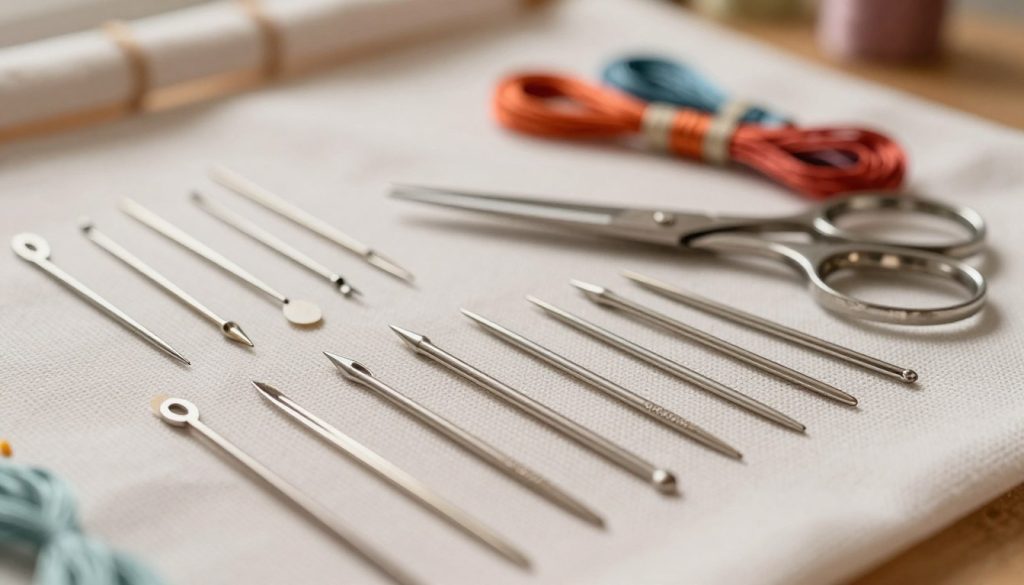
The fabric count affects your needle choice. The count tells you the needle size and type needed.
Mastering Aida Cloth with the Right Needle
Aida cloth is popular for cross stitch. It’s easy to use and shows the stitches well. Use a tapestry needle with a sharp point and large eye for Aida cloth.
Navigating Evenweave and Linen Challenges
Evenweave and linen fabrics are tighter. They need a sharp needle tip for easy stitching. A smaller eye needle helps prevent thread wear.
Thread-Specific Needle Selection
The thread type also matters for needle choice. Different threads need specific needles due to their thickness and texture.
Optimizing for Standard DMC Floss
For DMC floss, a medium eye tapestry needle works best. It allows smooth thread flow without wear.
Conquering Specialty and Metallic Threads
Specialty and metallic threads need larger eye needles. A smooth eye needle prevents fraying and breakage.
Project-Based Needle Selection Strategy
The project size and detail level affect needle choice. Different projects need different needles for the best outcome.
Small, Detailed Projects
For small, detailed work, use a short needle with a sharp point. It’s great for tight spaces and fine details.
Large-Scale Works
Large projects benefit from longer needles. They cover more area with each stitch. But, the needle should still be comfortable to handle.
Mastering Needle Techniques for Superior Stitch Precision
To get better at cross stitch, learning how to use your needle is key. Good needle skills can really improve your work, no matter if you’re new or experienced.
Identifying the Perfect Moment to Replace Your Needle
It’s important to know when to switch to a new needle. A dull or broken needle can mess up your stitches and fabric. Change your needle after 8-10 hours of stitching or if it’s damaged.
Organization Systems for Your Needle Collection
Keeping your needles organized saves time and stress. Use a needle case or a small container with different sections. This makes it easy to find the right needle for your project.
Solving Common Precision Problems
Most stitch issues come from the needle or how you thread it. Let’s look at some common problems and how to fix them.
Eliminating Fabric Distortion
To stop fabric from getting distorted, pick the right needle size. The needle should match the fabric’s count to keep stitches even.
Preventing Thread Shredding and Breakage
Thread problems can be fixed by using the right needle and threading method. Thread your needle carefully to avoid twisting or splitting the thread.
| Needle Type | Thread Type | Best Practices |
|---|---|---|
| Tapestry Needle | Embroidery Floss | Use gentle threading, avoid forcing the thread |
| Sharp Needle | Cotton or Silk | Ensure thread is not twisted, use a thread conditioner if necessary |
Advanced Threading Techniques for Different Needle Types
Each needle type needs a special threading method. For example, tapestry needles need a soft touch, while sharp needles might need a bit more force.
Adapting Your Stitching Technique to Complement Your Needle Choice
Adjust your stitching to match your needle choice for the best results. Try different needles and methods to see what works best for you.
By learning how to use your needle well and knowing when to change it, you’ll improve your cross stitch. Use these cross stitch tips to make your stitching better.
Conclusion: Elevating Your Cross Stitch Through Thoughtful Needle Selection
Exploring cross stitch, you’ve learned how the right needle changes everything. Choosing the right needle is crucial for quality embroidery. It’s clear that the perfect needle can greatly improve your cross stitch patterns.
Using the embroidery hacks and needlework secrets, you can take your stitching to new levels. Whether it’s complex designs or simple projects, the right needle ensures precision and beauty.
As you delve deeper into cross stitch, remember that small details matter a lot. Picking the right needle for your project unlocks your creative potential. It makes your stitching experience more enjoyable.
FAQ
What type of needle is best for cross stitch?
How do I choose the right needle size for my cross stitch project?
Can I use a sharp needle for cross stitch?
How often should I replace my cross stitch needle?
What is the difference between a tapestry needle and a specialty needle?
How do I store my cross stitch needles?
Can I use the same needle for different types of fabric?
How does needle material affect my stitching experience?
What are some common precision problems that can be solved with the right needle?
How can I adapt my stitching technique to complement my needle choice?
This post contains affiliate links. If you click on a link and make a purchase, I may earn a small commission — at no extra cost to you. Thank you for supporting this blog and helping me keep the patterns free! Read the full Affiliate Disclosure & Transparency.