
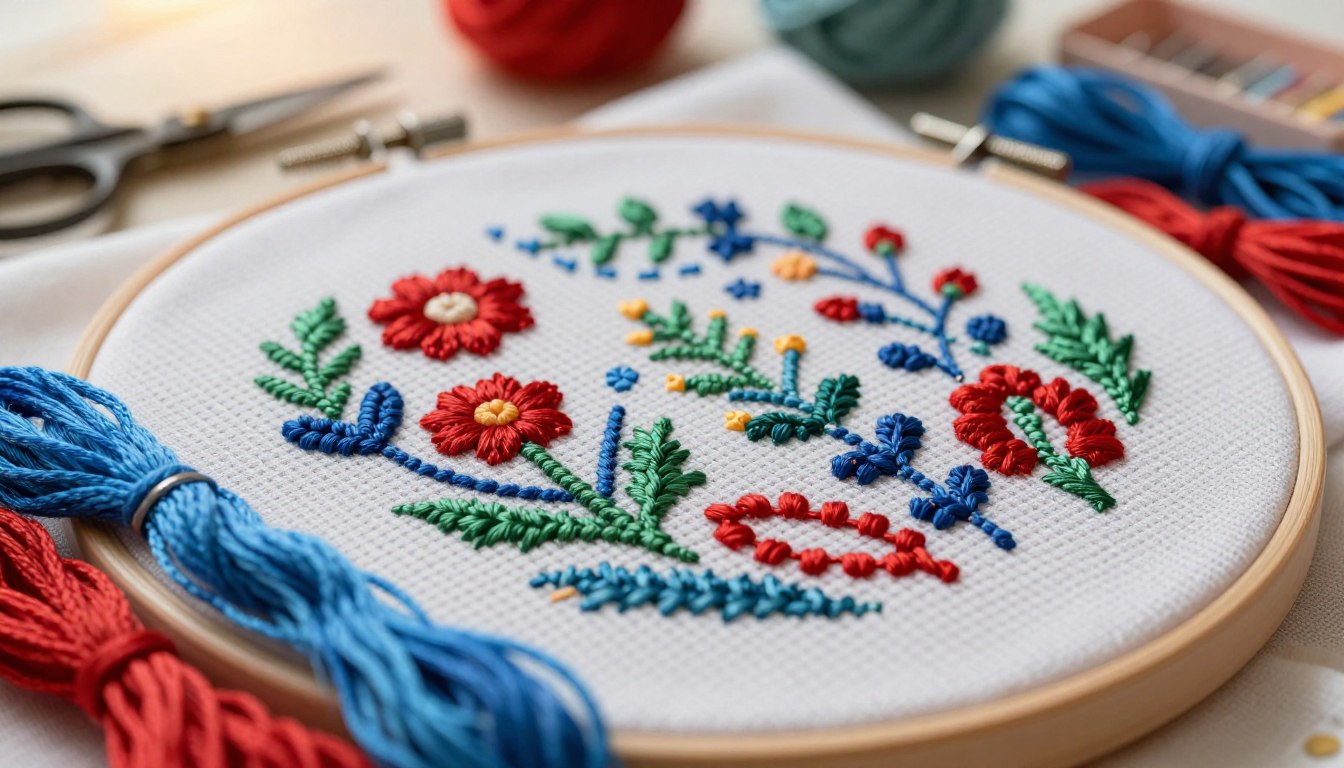
Working on a cross stitch project can be a game-changer. Thoughtful stitching is more than just following a pattern. It’s about adding life to your work with precision and care. As you start your next embroidery project, remember the importance of being accurate and detailed.
By using cross stitch tips and embroidery hacks, you can take your stitching to the next level. Whether you’re experienced or new to cross stitch for beginners, the secret to success is in the details.
Key Takeaways
- Understand the importance of accuracy in stitching
- Learn valuable cross stitch tips for improved results
- Discover embroidery hacks to simplify your workflow
- Explore resources for cross stitch for beginners
- Improve your stitching techniques for a professional finish
The Foundation of Quality: Preparing for Your Project
Starting your cross stitch project is more than just picking a pattern. You need to choose the right fabric and tools. A good start is key to success.
Selecting the Right Fabric and Count for Your Vision
Choosing the right cross stitch fabric is key. Aida and Evenweave are top picks, each with its own benefits. Aida is great for beginners, while Evenweave offers a more detailed stitch.
The fabric count affects your stitch density. Make sure it matches your pattern’s needs.
Essential Tools for Precision Stitching
The right cross stitch tools are vital. You’ll need embroidery hoops, needles, and scissors. A quality embroidery hoop keeps your fabric tight, helping you stitch accurately.
Gridding Techniques for Perfect Pattern Placement
Cross stitch gridding ensures your pattern is placed right. You can use a pre-printed grid or draw one with a water-soluble pen. This method keeps your design symmetrical.
| Tool | Purpose | Benefit |
|---|---|---|
| Embroidery Hoop | Keeps fabric taut | Eases precise stitching |
| Needles | For stitching | Reduces fabric damage |
| Scissors | For cutting thread | Ensures clean cuts |
The Importance of Consistent Tension in Your Stitches
Keeping your stitches at the same tension is key to a professional look in cross stitch. If your tension is off, your work might pucker, distort, or look uneven. This can be really frustrating and hard to fix.
How Tension Affects the Overall Appearance
The tightness of your stitches really matters for how your cross stitch looks. If they’re too tight, your fabric might pucker or distort. If they’re too loose, your stitches could look sloppy or uneven. This can make your piece look like it was done by an amateur.
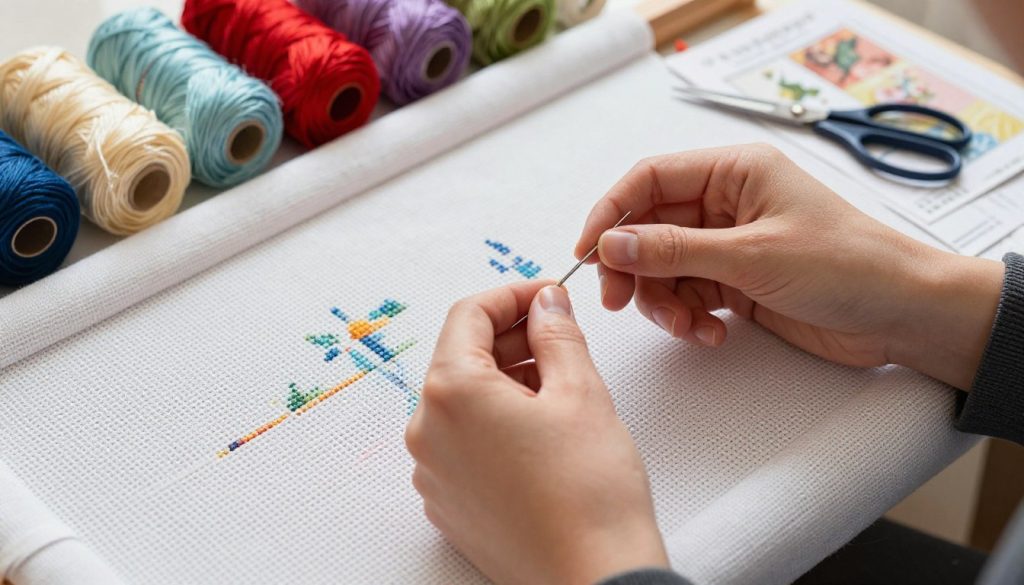
Techniques for Maintaining Even Tension
To keep your tension even, you need to develop good stitching habits. This means paying attention to how you hold your hands and work with different fabrics.
Hand Position and Posture Tips
Make sure your hands and arms are relaxed. Keep your wrists straight and your elbows slightly bent. Good posture helps you keep your tension even and prevents fatigue. Try out different hand positions to find what works best for you.
Working with Different Fabric Types
Different fabrics can change how your stitches feel. For example, Aida cloth is more forgiving than evenweave fabric, which needs more precision. Knowing your fabric’s quirks helps you adjust your tension right.
Directional Stitching: Creating a Uniform Look
To get a uniform look in your cross-stitch, you need to understand directional stitching. The way you stitch affects the look of your work. It changes the texture and how light hits it.
The Danish Method vs. English Method
There are two main ways to stitch: the Danish Method and the English Method. The Danish Method means stitching in one direction, usually from top to bottom. The English Method lets you stitch in different directions, following the design’s shape.
When to Choose Different Stitching Directions
Choosing a stitching method depends on your project. For example, the Danish Method is good for shading. It helps colors blend smoothly. But, for designs with shapes, the English Method works better.
How Stitch Direction Impacts Texture and Light Reflection
Stitch direction affects the texture and light reflection in your work. Stitches in one direction make the texture even. But, changing directions adds depth and interest. Think about these points:
- Texture: Stitches in one direction make the texture even.
- Light Reflection: Changing stitch directions makes light reflect better, adding depth.
Learning directional stitching can make your cross-stitch projects look better. It makes them more eye-catching.
Color Selection and Thread Management
Choosing colors and managing threads are key to a great cross-stitch project. They affect how your piece looks and lasts. The way you handle your thread and pick colors greatly influences the outcome.
Working with DMC Floss Effectively
DMC floss is a favorite among cross-stitch fans for its many colors and quality. To use DMC floss well, learn to separate the strands right and manage colors. It’s important to use the right number of strands, as patterns usually tell you.
Tip: Always cut a length of floss that’s about 18 inches long to prevent excessive tangling.
Preventing Color Bleeding and Tangling
Color bleeding and tangling are common when using embroidery floss. To avoid these, use a few simple tricks. First, pick high-quality floss that bleeds less. Second, keep your area tidy with thread separators or small containers for your floss.
Proper Thread Separation Techniques
Separating your thread right is key to avoiding tangles. Start by gently pulling the strands apart from one end of the floss. You can also use a thread separator tool to help.
Storage Solutions for Active Projects
For ongoing projects, a good storage system is essential. Use thread cards or small plastic containers to keep your floss in order. Labeling your threads can also save you time when looking for specific colors.
“A well-organized workspace is a stitcher’s best friend.”
| Storage Method | Benefits |
|---|---|
| Thread Cards | Keeps floss organized and visible |
| Small Containers | Protects floss from dust and tangling |
By using these tips, you can make your cross-stitch journey better. Good color choice and thread handling improve your work’s quality and make the process smoother.
Backstitching Techniques That Elevate Your Work
Learning backstitching can greatly improve your cross stitch art. It adds a professional touch and makes your designs more appealing.
When and Why to Use Backstitching
Backstitching is key for outlines, details, and highlighting parts of your patterns. It’s great for contrast and defining shapes. Use it to add depth and dimension to your work.
Creating Clean Lines and Defined Details
To get clean lines, keep your tension even and pick the right thread color. A thread that matches your fabric and design colors is best for smooth outlines.
| Technique | Description | Best Use |
|---|---|---|
| Simple Backstitch | A basic stitch used for outlining | General outlines and details |
| Double Backstitch | A heavier stitch for bold outlines | Emphasizing key elements or creating thick borders |
Alternative Embellishment Techniques
Backstitching is powerful, but there are other ways to decorate your cross stitch. French knots add texture, and beads create detailed designs.
Using these techniques can make your cross stitch stand out. You’ll create unique and beautiful pieces.
Common CROSS STITCH Mistakes and How to Avoid Them
For beginners and experienced cross stitchers, knowing common mistakes is key. This hobby needs patience, precision, and knowledge of pitfalls. This way, you avoid frustration and get a beautiful piece.
Identifying Issues Before They Become Permanent
Spotting problems early is crucial. Check your tension, fabric count, and thread colors. Regularly inspecting your work catches mistakes before they’re set.
Watch out for:
- Inconsistent tension causing puckering or loose stitches
- Misaligned patterns from wrong fabric count or chart mistakes
- Color bleeding or tangling with multiple threads
Correction Techniques That Don’t Compromise Quality
Fixing mistakes without losing quality is important. This might mean removing stitches carefully or adjusting your pattern.
Removing Mistakes Without Damaging Fabric
To fix mistakes, use a seam ripper or tweezers to remove stitches. Work slowly to avoid fabric damage or pulling out other stitches.
Adapting Patterns When Necessary
Adapting your pattern might be needed for mistakes or design improvements. This could mean changing thread colors, adjusting stitch counts, or modifying the pattern.
| Mistake | Correction Technique |
|---|---|
| Inconsistent Tension | Adjust your stitching technique or use a hoop to maintain even tension |
| Misaligned Patterns | Re-check your fabric count and pattern alignment before starting |
| Color Bleeding | Use a colorfix product or vinegar to minimize color bleed |
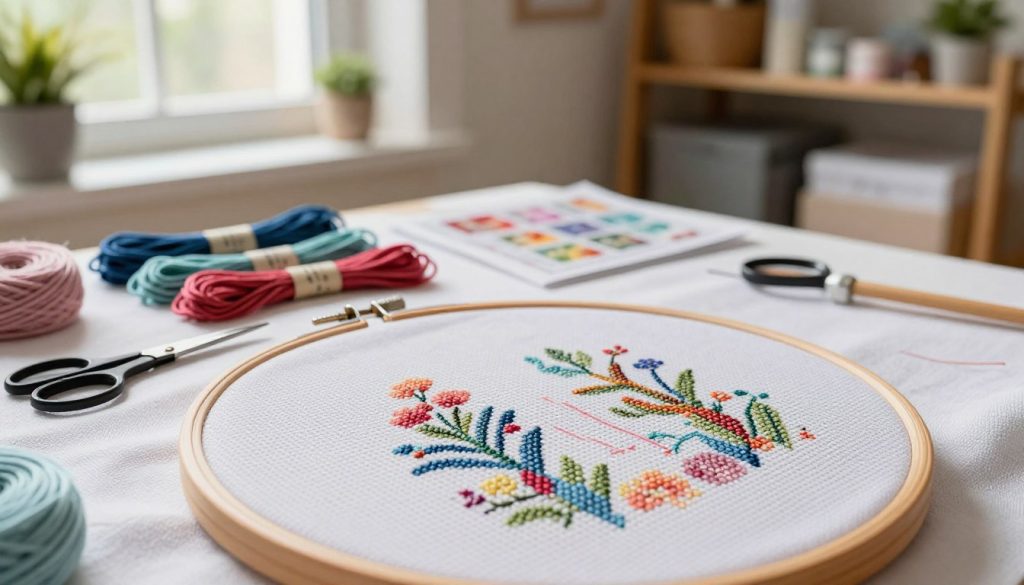
Knowing common mistakes and how to fix them ensures a quality piece. You’ll be proud to display or gift it. Happy stitching!
The Therapeutic Benefits of Mindful Stitching
Cross stitching offers many benefits, like reducing stress and boosting brain power. It’s a traditional craft that deeply affects your mental and emotional health.
How Focused Stitching Improves Your Final Piece
Being fully into the stitching makes your work better. Focused stitching means you notice every detail. This makes your piece look great and fills you with pride.
Creating a Relaxing Stitching Routine
To get the most from cross stitching, make a calm routine. Have a special place for stitching, away from distractions. Stick to a regular time for stitching. Enjoy the feel of the needle and the sound of your stitches.
Turning Mistakes into Learning Opportunities
Even pros make mistakes. Don’t get upset; see them as learning opportunities. Figure out what went wrong and fix it. This way, you get better and grow more confident.
Conclusion: The Mindful Stitcher Creates Heirloom-Quality Work
As you learn new cross stitch techniques, your embroidery inspiration will grow. Your projects will become truly special. The detail and mindfulness in every stitch will show.
Using the needlework secrets from this article, you’ll make pieces that are beautiful and last long. These projects will become treasured heirlooms, loved for generations.
Keep in mind, the real value is in the journey, not just the finished piece. The mindfulness and focus you’ve gained will enrich your crafting. It will also inspire you to create more beautiful embroidery.
FAQ
What is the best fabric to use for cross stitch?
How do I maintain even tension while stitching?
What is the difference between the Danish and English stitching methods?
How do I prevent color bleeding when working with DMC floss?
What is backstitching, and when should I use it?
How do I correct mistakes in my cross stitch project?
Can cross stitch be a therapeutic activity?
How do I keep my cross stitch project organized?
What are some common cross stitch mistakes to avoid?
How can I create a relaxing stitching routine?
This post contains affiliate links. If you click on a link and make a purchase, I may earn a small commission — at no extra cost to you. Thank you for supporting this blog and helping me keep the patterns free! Read the full Affiliate Disclosure & Transparency.