
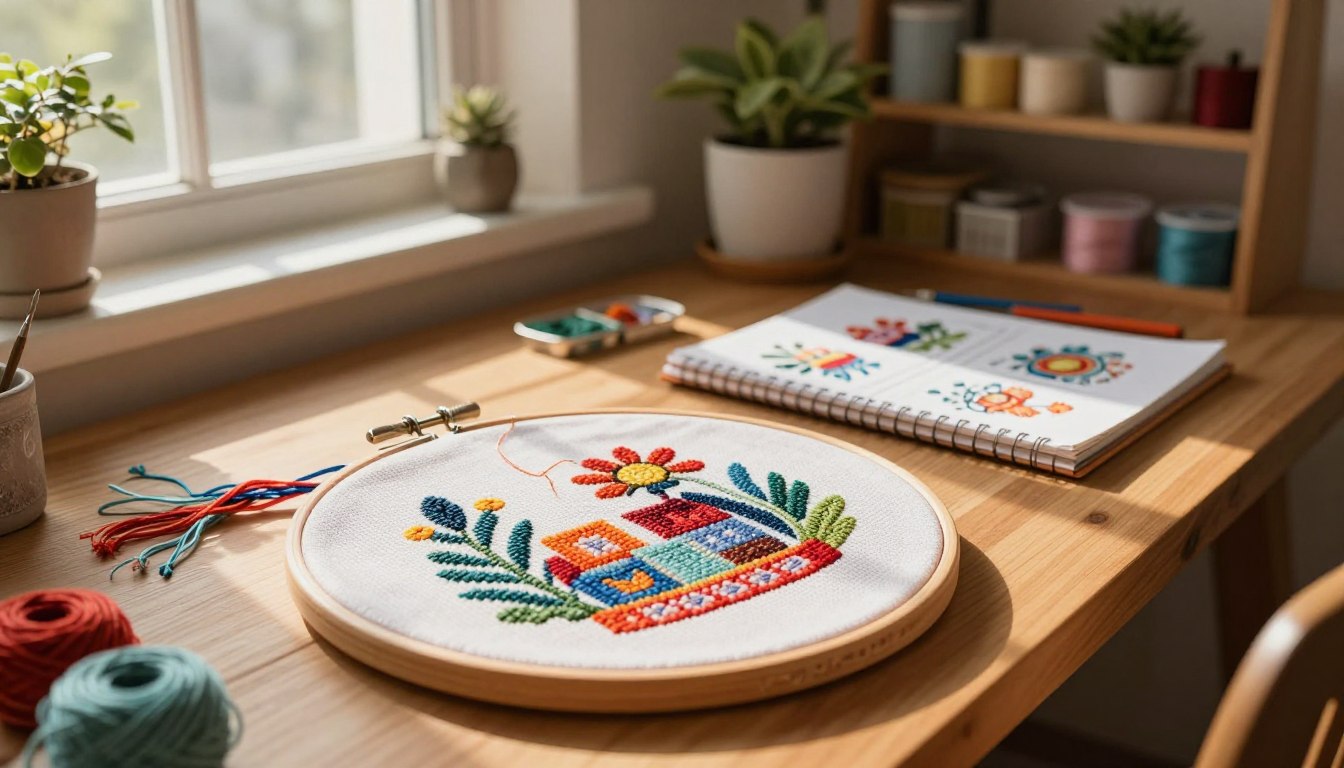
Doing creative things can really help your mind and boost your confidence. Cross stitch therapy is a great example. It makes you more patient and confident when you do it every day.
There are lots of embroidery inspiration patterns to try. This makes cross-stitch fun for everyone, no matter your skill level. As you finish your projects, you’ll feel proud and accomplished.
Key Takeaways
- Cross-stitch can be a therapeutic activity that improves mental well-being.
- Engaging in creative routines can boost confidence and patience.
- Embroidery inspiration can be found in various patterns and designs.
- Cross-stitch is a versatile hobby suitable for all skill levels.
- Completing cross-stitch projects can give you a sense of accomplishment.
The Psychological Benefits of Creative Routines
Doing creative activities regularly can make your mental health better. It can lower stress and help you focus better. Activities like cross-stitch can make you feel calm and clear-minded.
How Repetitive Creative Activities Affect the Brain
Activities like cross-stitch calm the brain. The repeating motions can make you feel less anxious. It’s like a meditation, which can improve your mental health and happiness.
Why Handcrafts Promote Mindfulness and Focus
Handcrafts like cross-stitch make you focus on the now. They need your full attention, keeping you fully engaged. This can help you be more focused and productive in other areas of life.
Adding creative routines to your day can be very beneficial. It doesn’t matter if it’s cross-stitch or something else. Just pick something you like and do it often.
CROSS STITCH: A Perfect Craft for Building Mental Resilience
Cross stitch is more than just making pretty patterns. It’s a way to build mental strength. This traditional craft offers comfort and support, blending creativity with repetition. It deeply impacts our mental health.
The History and Evolution of Cross Stitch
Cross stitch has a long history, starting in ancient times. It was first used for practical things like decorating clothes and homes. Now, the counted cross stitch technique is loved for its ease and flexibility. It has grown with new materials and designs, keeping its classic appeal.
What Makes Cross Stitch Uniquely Therapeutic
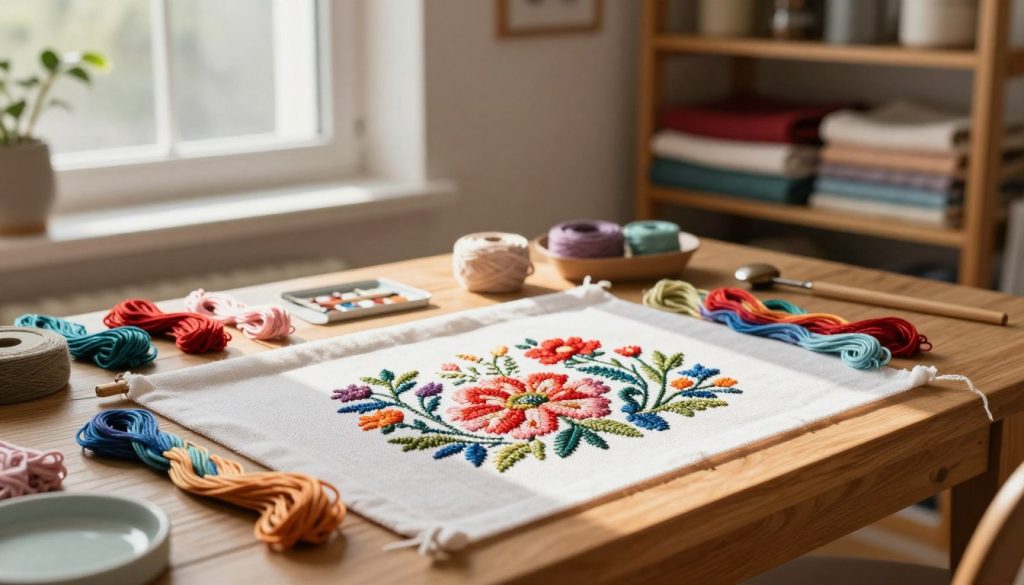
Cross stitch is special because it’s repetitive and calming. It helps you focus on the moment, reducing stress and anxiety. The touch of cross stitch fabric and DMC floss is very comforting. Making something with your hands brings a sense of pride and achievement.
The Meditative Quality of Counted Stitching
The counted stitching technique in cross stitch is calming and meditative. It requires focus and a steady hand. As you stitch, you can get into a flow state, where you’re fully present.
“The repetitive motion of the needle, the soft fabric, and the vibrant threads all combine to create a sense of tranquility.”
This meditative quality can help lower stress and improve mental health.
How Regular Stitching Builds Confidence
As you keep stitching, you’ll see your confidence grow. This hobby helps you learn new skills and make beautiful things. You’ll also face and beat challenges, making you more confident.
Mastering New Techniques Progressively
Regular stitching boosts confidence by teaching you new skills. You start with simple cross stitch projects and move to harder ones. Learning new stitches makes you feel proud of your work.
Creating Tangible Results You Can Display
Cross-stitch lets you make things you can show off. Finishing a project makes you feel accomplished. You can display your work, whether it’s for your home or as a gift, showing off your skills.
Overcoming Challenges and Building Self-Efficacy
Working on cross stitch tips and projects means facing challenges. But, learning to fix mistakes and push through hard parts builds your confidence. It shows you can handle tough situations.
Developing Patience Through the Stitching Process
With each stitch, you learn the value of patience. This quality improves your craft and how you face challenges. Stitching is slow and methodical, teaching you to value progress step by step.
Learning to Embrace Slow Progress
Cross-stitch requires time and focus. As you work, you’ll see that slow and steady progress is key. This mindset helps you enjoy the journey, not just the end result.
- Focus on the process, not just the outcome.
- Appreciate the small details that make your project unique.
- Celebrate small milestones along the way.
The Art of Correcting Mistakes Without Frustration
Mistakes are part of cross-stitch. But learning to fix them calmly is key to patience. Seeing mistakes as growth opportunities helps you stay calm and focused.
How Patience in Stitching Transfers to Daily Life
Patience from cross-stitch improves your life in many ways. It teaches you to approach challenges with calmness and resilience. This patience helps you in daily tasks and problem-solving.
- Apply the patience learned from stitching to your daily tasks.
- Use the skill of correcting mistakes to improve your problem-solving abilities.
- Enjoy the calming effects of a patient and mindful approach to life.
Getting Started with Cross Stitch: A Beginner’s Guide
The world of cross-stitch is open to everyone. It starts with the right beginning. Knowing the basics is key for a fun and easy experience.
Essential Tools for Your First Project
To begin cross-stitching, you need a few essential tools. You’ll need a hoop to keep your fabric tight, a needle for your fabric, and embroidery floss (also known as DMC floss). A pattern is also a must; it shows you the design and stitches to use.
Selecting the Right Fabric and DMC Floss
Picking the right fabric is important. Aida cloth and Evenweave are good for beginners because they’re easy to use and have clear patterns. DMC floss comes in many colors. Beginners should pick simple colors for their projects.
| Tool | Description |
|---|---|
| Hoop | Keeps fabric taut for easier stitching |
| Needle | Suitable for the fabric count being used |
| DMC Floss | Embroidery floss in various colors |
Simple Patterns That Build Confidence
Beginners should start with simple cross-stitch patterns. Start with basic shapes or small motifs. These help build confidence. As you get better, you can try more complex patterns.
Common Beginner Mistakes and How to Avoid Them
One common mistake is not using a hoop right, causing uneven tension. Make sure your fabric is tight in the hoop. Another mistake is not reading the pattern right; always follow the instructions carefully. If you make a mistake, don’t be afraid to start over.
Establishing a Sustainable Cross Stitch Routine
Creating a good cross stitch routine can be very rewarding. It begins with setting realistic goals and making a great stitching space. This way, you can keep enjoying cross stitch for a long time.
Setting Realistic Goals for Daily Practice
To keep up with cross stitch, setting daily goals is key. Try to stitch for a set time each day, like 30 minutes. This makes it a habit that’s easy to follow, even when you’re busy. Consistency is key to making progress and enjoying the journey.
Creating a Dedicated Stitching Space
A special place for cross stitch can make a big difference. It doesn’t have to be big; a small, organized spot is perfect. Make sure it’s comfy, well-lit, and has all your tools nearby. As one stitching fan says,
“A clutter-free space leads to a clutter-free mind, making it easier to focus on your craft.”
Cross Stitch Organization Systems That Work
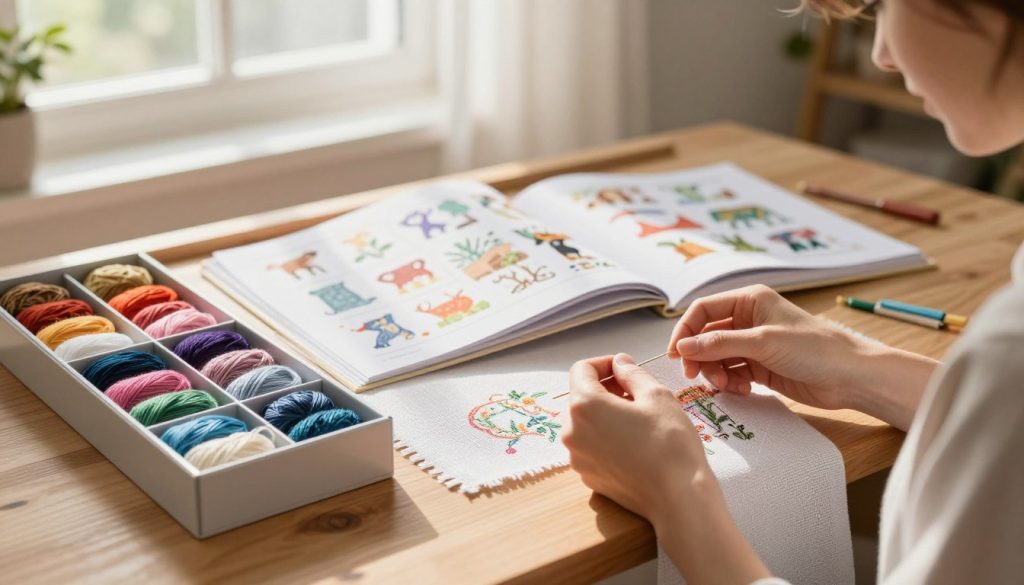
Good organization is essential for a lasting cross stitch routine. Use tools like project bags, thread organizers, and gridding systems to keep things neat. A system that fits you can save time and reduce stress, letting you enjoy the creative side of cross stitch. Think about using cross stitch gridding for complex patterns.
By following these tips, you can make a cross stitch routine that’s fun and lasting. This way, you can enjoy all the benefits that cross stitch offers.
Advanced Projects and Techniques to Boost Your Confidence
As you get better at cross-stitch, you’ll learn new techniques. These skills will make you more confident and creative. They will also improve your stitching.
Mastering Backstitching for Definition
Backstitching is key for clear designs. It adds detail and makes your work stand out. Start with simple patterns and then try harder ones.
Exploring Specialty Stitches and Textures
Special stitches and textures make your work unique. Try out different stitches to create interesting designs. Use French knots or bullion knots for extra texture.
Gridding Methods for Complex Patterns
For complex designs, use precise gridding. This keeps your stitches even and avoids errors. A ruler or grid overlay helps with this.
Creating Personalized Cross Stitch Designs
Designing your own cross-stitch is a great way to show your creativity. Start with a simple design or change an existing one. Use graph paper or design software to make your designs.
| Technique | Description | Skill Level |
|---|---|---|
| Backstitching | Adds definition and clarity | Intermediate |
| Specialty Stitches | Adds texture and dimension | Advanced |
| Gridding Methods | Ensures accuracy in complex patterns | Advanced |
Using these advanced techniques will improve your skills and confidence. Try different methods to see what works for you.
Conclusion: Stitching Your Way to a More Confident and Patient Self
Exploring CROSS STITCH has shown you a great way to build confidence and patience. Adding cross stitch therapy to your daily life can be very beneficial. It doesn’t matter if you’re new to cross stitch or have been doing it for years. Creating something with your hands is very rewarding.
Stitching helps calm your mind and keeps you in the moment. As you finish projects, you’ll feel proud and more confident. This patience you gain can help you deal with life’s challenges better.
Embracing CROSS STITCH as a hobby can make you more confident and patient. So, grab a needle and thread. Start stitching towards a more peaceful and assured you.
FAQ
What are the benefits of cross-stitch for mental health?
What type of fabric is best for cross-stitch?
How do I choose the right DMC floss for my cross-stitch project?
What are some common mistakes to avoid in cross-stitch?
How can I establish a sustainable cross-stitch routine?
What are some advanced cross-stitch techniques to boost confidence?
How can cross-stitch help with patience and confidence?
What are some simple cross-stitch patterns for beginners?
How can I create a dedicated stitching space?
This post contains affiliate links. If you click on a link and make a purchase, I may earn a small commission — at no extra cost to you. Thank you for supporting this blog and helping me keep the patterns free! Read the full Affiliate Disclosure & Transparency.