

Thread tension is a key skill in cross stitch. It makes your stitches even and your fabric look right. If it’s off, your work might have gaps or not fit the pattern.
This guide is for all, from beginners to experts. You’ll learn how to avoid knots and keep colors even. You’ll also discover the best tools for keeping tension right.
You’ll get step-by-step advice on getting ready, stitching, and managing threads. There’s also help for fixing tension issues. Plus, tips on finishing your work to make it look great.
Key Takeaways
- Consistent tension improves appearance, coverage, and final dimensions in CROSS STITCH.
- Use short thread lengths—fingertip-to-elbow—and pre-cut strands to avoid fuzzing and thinning.
- Tapestry needles, quality floss like DMC, hoops or frames, and laying tools help maintain even tension.
- The guide covers preparation, in-stitch techniques, thread management, troubleshooting, and finishing.
- Applying these cross stitch tips will elevate beginner cross stitch and complex counted cross stitch projects.
Why Thread Tension Matters for CROSS STITCH
Thread tension is key to successful cross stitch projects. The way you pull each stitch affects color, shape, and pattern on fabric. Making small adjustments can prevent common mistakes and keep patterns looking right.
How tension affects appearance and coverage
Stitches that are too loose sit on top of the fabric, causing gaps. These gaps make colors look uneven and patterns patchy.
Stitches that are too tight flatten the floss, hiding its color and sheen. This affects how detailed or shaded areas look, especially in dense designs.
When thread tension is just right, stitches lie flat and even. This ensures colors cover evenly and patterns look as intended, without needing extra stitches.
Impact on fabric distortion and final dimensions
Too tight pulls can warp fabrics like Aida, evenweave, or linen. This causes stitched areas to shrink and lose their grid alignment. This results in skewed motifs and mismatched blocks.
Loose tension leads to longer loops that collapse when the fabric is removed. These loops affect the final size of the piece after washing or pressing.
Think of tension as a tug-of-war between floss and fabric. If one side wins, your stitches won’t lie flat and precise.
Consistency vs. variability: why even tension gives a professional finish
Uneven tension causes visible irregularities in cross stitch. Small changes in stitch height and density are noticeable, especially in busy charts.
Changes in thread length, mixing new and old strands, or altering your pull angle mid-row can make work look amateur. These shifts can ruin otherwise good stitching.
To achieve a professional finish, maintain a steady pull angle and use a hoop or frame. These habits help avoid mistakes and ensure smooth, consistent stitching.
Preparing Your Thread and Needle for Even Tension
Getting your needle and thread ready is key for even stitches. Follow simple steps to reduce friction and prevent snags. These habits are crucial for both beginners and veterans in needlework.
Choosing the right needle size and type
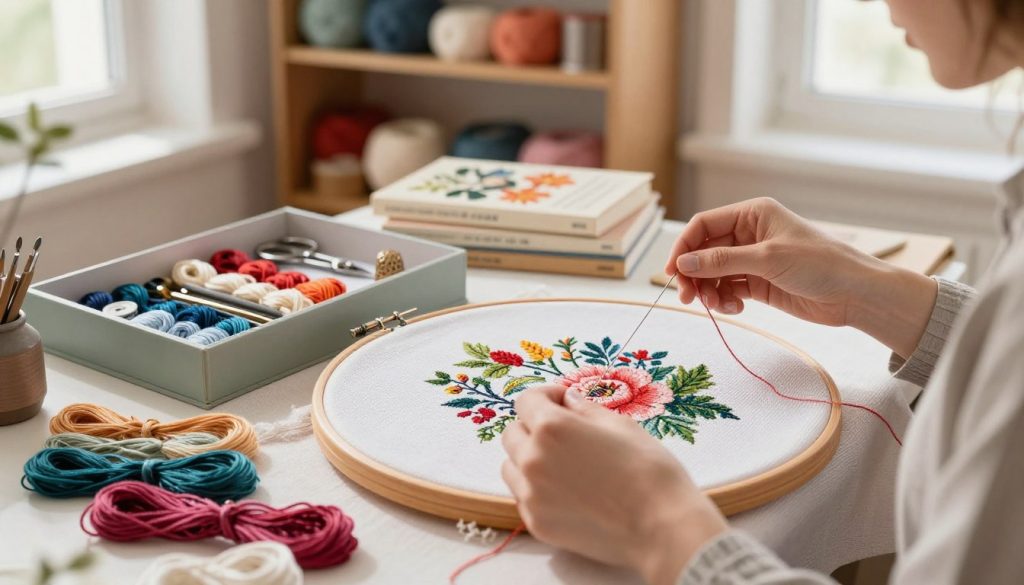
Choose a tapestry or blunt needle for smooth stitching. For 14-count Aida, a size 24 needle works well. For higher counts, use sizes 26–28. This size helps DMC floss lay flat and reduces friction.
Cleaning and maintaining your needle
Keep needles smooth by replacing them often. If you notice snagging or thread thinning, change the needle. Letting the needle dangle briefly can also help.
Cutting optimal thread length
Cut thread lengths to about 12–18 inches. This prevents tangling and keeps tension even. Pre-cutting thread helps maintain consistent pull.
Stripping and straightening strands
Separate the six strands of floss and align them. Pull small portions parallel to the skein end. This removes twists and ensures plumper stitches.
| Issue | Cause | Quick Fix |
|---|---|---|
| Snagging thread | Burr on needle or rough fabric edge | Replace needle; trim frayed edges of cross stitch fabric |
| Uneven, thin stitches | Twisted or unevenly separated strands | Strip strands and realign; run between fingers to remove twist |
| Visible fluffing and knots | Excessive thread length and friction | Cut to fingertip-to-elbow length; pre-cut DMC floss pieces |
| Holes that distort fabric | Needle too small or piercing weave | Use a slightly larger tapestry needle for your fabric count |
Techniques to Control Tension While You Stitch
Keeping even tension is key to avoiding common mistakes in cross stitch. Small changes in pull or a loose edge can cause uneven rows. Use simple methods to keep your work steady and protect the design.
Choose from a hoop, scroll frame, or stretcher bar based on your project size. A hoop is great for small areas, offering quick access. A scroll frame is better for larger pieces, keeping the fabric flat. Each tool helps prevent loose, elongated stitches that can ruin your work.
-
Hoop: Best for small sections and touch-ups. Keeps fabric taut in a tight circle.
-
Scroll frame: Ideal for large projects. Lets you move the work without re-hooping.
-
Stretcher bars: Offer stable tension for long-term projects and framing later.
Train a consistent pull angle to avoid uneven rows. Pull the needle through at the same slant each time. Check tension every few stitches. This habit ensures uniform stitch length and a smoother surface.
When you tend to over-tighten, try the little-finger pull trick. Start the stitch as usual, then finish with your little finger. This gentle strength reduces the risk of pulling too tight, leading to fewer flaws.
Prevent split stitches with a blunt tapestry needle and careful placement. Use the needle to nudge a clear path rather than forcing it through existing threads. Wiggle gently to open up the hole when working near filled areas; this keeps strands intact and avoids visible irregularities.
These practical cross stitch techniques complement the calming aspects of cross stitch therapy. By applying steady methods and avoiding common mistakes, your projects will have a professional finish. Your stitching time will remain relaxing and productive.
Thread Management Strategies for Neater Results
Keeping your work tidy and stitches consistent is key. Use simple systems to avoid tangles and focus on clean stitching. This way, you can enjoy complex cross stitch patterns more.
Railroading makes threads lie flat and parallel for better coverage. Use a laying tool or a second needle to separate strands as you pull the top arm of the stitch. This method is great for metallics and thin threads, and it helps prevent twisting when stitching light colours on dark fabrics.
Adopt a parking method to manage many colours without long floats. Park needles within the next one or two 10×10 grid sections to avoid long trailing threads on the back. Use magnetic needle minders or attach parked needles to the fabric edge for neat cross stitch organization.
Plan stops and starts so you avoid rethreading in the middle of a row. Changing threads at row ends or grid lines prevents uneven tension and visible irregularities on the front. Keep the number of parked threads manageable to reduce tangles during busy sections of your design.
Pre-cut and label your DMC floss and other brands to speed sessions and prevent knots. Pull from the skein end that shows the colour number and separate small segments before use. Straightening and separating strands before threading lowers fuzzing and keeps your stitches uniform across detailed cross stitch patterns.
Troubleshooting Tension Problems in Counted Cross Stitch
Spotting uneven rows or puckering? It might be due to tension. Check both sides of your work. The front shows how the stitches look and cover. The back shows if threads are pulling or long, causing issues.
Stitches that are too tight can pull the fabric and thin the thread. This causes fabric distortion and raised X legs on the front. On the other hand, stitches that are too loose sit proud and leave gaps between threads. The right tension makes stitches lie flat and cover the fabric evenly.
For small areas with uneven tension, unpick and restitch. Use shorter thread lengths and check your needle size. If the problem is big, remove a wider section to match the rest of the piece.
Take breaks and test your tension often. Re-threading can cause uneven rows. Adjust your pull angle and use consistent finger technique to avoid mistakes.
After finishing, washing and blocking can fix mild distortions. Soak in cool water with gentle detergent, then rinse and roll in a towel. Lay flat and pin to shape, then press from the back to protect stitches. Repeat if needed for stubborn warps.
Different fabrics need different care. Aida is good for beginners. Evenweave and linen need stitching over two threads and finer needles. For higher counts, use needles like 26–28 and shorter thread lengths. Remember, a 28-count over two is like 14-count in size for planning.
| Issue | Signs | Quick Fix | Prevention |
|---|---|---|---|
| Too-tight stitches | Puckered fabric, thin-looking threads, raised stitches | Unpick and restitch with gentler pull; use shorter thread | Consistent pull angle, use a hoop or frame |
| Too-loose stitches | Gaps in coverage, stitches sit proud | Tighten individual stitches and rework area if needed | Check tension frequently, avoid long thread lengths |
| Uneven tension across a section | Patchy appearance, mismatch with surrounding stitches | Unpick affected section; restitch with matched technique | Standardize stops/starts and rethread points |
| Post-finish distortion | Warped edges, uneven surface | Washing and blocking, pin to shape, press from back | Block mid-project for large pieces; use proper washing |
| Fabric-specific issues | Difficulty on evenweave/linen, differing finished size | Switch to finer needles and shorter threads | Match needle and thread to cross stitch fabric count |
CROSS STITCH Tools, Fabrics, and Advanced Tension Tips
Choosing the right gear and fabrics makes tension control easier and your finished piece neater. Match your comfort with tension to the fabric count so stitches sit evenly. Small changes to tools and technique give big improvements in coverage and backstitching results.

Choosing fabrics and counts that suit your tension style
If you tend to pull slightly tight, try 16–18 count evenweave or linen to hide pull while keeping a refined look. If your tension runs loose, 14-count Aida masks longer stitches and keeps shapes crisp. Use simple cross stitch gridding to mark blocks and keep tension consistent across large areas.
Needle, laying tool, hoop, and magnifier recommendations
Use tapestry needles sized to your fabric: size 24 works well for 14-count Aida; sizes 26–28 help on higher counts. Invest in a quality laying tool to flatten and align strands when you want cleaner coverage. Choose a hoop, Q-Snap, or scroll frame based on project size and comfort. Bright task lighting and a magnifier help you see threads and maintain steady tension on finer fabrics.
Advanced methods: railroading for metallics, parking for confetti patterns
Railroading keeps thread strands parallel and is indispensable with metallics and thin threads to avoid shimmering gaps. Try the technique slowly until you can pull strands apart smoothly after each stitch. Parking helps manage many color changes on confetti patterns; start by parking two to three threads before increasing numbers as you gain skill.
How stitch technique affects backstitching and back tension
Uneven front-stitch tension can shift backstitch paths and make outlines look wavy. Keep front stitches balanced so backstitching follows a clean line. When you add backstitching over stitched areas, use a slightly lighter tension so the outlines sit without pulling the underlying crosses out of shape. Good cross stitch tools and careful planning of backstitching techniques preserve the design’s proportions.
- Practice cross stitch gridding to reduce rework and keep tension uniform.
- Use a laying tool when railroading metallics for smoother coverage.
- Choose your cross stitch fabric to match how tight or loose you naturally stitch.
- Try small experiments with backstitching techniques on a scrap before applying to your main piece.
Conclusion
Keeping thread tension consistent can really improve your cross stitch. Start by choosing the right tapestry needle. Also, keep your needles clean and use short, pre-cut lengths of floss.
When needed, strip the strands of floss. Use a hoop or frame to help keep your stitches even and neat. Techniques like railroading and parking can also help.
Try one new technique per project to avoid feeling overwhelmed. Start with simple methods like the little-finger pull or pre-cutting floss. Then, move on to more complex techniques like 10×10 gridding or selective parking.
These steps will help you build muscle memory and apply tips more reliably. They also make the hobby more enjoyable and meditative.
Once your piece is done, wash, block, and press it correctly. This will even out any tension issues and make your work look polished. Invest in good lighting, a laying tool, quality floss, and proper needles.
These tips and ideas will help you achieve professional-looking cross stitch. They will also spark inspiration for your next project, whether you’re a beginner or looking to improve your skills.
FAQ
Why does thread tension matter for counted cross stitch?
How does tension affect fabric distortion and final dimensions?
What makes tension consistent or variable across a project?
Which needle size and type should I use to help tension?
How should I maintain needles to reduce friction and splitting?
What is the ideal thread length and why are shorter lengths better?
How do I strip and straighten strands for fuller stitches?
Should I use a hoop, frame, or scroll to control tension?
How does pull angle affect stitch consistency?
What is the little-finger pull trick and when should I use it?
How do I avoid splitting stitches when inserting near existing areas?
What is railroading and when should I use it?
What is parking and how does it help with complex patterns?
When should I rethread or plan stops and starts to avoid visible irregularities?
How should I pre-cut and organize DMC, Anchor, or Madeira floss for even tension?
How can I identify too-tight, too-loose, and balanced stitches?
What should I do if I find uneven tension mid-project?
How does washing, blocking, and pressing help with tension issues?
How do I adjust techniques for Aida, evenweave, and linen?
Which fabrics and counts suit different tension tendencies?
What tools and accessories help maintain even tension?
What advanced methods improve tension for metallics and confetti patterns?
How does cross stitch tension affect backstitching and back tension?
What are the core takeaways to improve my thread tension?
How should I practice and adopt these techniques without getting overwhelmed?
This post contains affiliate links. If you click on a link and make a purchase, I may earn a small commission — at no extra cost to you. Thank you for supporting this blog and helping me keep the patterns free! Read the full Affiliate Disclosure & Transparency.