
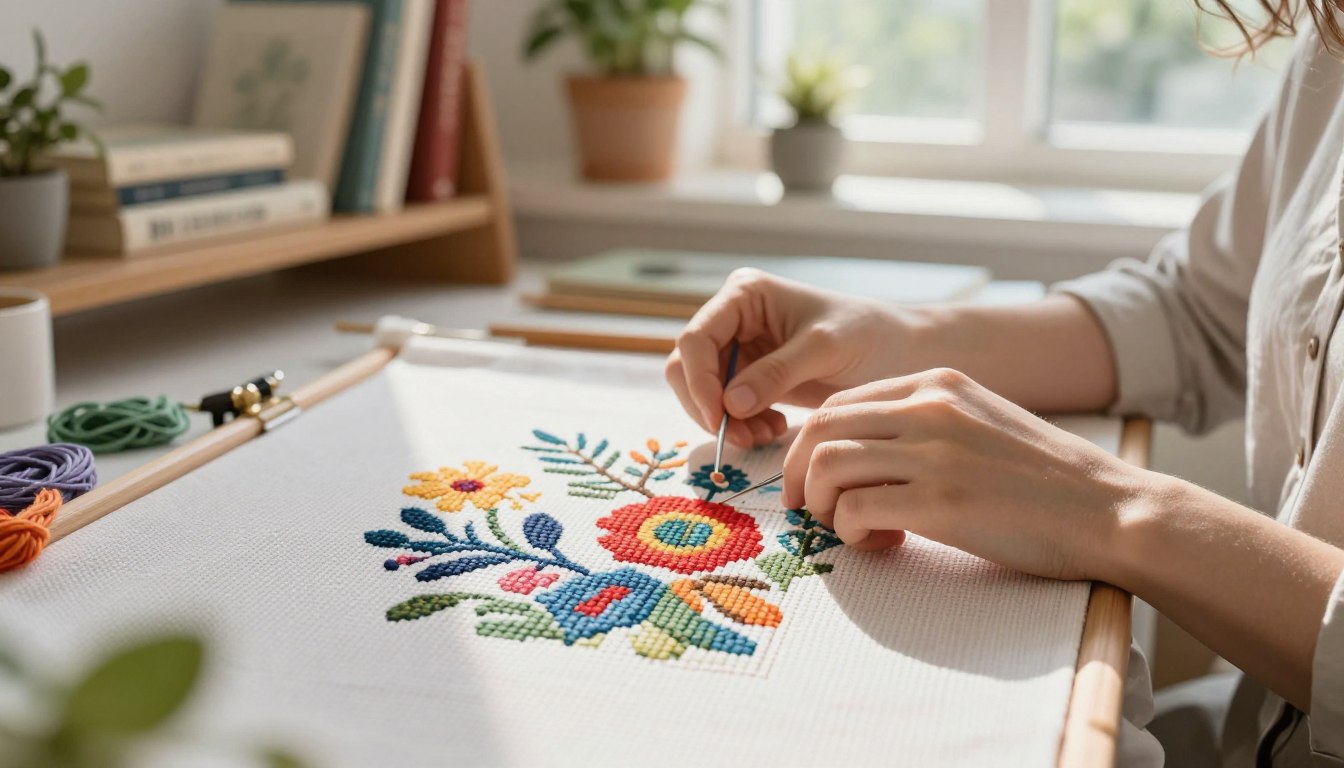
Cross stitch is more than just a hobby; it’s a way to find calm. By following a pattern, you slow down and focus. This keeps your mind on the task, away from distractions.
The rhythm of stitching is like deep breathing. It calms your mind and lowers stress. Many find it helps reduce anxiety and improves mood.
This craft is also a break from screens. Working with thread and fabric makes you feel connected. For beginners, kits include everything needed to start, making it easy to practice anywhere.
Seeing your work grow stitch by stitch boosts confidence. It shows you can achieve things. Stories from stitching communities talk about better sleep, less pain, and sharper focus.
Key Takeaways
- Counted cross stitch invites present-moment focus by requiring attention to pattern and stitch counts.
- Repetitive stitching creates a meditative rhythm similar to mindful breathing.
- Cross stitch therapy offers a tactile, screen-free way to lower stress and boost mood.
- Beginner-friendly kits make it easy to start cross stitch for beginners and build a routine.
- Visible progress and community support reinforce motivation and emotional well-being.
Why cross stitch is a mindful practice
When you sit with fabric, needle, and floss, you focus. Counting each stitch keeps your mind in the now. This helps calm your thoughts and gives your mind a break.
Designers at DMC and craft platforms say stitching is like meditation. It trains your mind to stay focused and return to the task when distracted. This builds mental strength over time.
Attention and present-moment focus
Counting stitches and changing colors need short, sharp focus. These moments keep your mind on the task and reduce worries. Beginner projects help you practice without feeling too much.
Working on clear patterns gives you clear goals. Seeing your progress helps you stay in the moment.
Repetition as a meditative rhythm
The X-shaped stitches create a soothing rhythm. Your breathing may slow down, lowering your heart rate and easing tension.
Many find the rhythm calming and predictable. This repetition helps relax and shifts your nervous system away from stress.
Hands-on engagement versus screen time
Needlework offers a tactile experience missing from digital devices. It keeps you grounded in the present, reducing eye strain and mental fatigue.
Switching from screens to needlework is restorative. It helps with anxiety, PTSD, and chronic pain by focusing your attention on a calming activity.
Use techniques like gridding and clean counting to avoid mistakes. Start with short sessions and simple patterns to create a calming routine.
| Mindful Benefit | How to Practice | Why it Helps |
|---|---|---|
| Present-moment focus | Work small sections from clear cross stitch patterns | Counting and placing each stitch limits mental wandering |
| Calming rhythm | Repeat basic cross stitch techniques for several minutes | Repetition syncs breath and movement to reduce stress |
| Sensory grounding | Choose tactile materials and take breaks from screens | Hands-on engagement restores sensory balance and focus |
| Accessible entry | Try beginner cross stitch kits with limited colors | Simple projects lower frustration and boost confidence |
| Therapeutic impact | Join a local group or online forum to share progress | Community support enhances the benefits of cross stitch therapy |
CROSS STITCH and cognitive benefits for focus
Cross stitch is a simple way to improve your focus. It involves sitting with a pattern and focusing on small tasks. This builds mental stamina for work and daily life.
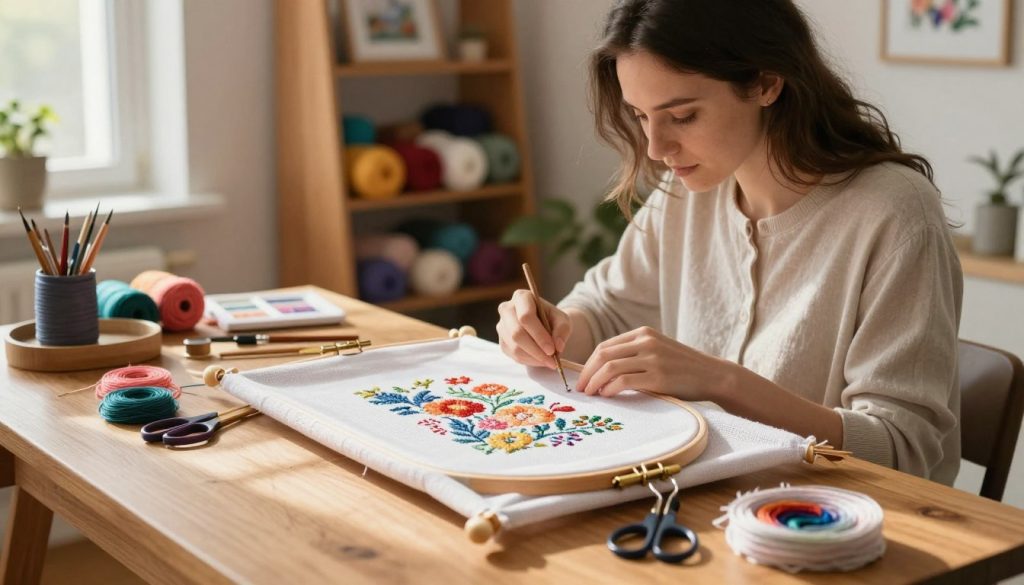
Counting, visual checks, and small corrections sharpen your concentration. Regular counted cross stitch improves working memory and sustained attention.
Planning a project requires thinking ahead. You sequence colors and choose threads with purpose. This enhances problem-solving and planning skills.
Digital pattern editors and physical grids help test ideas before stitching. Tools like pattern grids and common cross stitch tools help visualize changes and avoid wasted time.
Needlework rewires hand–brain connections. Tiny, repeated motions strengthen fine motor control and hand–eye coordination. This makes tasks like buttoning shirts or using a keyboard easier.
Seniors and people in rehab find these movements therapeutic. Repetition supports dexterity while keeping the activity low-risk and calming.
Here are practical takeaways to try when you stitch.
- Use cross stitch gridding to reduce counting errors and speed progress.
- Keep a simple log to track rows and color blocks for clear cross stitch tracking.
- Choose counted cross stitch projects with limited colors to train sequencing.
- Select reliable cross stitch tools like a hoop, magnifier, and quality needles for steadier stitches.
| Benefit | How it helps | Easy action to try |
|---|---|---|
| Concentration | Counted cross stitch forces focused attention on stitches and colors. | Set 20-minute focused stitching sessions with a simple pattern. |
| Problem-solving | Planning color sequences and fixing mistakes builds adaptive thinking. | Use cross stitch gridding and test changes on scrap fabric first. |
| Fine motor control | Repetition improves hand–eye coordination and finger dexterity. | Work daily on a small motif to strengthen precise movements. |
| Tracking | Row and symbol checks train working memory and sequencing skills. | Mark completed areas on patterns to simplify cross stitch tracking. |
| Tool familiarity | Using consistent cross stitch tools reduces frustration and speeds learning. | Create a small kit with needles, threads, hoop, and needle minder. |
How cross stitch encourages emotional well-being
When you start stitching, you get a calming activity. Cross stitch shows progress step by step. Seeing colors fill a canvas boosts confidence and reduces stress.
Sense of accomplishment from visible progress
Tracking progress is easy with cross stitch. Finishing a section or a border gives a clear reward. These achievements boost your self-esteem and encourage you to tackle bigger projects.
Even small projects, like bookmarks or small hoops, offer a sense of achievement. This achievement helps fight anxiety and improves your mood. For beginners, starting small builds a string of successes.
Creative expression as stress release
Choosing threads and patterns lets you express your feelings through art. This creative outlet is a safe way to release tension. It helps you process emotions without words.
Using different motifs, from flowers to shapes, brings new ideas. Turning your mood into stitchwork makes crafting a form of self-care. It turns stress into a chance for creative play.
Social connection and community support
Joining online groups or platforms like Love It Stitch It connects you with others. The cross stitch community shares tips and encouragement. This interaction reduces feelings of loneliness and makes you feel understood.
Sharing patterns and working on projects together sparks new ideas. Members often share their work, offer feedback, and celebrate each other’s achievements. For many, these connections improve their sleep and offer a distraction from pain or stress.
| Benefit | How it Helps | Actions to Try |
|---|---|---|
| Sense of accomplishment | Visible progress and completed pieces boost mood and confidence | Pick small cross stitch projects; mark milestones in a journal |
| Stress release | Creative choices convert anxiety into tangible art | Experiment with color palettes for emotional themes |
| Social support | Community interaction reduces isolation and offers practical help | Join online groups and local stitching meetups |
| Emotional resilience | Structured, repetitive work provides comfort and routine | Schedule regular stitching time; try simple patterns for consistency |
| Creative growth | Exposure to patterns fuels new embroidery inspiration | Collect motifs and test cross stitch ideas from community threads |
Practical cross stitch techniques to boost mindfulness
Begin your mindful stitching with simple steps. This keeps you in the moment. Choose the right supplies and set small goals for each session. Tools that help you avoid counting and reduce tension let you focus on the rhythm, not mistakes.
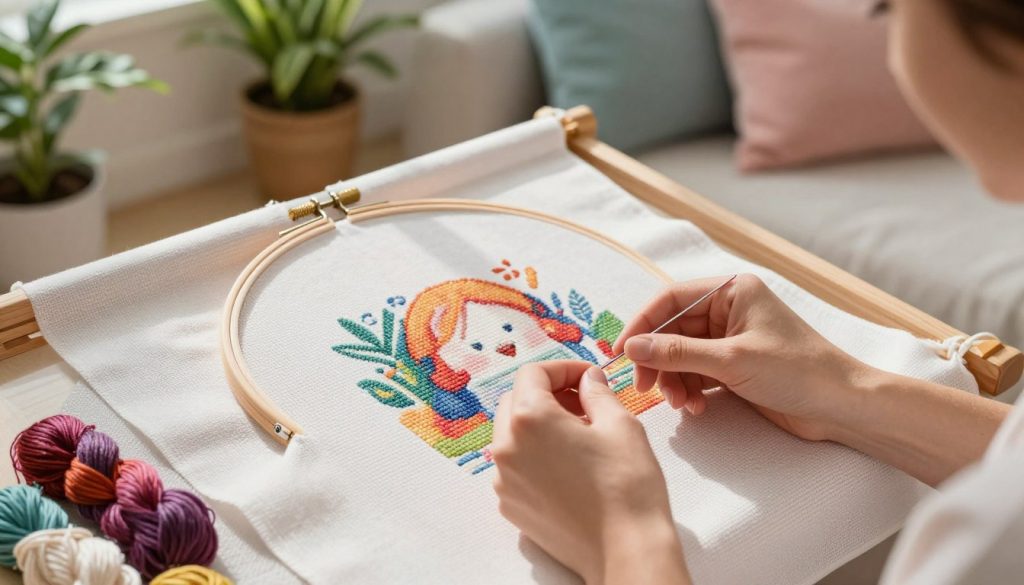
Selecting beginner cross stitch kits and patterns
Look for beginner cross stitch kits with Aida fabric, DMC floss, needles, and a clear pattern. Small motifs and simple patterns help you relax with each stitch. Choose kits from trusted brands that list DMC numbers to make color choices easier.
Use of cross stitch gridding and frames to reduce mistakes
Grid your fabric with a washable marker or buy pre-gridded cloth to avoid counting errors. Cross stitch gridding saves time and keeps your rhythm steady. Use an embroidery hoop or cross stitch frames to keep your work even and improve your posture.
Backstitching techniques and finishing for satisfaction
Learn basic backstitching techniques for a polished look. Backstitching is a mindful final step where small motions bring visible rewards. Secure threads, wash or press, and mount your piece for a sense of completion that encourages more projects.
Mindful technique tips
- Work in focused sessions of 20–40 minutes to keep attention sharp.
- Count deliberately and use your grid to avoid redoing rows.
- Let cross stitch frames hold tension so your hands relax into the pattern.
Cross stitch tips, tools, and organization for mindful stitching
Before you start stitching, make sure your space is tidy. You’ll need Aida or evenweave fabric, good needles, and quality DMC floss. These things make a big difference in how comfortable and good your stitching looks.
An embroidery hoop or frame is also key. It keeps your fabric taut and helps you stay focused, even during short sessions.
Essential tools and organization hacks
Put together a small kit you can carry around. Include scissors, a needle case, a thimble, and a pattern chart. Use a project bag to keep everything together when you move from room to room.
Pre-sort DMC floss onto labeled bobbins by number. Store bobbins in a compact box or pouch to reduce tangles and speed up color changes. Keep a tiny notebook to log stitch counts, color changes, and where you stopped.
Embroidery hacks to maintain flow and reduce frustration
Grid your fabric with a temporary marker or use pre-printed fabric to cut down on cross stitch mistakes caused by miscounting. Tail-start or loop-start methods save time and reduce loose ends.
Use a needle minder and pre-cut bobbins to keep tools at hand. A bright lamp or magnifier helps when you work on high-count fabric. When you need to remove errors, use a seam ripper or gently unpick stitches. Treat small flaws as part of the craft, not failures.
Creating a mindful stitching routine
Block short, consistent periods for stitching—15 to 45 minutes fits most schedules. Choose a calm corner with a cup of tea or soft music to turn stitching into a ritual. Breathe slowly while you stitch to deepen focus and lower stress.
Track progress in a stitching journal or share updates with online groups for accountability and support. Keep compact projects ready for commutes or waiting times so you can access mindful moments throughout your day.
| Focus Area | Tools or Hack | Benefit |
|---|---|---|
| Starter kit | Aida/evenweave fabric, embroidery needles, DMC floss, hoop | Comfortable stitching and reliable color matching |
| Organization | Labeled bobbins, project pouches, notebook | Faster setup, fewer tangles, clear progress tracking |
| Workflow | Needle minder, pre-cut bobbins, bright lamp | Uninterrupted stitching and reduced eye strain |
| Mistake management | Seam ripper, gentle unpick, acceptance of small flaws | Quick fixes and less frustration |
| Routine | 15–45 minute sessions, breathing techniques, journal | Sustained focus and emotional regulation |
Conclusion
When you start cross stitch, you get to focus on the small details. It’s a mix of calm, creativity, and fun. It helps you slow down and feel more present.
It’s not just relaxing; it’s also good for your brain. It makes you more focused and better at planning. Plus, it’s a great way to express yourself creatively.
Beginners can start with a simple kit or pattern. Use tools like gridding and frames to make your work look neat. Finishing with clean backstitching makes you feel proud of your work.
Make sure to keep your stitching sessions short and regular. This way, it becomes a calming part of your day. Cross stitch is a great way to find peace and focus in a busy world.
FAQ
What makes cross stitch a mindful practice?
How does repetition in cross stitch help reduce stress?
Can cross stitch actually replace screen time for a digital detox?
Does counted cross stitch improve concentration and memory?
How does cross stitch build problem-solving and planning skills?
Is cross stitch good for fine motor control and coordination?
How does cross stitch provide emotional benefits and a sense of accomplishment?
Can creative choices in cross stitch help release stress?
How do cross stitch communities support mental well-being?
What should I look for in a beginner cross stitch kit for mindful practice?
How does gridding and using frames reduce mistakes and frustration?
What backstitching and finishing techniques give the most satisfaction?
What essential tools and organization hacks keep stitching mindful?
Which embroidery hacks help maintain flow and reduce interruptions?
How do I build a mindful stitching routine that fits a busy day?
Who benefits most from cross stitch as a mindfulness tool?
This post contains affiliate links. If you click on a link and make a purchase, I may earn a small commission — at no extra cost to you. Thank you for supporting this blog and helping me keep the patterns free! Read the full Affiliate Disclosure & Transparency.