
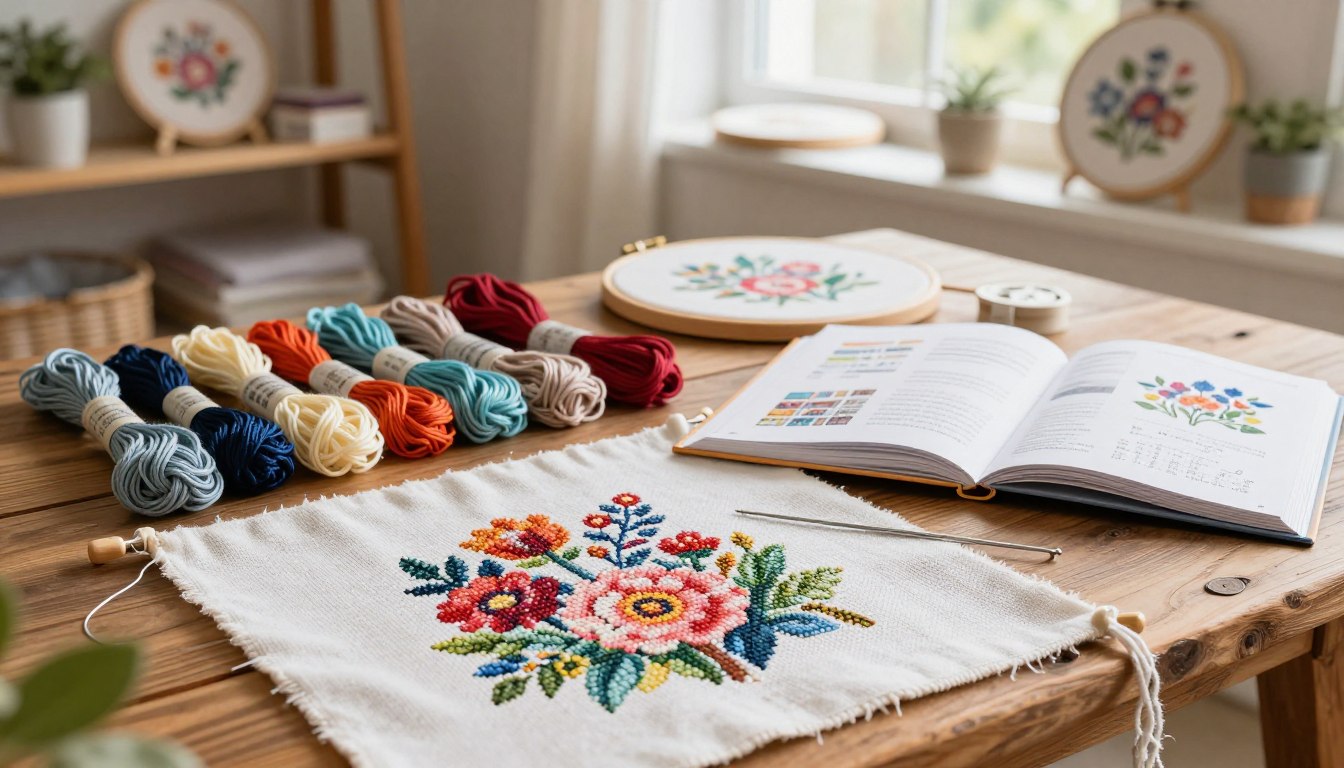
Starting with good habits can greatly affect your embroidery’s final look. Experts say mistakes can cause uneven stitches, messy threads, or a piece that doesn’t look right. By using effective stitching habits, you can make your work look beautiful and professional.
Your stitching habits are key to your work’s quality. By learning cross stitch techniques and avoiding common mistakes, you can make stunning pieces. This article will show you why stitching habits matter and share needlework secrets to enhance your craft.
Key Takeaways
- Good stitching habits lead to professional-looking results
- Common mistakes can ruin the final appearance of your work
- Mastering cross stitch techniques is crucial for success
- Effective stitching habits can save time and reduce frustration
- Valuable needlework secrets can help you improve your craft
The Foundation of Beautiful CROSS STITCH Work
Beautiful cross stitch starts with consistent stitching and the right materials. To get a professional look, you must focus on tension, thread count, and fabric choice.
Understanding Tension and Consistency
Tension and consistency are key in cross stitching. Inconsistent tension can ruin your design. On the other hand, consistent stitches give you a smooth finish.
How to Maintain Even Tension Throughout Your Project
To keep tension even, use a hoop or frame to keep your fabric tight. Stitch at a pace that feels comfortable. Avoid pulling the thread too hard or leaving it too loose.
Tools That Help Achieve Consistent Stitches
The right tools are crucial for consistent stitches. Use a cross stitch needle and top-quality DMC floss. A magnifying glass or lamp can also help you see your stitches better.
The Impact of Thread Count and Fabric Choice
The thread count and fabric choice greatly affect your cross stitch’s look. Thread count is the threads per inch in your fabric. Fabric choice changes the texture and appearance of your design.
Selecting the Right DMC Floss for Your Project
DMC floss is a favorite among cross stitchers for its colors and quality. When picking DMC floss, think about your project’s colors and thread count for a unified look.
How Fabric Count Affects Your Final Image
The fabric count changes the size and detail of your image. A higher count means a smaller, more detailed design. A lower count results in a larger, less detailed image. Pick a fabric count that fits your project’s needs.
Essential Stitching Techniques for Professional Results
To get professional results in CROSS STITCH, you need to learn key techniques. These skills improve your work’s look and make stitching fun and efficient.
Mastering the Basic Cross Stitch for Beginners
For beginners, learning the basic cross stitch is crucial. It’s about making an “X” on fabric with full or half stitches. Consistency is key for a uniform look.
Full Stitches vs. Half Stitches and Their Uses
Full stitches cover a whole fabric intersection, while half stitches cover half. Full stitches are for the design’s main parts. Half stitches are for details or color changes.
Creating Clean Corners and Edges
To get clean corners and edges, keep your stitches even and consistent. Regular practice and attention to technique help. Correcting as you go prevents mistakes.
Backstitching Techniques for Definition and Detail
Backstitching adds definition and detail to designs. It’s about stitching in the opposite direction of your main stitches. This creates outlines or texture.
When to Use Single Thread vs. Double Thread
Choosing single or double thread for backstitching depends on the outline’s thickness. Double thread makes outlines bold, while single thread is more subtle.
Straight Stitches vs. Fractional Backstitches
Straight stitches are common for backstitching. Fractional backstitches are for finer details. Knowing when to use each improves your work’s look.
French Knots and Specialty Stitches
French knots and other specialty stitches add unique textures. French knots are great for detailed elements like eyes or floral centers.
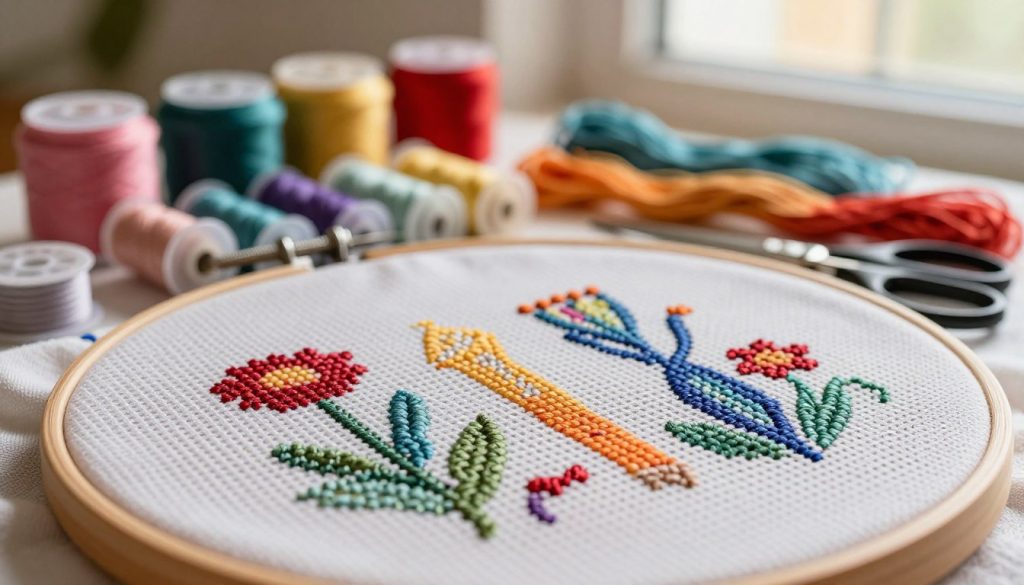
Learning these essential techniques will help you create professional CROSS STITCH projects. Your skill and creativity will shine through.
How Your Stitching Direction Affects Pattern Appearance
The way you stitch can change how your cross-stitch looks. Keeping your stitches even and consistent makes your project look better.
The Danish Method vs. English Method
There are two main ways to stitch: the Danish Method and the English Method. The Danish Method means stitching each stitch one at a time for even tension. The English Method is faster but can have uneven tension.
When to Use the Row-by-Row Approach
For big projects, the row-by-row method works well. It helps keep your stitches even and your tension steady, making your work look better.
Creating Uniform Stitches Across Your Project
Getting your stitches to look the same is important. To do this, keep your stitch direction the same all over your project.
Maintaining Consistent Stitch Direction
Staying consistent in your stitch direction is key. Try always stitching from top to bottom or left to right. This helps keep your stitches even.
Working in Sections vs. Color Blocks
You can organize your stitching in sections or by color. Stitching in sections helps keep your direction steady. Working by color makes managing threads easier.
| Stitching Method | Benefits |
|---|---|
| Danish Method | Consistent tension, uniform stitches |
| English Method | Faster stitching, fluid motion |
| Row-by-Row Approach | Maintains consistent stitch direction, ideal for large projects |
As one expert notes,
“Uniformity is key in cross-stitch, and maintaining consistent stitch direction is crucial for achieving a professional finish.”
Knowing how stitching direction affects your work helps. Using methods like the Danish Method or row-by-row can make your cross-stitch look great. Plus, it’s good for cross stitch therapy.
Common Habits That Can Make or Break Your Project
Good habits are key to making your cross stitch look professional. How you handle threads, fix mistakes, and keep your work can change how it looks.
Thread Management and Organization Systems
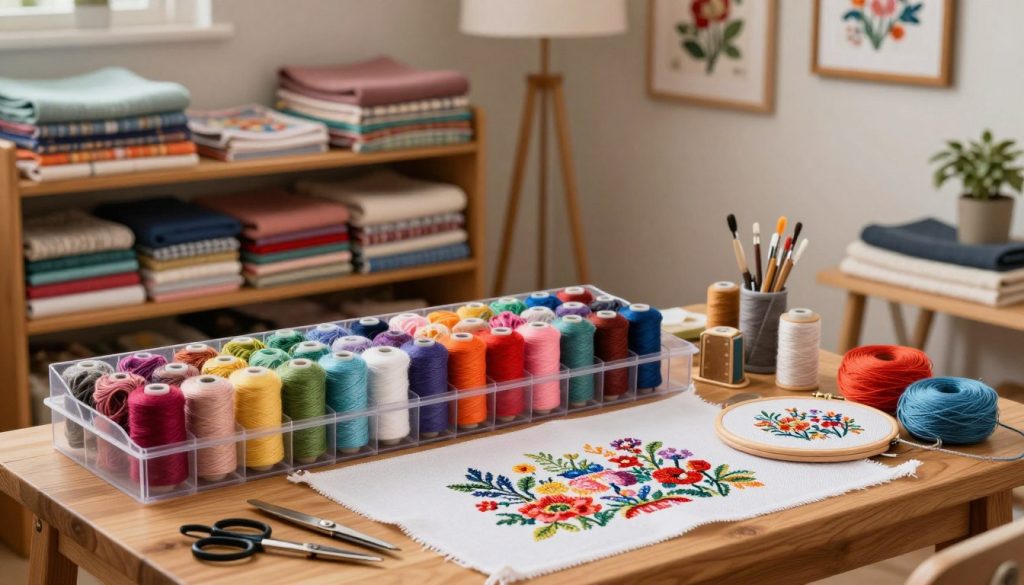
Managing threads well is important for smooth stitching. Use a thread sorter or a small container to keep your floss organized.
Preventing Tangling and Knotting
To avoid tangling and knotting, pull out the right amount of floss. Keep it separate from other threads. A thread conditioner can also help prevent knots.
Cross Stitch Organization Tips for Multiple Colors
When using many colors, label each thread with its color code. Use color-coded thread cards or a thread organizer with separate spots.
Handling Mistakes and Frogging Techniques
Mistakes happen, but how you fix them matters. Frogging, or ripping out stitches, is a skill every cross stitcher needs.
Tools for Safe Thread Removal
Use a seam ripper or a small, sharp tool to remove stitches safely. Be careful not to pull too hard, as it can distort the fabric.
When to Fix vs. When to Adapt Your Pattern
At times, a mistake can be part of the design. Or, you might change the pattern to fit the error. Decide whether to fix or adapt based on the situation.
The Importance of Regular Cleaning and Storage
Cleaning and storing your cross stitch work properly is crucial. Dust and dirt can damage your project over time.
Protecting Your Work from Dirt and Damage
Keep your project in a protective case or bag when not stitching. Avoid direct sunlight and moisture.
Proper Hoop and Frame Usage
Using a hoop or frame keeps your work taut and prevents distortion. Make sure the hoop or frame fits your project size.
| Best Practices | Benefits |
|---|---|
| Organize threads using a sorter or container | Reduces tangling and knotting |
| Use a seam ripper for safe thread removal | Prevents fabric damage |
| Store project in a protective case or bag | Protects from dust and damage |
Advanced CROSS STITCH Techniques for Stunning Results
To get amazing results in your cross stitch, try advanced techniques like gridding and thread blending. These methods can really make your work stand out.
Gridding Methods for Perfect Pattern Placement
Gridding is key to placing your cross stitch pattern right on the fabric. You can make a grid with washable markers or thread gridding.
Using Washable Markers vs. Thread Gridding
Washable markers are fast and simple for making a grid. But, thread gridding with a contrasting thread is more precise.
Digital Pattern Reading Tips
When using digital patterns, it’s important to know how to read the chart. Look for symbols or colors that show specific stitches or techniques.
Blending Threads for Dimensional Effects
Blending threads adds depth and dimension to your cross stitch. Mixing different colors and textures makes your designs more complex and appealing.
Creating Shading and Depth with Multiple Colors
To add shading and depth, use different colors to blend from one shade to another. This makes your designs look more realistic.
Confetti Stitching Strategies
Confetti stitching uses small, scattered stitches for a textured look. Try different colors and stitch lengths to get the effect you want.
Finishing Techniques That Elevate Your Work
The final touches are crucial for your cross stitch. Think about framing and washing and blocking to improve your work.
Framing Options for Different Projects
Choose a frame that matches your project’s style and size. Adding a mat can add elegance.
Washing and Blocking Completed Pieces
Washing and blocking your finished piece can even out the stitches. It gives your work a professional look.
| Technique | Description | Benefits |
|---|---|---|
| Gridding | Creating a grid on fabric for pattern placement | Accurate stitching, reduced errors |
| Thread Blending | Combining threads for dimensional effects | Adds depth, visual interest |
| Framing | Choosing a frame to display your work | Enhances presentation, protects work |
Conclusion: Developing Habits for Cross Stitch Success
Your stitching habits greatly affect your cross stitch’s final look. Learning about tension and consistency is key. Mastering basic stitches and managing thread well can take your work to the next level.
Getting rid of bad habits can really improve your stitching quality and enjoyment. By using cross stitch tips every day, you’ll get better at stitches and techniques. This lets you enjoy the calming side of cross stitch therapy.
Whether you’re new to cross stitch for beginners or experienced, good habits lead to amazing results. By following the needlework secrets from this article, you’ll make beautiful, detailed designs. These will show off your talent and creativity.
FAQ
What is the best fabric to use for counted cross stitch?
How do I maintain even tension while stitching?
What is the difference between the Danish and English methods of cross stitch?
How do I prevent tangling and knotting of my embroidery floss?
What is the best way to handle mistakes in cross stitch?
How do I grid my fabric for cross stitch?
What are some tips for blending threads in cross stitch?
How do I finish my cross stitch project?
What are some benefits of cross stitch as a hobby?
This post contains affiliate links. If you click on a link and make a purchase, I may earn a small commission — at no extra cost to you. Thank you for supporting this blog and helping me keep the patterns free! Read the full Affiliate Disclosure & Transparency.