
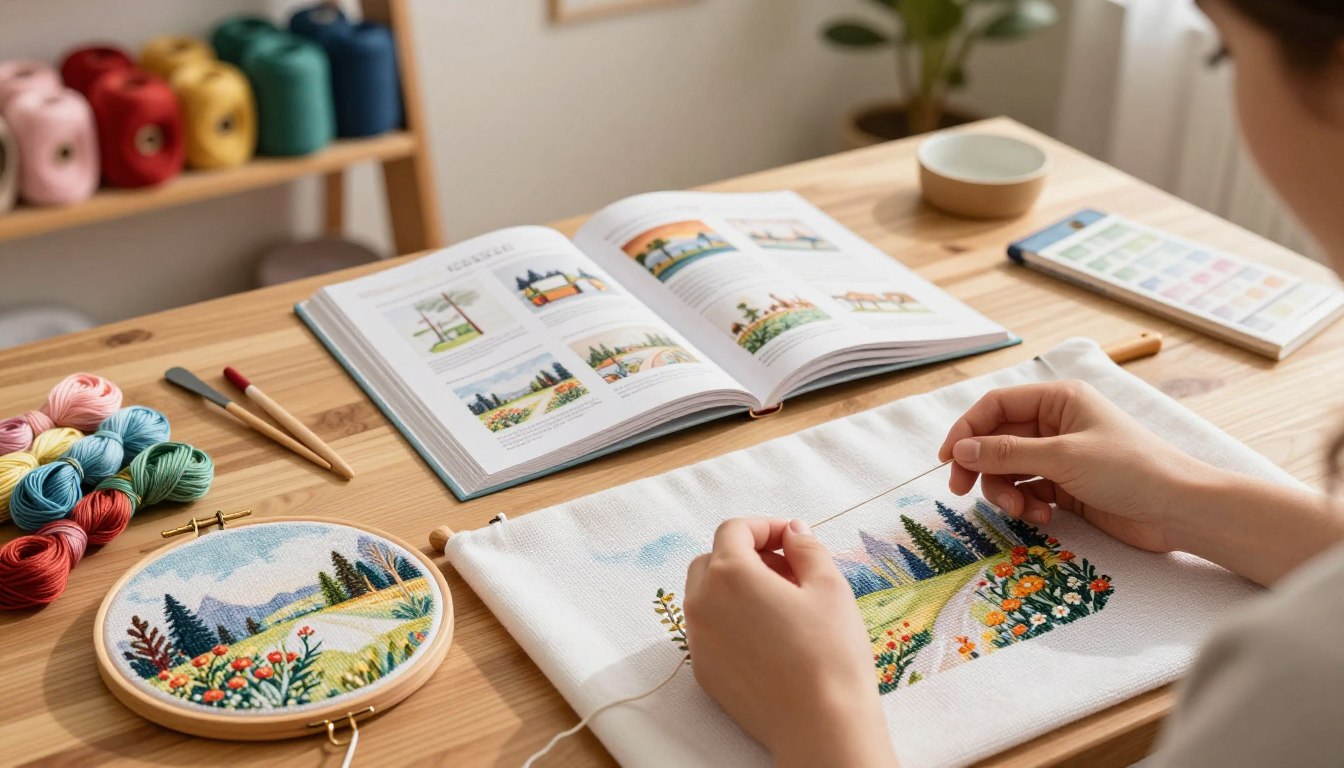
Working on cross stitch projects can be very relaxing and creative. It helps improve hand-eye coordination and boosts wellness. But, it’s important to watch out for visual fatigue, especially with big and detailed designs.
Starting your cross stitch journey means taking care of your eyes. Simple steps can help you enjoy this hobby without harming your vision. We’ll share cross stitch tips to keep your eyes happy and your passion for stitching alive.
Key Takeaways
- Understand the benefits and risks associated with cross stitch projects.
- Learn simple strategies to reduce visual fatigue.
- Discover effective cross stitch tips for a comfortable stitching experience.
- Explore ways to maintain your enthusiasm for cross stitch.
- Prioritize your eye health while enjoying cross stitch projects.
Understanding Visual Fatigue in Large-Scale Needlework
Starting big cross-stitch projects can affect your eye health. The detailed work can strain your eyes. It’s important to keep your vision sharp.
Common Symptoms of Eye Strain During Stitching
Eye strain might show as dry eyes, headaches, or blurry vision after stitching. Eye fatigue can also make it hard to focus and feel uncomfortable. Knowing what causes eye strain is key.
Why Large Projects Increase Visual Fatigue Risk
Big cross-stitch projects have complex patterns and lots of detail. This makes visual fatigue more likely. Long focus can hurt your eyes if you don’t take care.
The Connection Between Visual Comfort and Stitching Enjoyment
Your comfort while stitching affects how much you enjoy it. Understanding and fighting visual fatigue can improve your hobby. Using cross stitch techniques that ease eye strain makes stitching more fun and lasting.
Optimizing Your Lighting Setup for Cross Stitch Work
The right lighting is key for cross-stitching. It makes your work more comfortable and boosts your productivity. Good lighting also helps you see colors and details better.
Natural vs. Artificial Light Sources
Natural light is great for crafting, like cross-stitching. It’s accurate in color and good for your mental health. But, it’s not always available or steady.
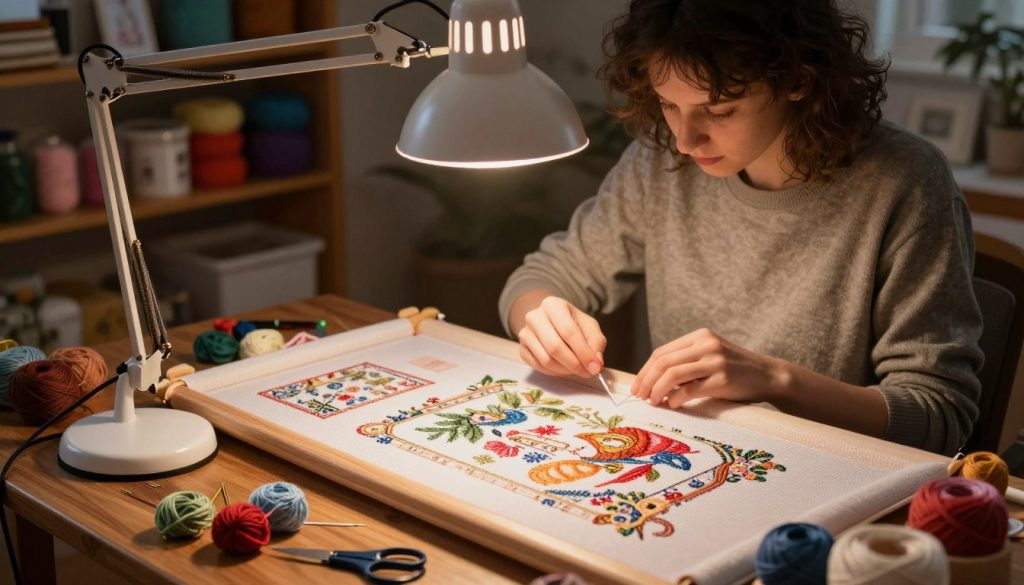
Artificial light, like LED lamps, is a reliable choice. They come in different colors, with daylight (around 5600K) being best for detailed work.
Recommended Lighting Tools for Detailed Needlework
For detailed needlework, a magnifying glass lamp or a daylight LED lamp is a good pick. They help you see better and reduce eye strain.
| Lighting Tool | Benefits |
|---|---|
| Magnifying Glass Lamp | Enhances visibility of small stitches and details |
| Daylight LED Lamp | Provides color-accurate lighting, reduces eye strain |
Positioning Your Light to Minimize Shadows and Glare
To avoid shadows and glare, place your light right. It should light up your work without causing reflections. Try different angles to find the best spot.
With the right lighting, cross-stitching becomes more enjoyable and comfortable.
Creating an Ergonomic Cross Stitch Workspace
To enjoy cross stitching without straining your eyes and neck, creating an ergonomic workspace is essential. A well-designed workspace can make a big difference in your comfort and productivity.
Proper Seating and Posture for Extended Stitching Sessions
Maintaining proper seating and posture is crucial for extended stitching sessions. You should sit in a chair with adequate back support. Keep your feet flat on the floor or on a footrest, and adjust the height so that your legs are at a 90-degree angle. This posture helps prevent back and leg strain, allowing you to focus on your stitching.
Ideal Height and Angle for Your Frame or Hoop
The height and angle of your frame or hoop significantly impact your stitching comfort. Ideally, your work should be at eye level or slightly below, reducing the need to tilt your head up or down. Adjusting the angle of your frame or hoop to a comfortable position can also help minimize reflections and glare.
Using Stands and Lap Frames to Reduce Neck and Eye Strain
Utilizing stands and lap frames can greatly reduce neck and eye strain. These tools allow you to maintain a comfortable position while working on your cross stitch projects. Stands can hold your frame at the ideal height, and lap frames provide support, keeping the fabric taut and reducing the strain on your hands and wrists.
By implementing these ergonomic considerations, you can create a comfortable and efficient cross stitching workspace. This enhances your overall stitching experience.
Essential Cross Stitch Tools to Protect Your Vision
The right tools make cross-stitching better and keep your eyes safe. Good equipment cuts down eye strain. This lets you stitch for longer without eye problems. Here, we’ll look at key tools for eye care while stitching.
Magnification Options for Detailed Pattern Work
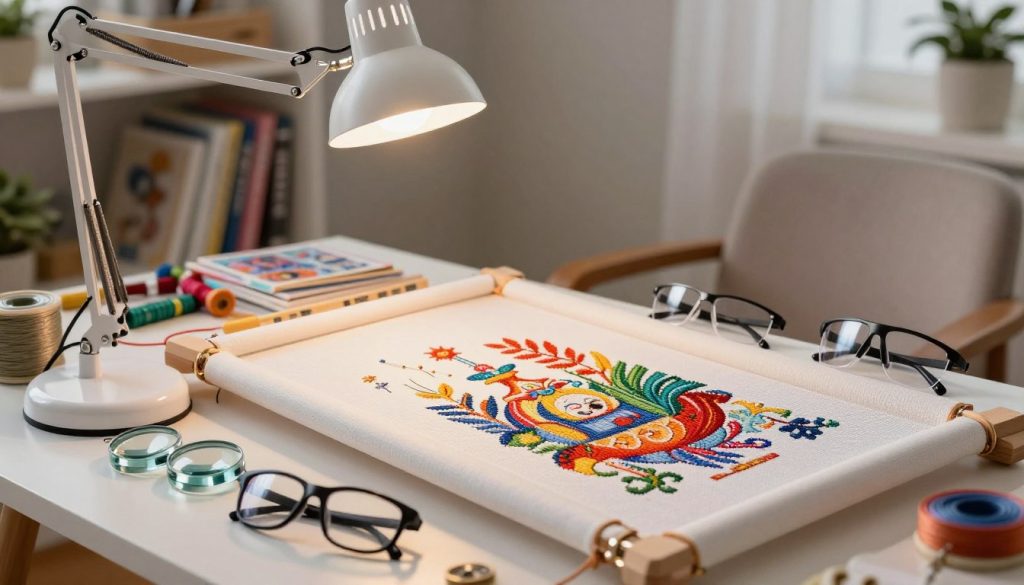
Magnifying glasses or lamps are great for detailed stitching. They help see small patterns clearly without eye strain. A magnifying glass with a light is best for clear vision.
Needle Threaders and Other Assistive Devices
Needle threaders are a big help, especially for those with eye or hand issues. They make threading easier, easing eye strain. Other tools like magnifying needle threaders or stitch markers also help.
As cross-stitch expert Jane Doe said, “The right tools make stitching fun, not frustrating.” This is especially true for eye care.
Selecting the Right Fabric Count and DMC Floss Colors for Your Vision
Picking the right cross stitch fabric count and DMC floss colors is key for eye health. Too high or too low fabric counts can be hard. Also, choose DMC floss colors that stand out against your fabric to avoid eye strain.
When doing counted cross stitch, think about your colors and fabric carefully. High contrast between fabric and floss is better for your eyes. For example, dark floss on light fabric or light floss on dark fabric is easier.
Using these tools and tips in your stitching can reduce eye fatigue. This way, you can enjoy stitching for many years.
Advanced Cross Stitch Techniques for Managing Large Projects
Large cross stitch projects need more than basic skills. They require smart ways to keep your eyes comfortable and the project easy to manage. When you tackle complex patterns, using advanced techniques can greatly improve your stitching journey.
Gridding Methods to Reduce Eye Tracking Fatigue
Using gridding methods is a great way to handle big cross stitch projects. Gridding means dividing your canvas into smaller parts, often with a ruler or special tool. This method keeps your work accurate and cuts down eye strain by breaking the project into smaller pieces.
To use gridding, mark your canvas with a light box or ruler. Create a grid that fits the pattern’s size. As you stitch, follow these grid lines to keep your work precise and evenly spaced. This method improves clarity and makes tracking your progress easier.
Parking Technique for Complex Pattern Areas
The parking technique is great for handling tricky parts of your cross stitch pattern. It lets you stitch a section, then leave your needle in the fabric to pick up later. This is especially helpful for designs with lots of colors and stitches.
With the parking technique, you won’t get lost or have to re-thread your needle often. It makes your stitching smoother, letting you focus on the work rather than thread management.
Color Blocking and Organization Strategies for Visual Clarity
Color blocking groups stitches by color, making complex patterns easier to manage. Organizing by color means you don’t have to switch threads as much. This saves time and reduces eye strain.
To do color blocking, find the main colors in your pattern. Stitch all areas of one color before moving to the next. This simplifies your work and makes the pattern clearer.
By using these advanced techniques, you can make your stitching experience better. Whether it’s a big or complex project, gridding, parking, and color blocking help reduce eye fatigue and make managing the project easier.
Healthy Stitching Habits and Break Routines
It’s key to enjoy big cross stitch projects without feeling uncomfortable. Regular breaks and simple exercises can help a lot. They reduce eye strain and keep you comfortable while stitching.
The 20-20-20 Rule for Eye Breaks
The 20-20-20 rule is easy to follow: every 20 minutes, look 20 feet away for 20 seconds. This short break helps your eyes relax and refocus. It makes stitching more fun and comfortable.
Simple Eye Exercises Between Stitching Sessions
Along with the 20-20-20 rule, simple eye exercises can also help. Try rolling your eyes, focusing on a point and then shifting your gaze to another. Or, gently massage your temples. These exercises ease tension and keep your eyes healthy.
| Exercise | Benefit |
|---|---|
| Eye Rolling | Relaxes eye muscles |
| Gaze Shifting | Improves focus and reduces strain |
| Temple Massage | Reduces tension and promotes relaxation |
Scheduling Your Cross Stitch Therapy Time for Maximum Comfort
Plan your cross stitch therapy sessions to keep a good balance. Set aside time just for stitching. Make sure to take breaks to stretch, move, and rest your eyes.
Conclusion: Enjoying Your Cross Stitch Journey Without the Strain
By following the tips and techniques shared, you can enjoy cross stitch without eye strain. Keeping your eyes healthy is key to enjoying your hobby and trying new ideas.
Remember to prioritize your eye comfort as you continue stitching. Good lighting, an ergonomic workspace, and breaks can prevent eye fatigue. This makes your stitching sessions more fun.
With these tips, you can protect your vision and dive deeper into your creative work. Whether it’s a complex pattern or a simple design, your cross stitch will be more enjoyable and rewarding.
By caring for your eyes and adopting healthy habits, you can keep exploring new ideas. And you’ll enjoy the calming benefits of this creative hobby.
FAQ
What is visual fatigue, and how does it relate to cross-stitching?
How can I optimize my lighting setup to reduce eye strain while cross-stitching?
What are some ergonomic tips for creating a comfortable cross-stitch workspace?
What tools can help protect my vision while cross-stitching?
How can I manage large cross-stitch projects to reduce visual fatigue?
What are some healthy stitching habits I can adopt to reduce eye strain?
Can using the right fabric count and thread colors really make a difference in reducing eye strain?
Are there any specific cross-stitch techniques that can help alleviate visual fatigue?
This post contains affiliate links. If you click on a link and make a purchase, I may earn a small commission — at no extra cost to you. Thank you for supporting this blog and helping me keep the patterns free! Read the full Affiliate Disclosure & Transparency.