
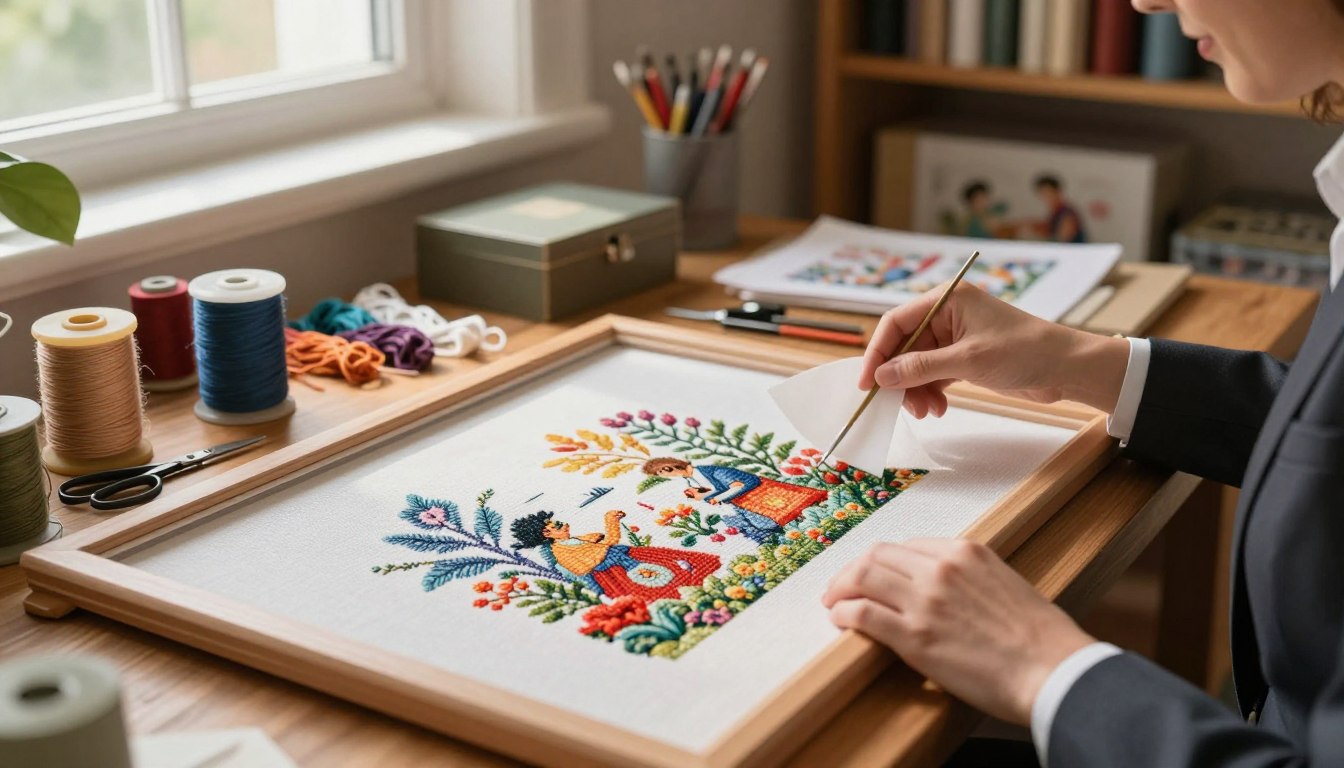
Finishing a cross stitch project is a big deal. It’s a culmination of hours of work and cherished memories. To keep your masterpiece looking its best, it’s important to care for it properly. A gentle wash can remove oils from your hands and prevent stains from setting in.
Start by using cool to lukewarm water, around 30°C (86°F). Choose a mild, non-bleaching detergent for washing. Always hand wash each piece separately. This is crucial, especially if you’ve used hand-dyed threads or mixed brands like DMC with specialty floss. Fabrics from trusted makers like Zweigart are pre-shrunk, but gentle cleaning still helps.
After washing, the right framing and storage are key to preserving your cross stitch. Use acid-free matting and UV-protective glass to prevent fading. Choose breathable coverings to slow down fiber breakdown. Keep your pieces away from attics and basements. Instead, store them in climate-controlled spaces with archival materials for the best preservation.
Key Takeaways
- Hand wash finished pieces gently in cool water to remove oils and reduce hoop marks.
- Wash each piece separately to avoid colour transfer, especially with hand-dyed floss.
- Use mild, non-bleaching detergents and rinse thoroughly before reshaping to dry.
- Frame with acid-free matting and UV-protective glass to guard against fading.
- Store in breathable, archival materials in a climate-controlled area for long-term care.
Why Proper Care Matters for CROSS STITCH Longevity
When you finish a cross stitch, you hold more than a pattern. You keep memories, skill, and sometimes an investment in material and time. Good care preserves the look and keeps the cross stitch value intact over years. Treating pieces with attention protects sentimental worth and any resale or gift value they may have.
Emotional and monetary value
Your work often reflects family events or personal milestones. Proper storage and display keep colors true and fabric crisp, so the embroidery inspiration stays vivid. If you ever sell or display a piece, maintained condition supports its cross stitch value.
Common risks to watch for
- Dirt and body oils from handling can dull stitches and leave stains that become permanent.
- Direct sunlight causes fading of threads and printed fabrics.
- High or fluctuating humidity invites mold and weakens fibers.
- Pests such as moths can eat natural fibers like linen and wool.
- Acidic papers or plastics cause yellowing over time.
How poor care speeds deterioration
Leaving a piece folded or stored in attics or basements accelerates fabric yellowing and fiber breakdown. Light, heat, and moisture work together to fade floss and weaken threads. Small cross stitch mistakes in finishing and mounting, such as tight stapling or direct contact with glass, increase stress and cause lasting damage.
To keep your work looking like new, learn basic cleaning, testing, and storage techniques early. Simple habits protect color, strengthen fabric, and preserve the creative spark behind your cross stitch ideas and ongoing embroidery inspiration.
How to Clean Finished Cross Stitch Safely
Cleaning your finished cross stitch keeps colors bright and fabric strong. It removes oils, dirt, and hoop marks without harming threads. Follow these easy steps to care for your work with confidence.
When to wash and when to spot-clean
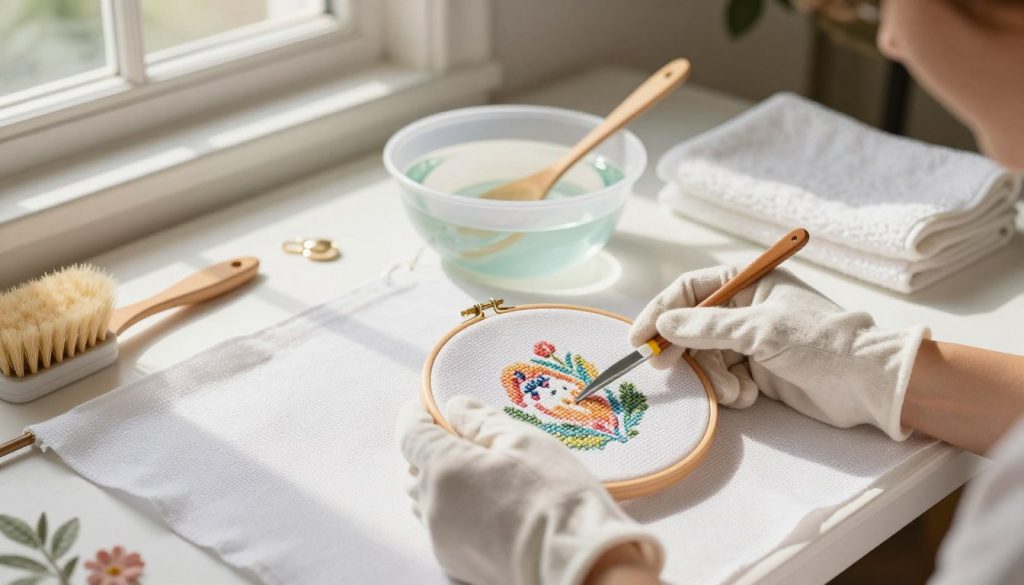
For small stains, spot-cleaning is best. Use a damp cloth and mild soap on the back of the fabric. This lifts surface marks. Wash the whole piece only if it looks dull, smells, or has stubborn grime.
Before washing, test a corner for colorfastness, especially with hand-dyed threads. Clean one piece at a time to avoid dye transfer between projects.
Recommended soaps and detergents
Use a mild, non-bleaching detergent for delicate textiles. Fairy Liquid is good for light cleaning. Orvus Quilt Soap is great for deeper cleaning. Always use a small amount to avoid residue.
Avoid whiteners and strong enzymes. They can damage fibers and change how you care for DMC floss when mixed with other dyes.
Step-by-step hand-washing method
- Start with a cold rinse to clear loose dust and check for color bleed.
- Then, use lukewarm water with a few drops of your chosen soap. Soak for 15–30 minutes.
- Sluice the piece up and down in the water instead of scrubbing. This gentle motion removes grime without stressing stitches.
- For persistent dirt, repeat the lukewarm soak once more.
- Rinse under cool running water until the water runs clear. Support the fabric so it doesn’t stretch under its own weight.
Tools that help and what to avoid
- Soft baby toothbrush or a badger-hair shaving brush can lift stubborn spots with light pressure.
- Use clean white towels and a flat surface for drying. Roll gently in a towel to remove excess water.
- Cross stitch tools like small nets for rinsing help keep pieces supported in the sink.
- Avoid machine washing and avoid wringing or twisting. Aida and other fabrics lose starch and shape when handled roughly.
As a beginner cross stitch artist, follow these steps to protect your work. Good cross stitch cleaning keeps colors vivid and limits wear to DMC floss and other threads. Keep your tools handy and treat each piece with care.
Preventing Colour Bleeding and Testing for Colourfastness
Before washing a finished piece, do a simple colourfastness test. Wet a small scrap or loose end, then press it onto a white paper towel or dab with a white cloth. If colour transfers, it’s not colourfast. Avoid full washing unless you can be very careful.
Always use cold water for tests and cleaning. Cold water helps prevent dye migration. If dye starts to run, change the water often or rinse under cold running water until it’s clear.
Specialty fibres need extra care. Silk can bleed and lose its sheen, so test first and avoid washing. Wool will felt and shrink with warm water and agitation; spot-clean when possible. Metallic threads are fragile and should be handled with care in cool water only.
Hand-dyed floss care means treating each skein as potentially unstable. Test every new skein before mixing with other colours. When using DMC floss alternatives or indie hand-dyed brands, run the same colourfastness test to avoid surprises in a final wash.
Colour-catcher sheets offer extra protection when washing complex pieces. Use them as insurance in a cold soak. They do not replace testing, but they can trap loose dye and reduce risk when you must wash a multicolored sampler or finished item.
Watch for common cross stitch mistakes that increase bleeding risk. Leaving long loose ends, using untested threads, or washing in warm water can all cause dye transfer. Secure ends, separate high-risk skeins, and always test before laundering the whole piece.
Drying, Pressing, and Restoring Shape After Cleaning
After washing, you need a gentle plan to take your piece from wet to frame-ready. Use methods that preserve stitch tension, fabric weave, and colour. Keep movements slow and careful so embroidery stays true to the original grid.
Towel method
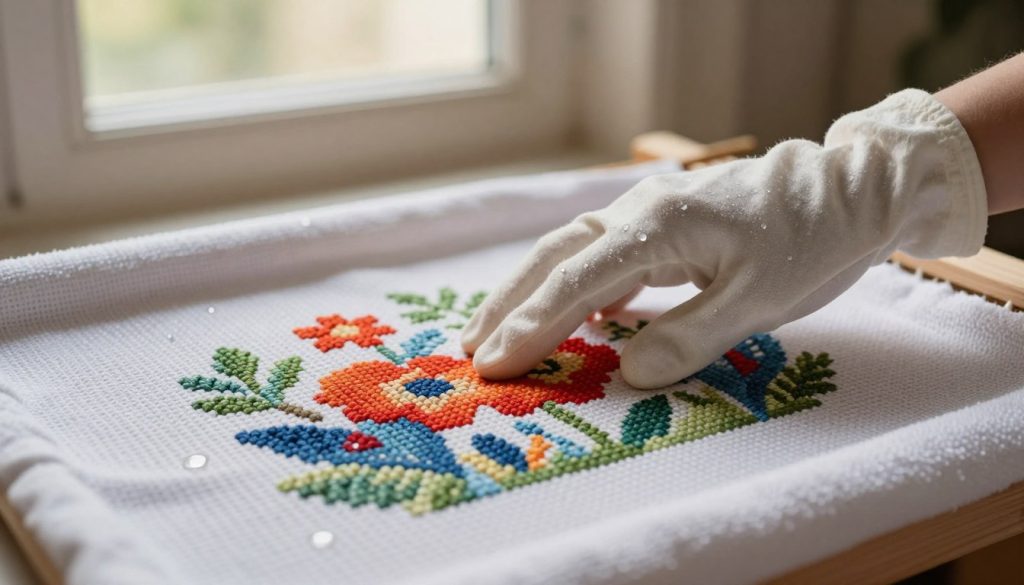
Lay your cross stitch face down on a clean, fluffy white towel. Gently squeeze to move excess water out; never wring. Roll the piece in the towel and press with even, light pressure to draw out moisture. Unroll and place the work face down on a fresh dry towel to relax the fabric and ease into shape for cross stitch drying.
Ironing and pressing cross stitch
Use a clean pressing cloth such as a cotton pillowcase or tea towel. Turn the piece to the back and set the iron to a warm, non-steam setting. Press using lift-and-place motions instead of dragging the iron across stitches. Avoid high heat and steam to prevent fibre damage and distortion while pressing cross stitch.
Reshaping for framing
Keep the textile slightly damp for final shaping when you prepare for mounting. Smooth the fabric by hand, paying attention to cross stitch gridding lines if you used them. Air-dry the piece flat in a shaded, well-ventilated area. Let it dry fully before any cross stitch framing prep to stop moisture buildup behind glass.
When you plan to mount, use gentle blocking techniques and check stitch alignment against your gridding marks. Proper cross stitch framing prep keeps edges straight, centers motifs, and preserves the even tension you achieved while stitching.
Best Practices for Framing and Displaying Cross Stitch
Framing your cross stitch makes it a lasting part of your home. It keeps dust and damage away. It also slows down fading, thanks to the right materials and techniques.
Choosing UV-protective glass and acid-free matting
Use UV-protective glass to block fading light. Pair it with acid-free matting to stop yellowing and chemical damage. These choices help keep your framed piece looking great for years.
Use of spacers to keep fabric off the glass and prevent moisture build-up
Spacers keep fabric away from the glass. This prevents condensation and stitch flattening. It also reduces mold and moisture damage from humidity changes.
Selecting backing materials and mounting techniques to protect stitches
Choose acid-free backing boards and linen or cotton tapes. These won’t harm your threads. Sewn or laced mounting keeps stitches even and prevents puckering. For special pieces, professional framing is best.
Placement advice: avoid direct sunlight, heat sources, high-humidity rooms
Place framed pieces away from sunlight and heat vents. Avoid bathrooms and kitchens with high humidity. Rotate them every few months to prevent uneven exposure.
| Framing Element | Recommended Option | Why it Matters |
|---|---|---|
| Glass | UV-protective glass | Blocks UV rays that cause colour fading and thread degradation |
| Matting | Acid-free matting | Prevents yellowing and chemical damage to fabric edges |
| Spacer | Plastic or foam spacer | Keeps fabric off glass to avoid moisture traps and imprinting |
| Backing | Acid-free board | Offers stable support and resists acid migration |
| Mounting | Sewn or laced mounting; archival tape for minor fixes | Maintains even tension and protects stitch integrity |
| When to seek help | Professional framing | Recommended for valuable or sentimental pieces to guarantee archival quality |
Storage Strategies for Short-Term and Long-Term Preservation
Keeping your finished work safe and ready to display is key. You need methods that prevent creases, stains, and fabric damage. Labels and a simple rotation plan help you find and inspect pieces easily.
Short-term: Lay pieces flat to avoid folds and distortion. Gently brush off loose dirt before storing. Cover with breathable fabrics like white cotton or muslin to keep dust off while allowing airflow.
When stacking multiple items, place sheets of acid-free tissue between each layer. This prevents colour transfer and contact wear. Keep stacked pieces on a flat shelf away from direct sunlight and heat sources.
Long-term: Choose archival boxes designed for textile care and line them with acid-free tissue. Wrap each project in acid-free paper, then place it in archival boxes to protect from dust and light.
A climate-controlled environment is critical. Aim for stable temperature and humidity. Avoid attics, basements, and garages where conditions swing and pests find easy access. Never use plastic bags for long-term storage; they trap moisture.
Rolling large pieces: Rolling textiles on acid-free tubes prevents creases. Lay the work face up, position the tube at one end, and roll evenly without tightening too much. Wrap the roll first in acid-free tissue, then in muslin for extra protection.
Store rolls horizontally on padded supports so the tube keeps its shape. Do not stack heavy items on top. Periodically unroll, inspect, and re-roll in the opposite direction to relieve stress on fibers.
Organization and upkeep: Label boxes with a short description, fabric type, and date. Group projects by size or season for easy access. A simple checklist for inspections every 6–12 months helps you catch issues early.
| Storage Type | Best Materials | Ideal Conditions | Inspection Frequency |
|---|---|---|---|
| Short-term flat | White cotton cover, acid-free tissue | Room temperature, low light | Every 12 months |
| Long-term boxed | Archival boxes, acid-free tissue paper | Climate-controlled, stable humidity | Every 6–12 months |
| Rolled textiles | Acid-free tubes, acid-free tissue, muslin wrap | Horizontal support, moderate climate | Every 6 months |
| Quick access | Breathable bins, labeled folders | Indoor closet or shelf, away from light | Every 12 months |
Practical Tips, Tools, and Embroidery Hacks for Ongoing Care
Keep a simple routine to protect your finished pieces. Small habits during stitching save work later. Use reliable cross stitch tools and plan storage before you start framing or gifting.
Needlework organization and storage
Create a dedicated kit for threads, needles, and backing supplies. Use labeled boxes or floss bobbins to manage DMC floss storage so colors stay tidy and easy to find.
Store gridding pens, wash-away stabilizers, and spare needles together. Good cross stitch gridding habits cut down on rework and speed finishing.
Common mistakes that harm preservation
Avoid tying knots on the front of your work. Anchor thread ends under stitches on the reverse to prevent loose bits that can catch or fray in washing.
Choose the right fabric for the project. The wrong weave or low-quality material will yellow or distort with time. Do not store finished pieces in airtight plastic that traps moisture.
Beginner tips to make future care easier
Plan margins for framing by leaving extra fabric around the design. Use colorfast threads when possible to reduce bleeding risks during cleaning.
Keep beginner cross stitch tips in mind: secure ends properly, maintain neat tension, and grid before stitching to limit mistakes. These steps help counted cross stitch pieces remain stable for years.
Creative display and storage ideas
Rotate displayed pieces to limit sun exposure. Hoops and hanging scrolls make quick shows and easy storage between displays.
Create a framed gallery with acid-free matting and UV glass for prized pieces. Use furniture with display cases to protect textiles while keeping them visible.
When to seek professional help
Take valuable or badly damaged textiles to a conservator or professional framer who offers archival mounting and UV-protective glazing. Expert repair preserves stitch work and maintains value.
For complicated restorations, a professional can stabilize fragile areas without risking further loss.
Conclusion
To keep your cross stitch work looking great, follow some simple steps. Clean it gently with mild soap, dry it carefully, and frame it with UV-protective glass. This way, your stitching’s small flaws become part of its charm.
Good care is key. Use breathable covers and store your work flat to avoid damage. For long-term protection, use archival boxes and control the climate. Labeling your pieces helps keep colors vibrant for years.
Needlework is more than just a hobby; it’s a way to find peace. Cross stitch therapy offers a sense of calm and a beautiful piece to show off. By following these tips, you can enjoy your needlework for years to come.
FAQ
What is the best general approach to care for and preserve finished cross stitch pieces?
Why does proper care matter for cross stitch longevity?
What common risks should I watch for?
How does poor care accelerate fading, yellowing, and fiber damage?
When should I wash a finished piece and when should I spot-clean?
Which soaps and detergents are recommended?
What is a safe step-by-step hand-washing method?
What tools help with cleaning and what should I avoid?
How do I test threads and fabrics for colorfastness?
What should I do immediately if dye starts running?
When should I avoid washing specialty fibers like silk, wool, and metallics?
What is the best drying method after washing?
How should I iron and press my cross stitch?
How do I reshape a piece for framing?
What should I choose for framing and display?
Why use spacers behind the glass?
How should I store pieces for short-term preservation?
What are long-term storage best practices?
How do I roll large pieces for storage?
What organization and labeling tips help preserve a collection?
Which needlework tools and storage solutions are useful for ongoing care?
What common cross stitch mistakes harm preservation?
What beginner cross stitch tips make future preservation easier?
What are creative display and storage ideas?
When should I seek professional framing or restoration?
This post contains affiliate links. If you click on a link and make a purchase, I may earn a small commission — at no extra cost to you. Thank you for supporting this blog and helping me keep the patterns free! Read the full Affiliate Disclosure & Transparency.