
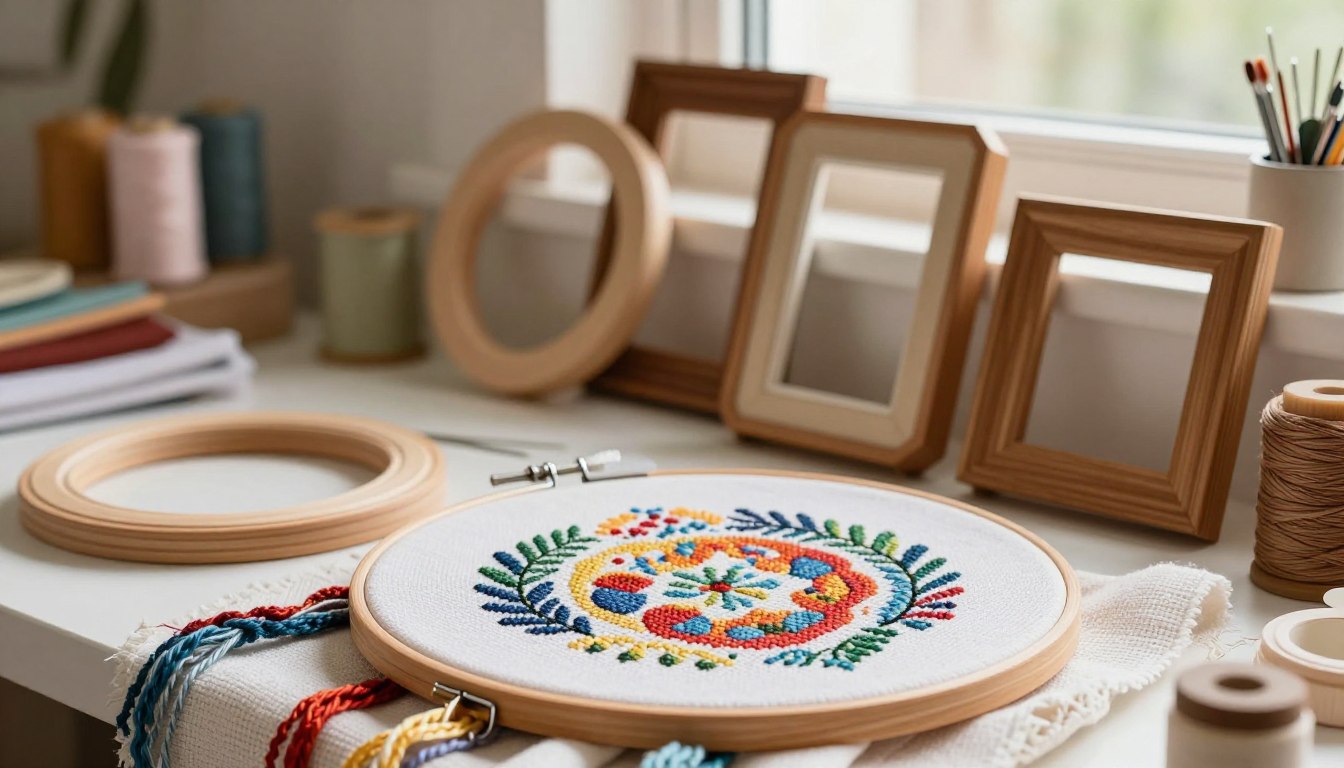
Choosing the right hoop or frame is key for your CROSS STITCH and needlework. It keeps your stitches even, avoiding puckers and crushed threads. This is crucial for counted cross stitch, backstitching, and hand embroidery.
Different crafts need different tools. For example, punch needle and rug hooking require loose tension and strong mounting. Linen and unevenweave fabrics need tight support to see holes clearly. Aida cloth is more forgiving, so you might not need a hoop for some projects.
You can change tools if needed. Switching to a smaller hoop or a rigid frame can save your project. Wooden hoops are great for display, while snap frames and Q-Snaps offer steady tension for long sessions.
Think about your project’s goal when choosing a hoop. For a gallery-ready piece, pick materials that minimize marks and keep tension even. For relaxation or travel, choose light and easy tools. Beginners should pick the right hoop or frame to learn better and practice cross stitch tips.
Key Takeaways
- Proper hoop or frame improves tension and reduces puckering in CROSS STITCH.
- Match the tool to your fabric: linen often needs tighter support than Aida.
- Switch hoops mid-project if stitches or comfort suffer.
- Balance portability and tension stability when choosing cross stitch tools.
- Choose tools that support your project goal—display, wearable, or relaxation.
How to decide which hoop or frame suits your craft and working style
Choosing the right hoop or frame is key for every project. Think about the needlework you do most, how you hold your work, and the fabrics and threads you use. Making small, steady choices helps you stitch neater and avoid frustration.
Match the tool to the type of needlework
Cross stitch and most hand embroidery need even tension to avoid puckering. Use Q-Snaps or screw-tension hoops for counted work to keep crosses neat. For punch needle and rug hooking, sturdier frames like gripper strip frames or stretcher bars are best. This is because repeated punching can cause fabric slip and sag.
Consider how you like to work
If you like to see a large area while stitching, choose a bigger frame like snap frames or stretcher bars. For something handheld, go for smaller hoops in the 5–8″ range or flexi hoops. Wooden hoops and small gripper hoops are great for travel because they’re light and pack easily.
Project size, fabric, and thread considerations
For counted projects, use a hoop about one inch larger than the design or a Q-Snap for bigger pieces. Recenter the fabric as needed for large works or use a frame that lets you remove the fabric between sessions. Fabric type affects your choice: linen benefits from tight tension while Aida often stitches well with looser support.
Specialty threads like silk, metallics, and common DMC floss blends look better with steady tension. This lets you see holes and control stitch size. For delicate fabrics, wrap wooden hoops with twill tape or add felt under clamps to protect fibers. These small embroidery hacks save time and preserve your work.
Materials, shapes, and mechanism differences for better stitch results
Choosing the right tools is key to enjoying cross stitch. Different materials and mechanisms offer unique benefits. They affect tension, portability, and how well you can work for long periods. Here’s a guide to help you pick the best tools for your favorite techniques and keep your space organized.
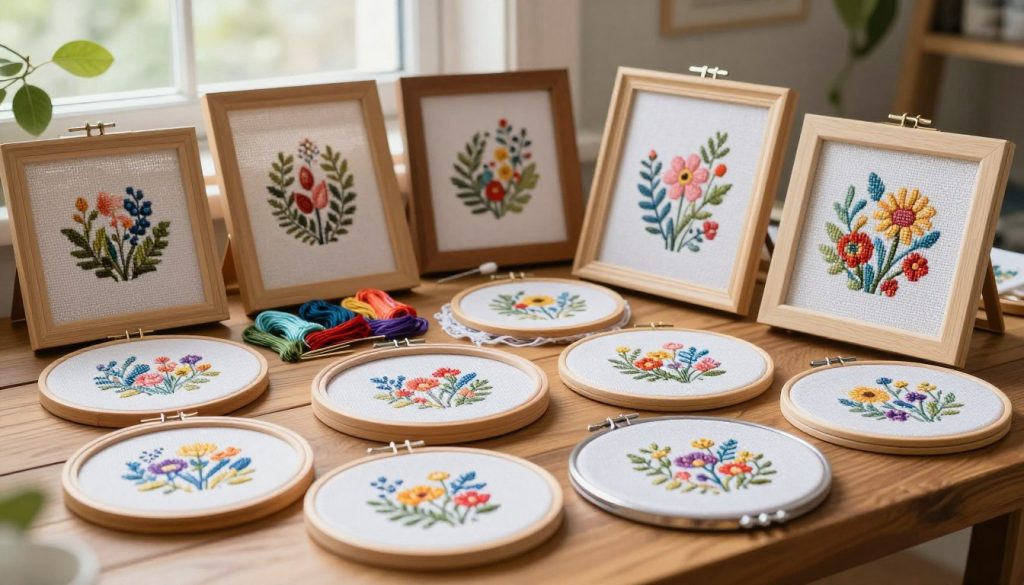
Wood hoops and wooden stretcher frames
Wooden screw-tension hoops offer a classic feel. Opt for beechwood or makers like Hardwicke Manor for smooth edges and reliable brass screws. They’re great for projects you plan to frame or give as gifts.
Wooden stretcher bars and scroll frames are perfect for large pieces. You can roll them up to avoid working over stitched areas. This method reduces strain on your stitches during long projects.
For punch needle, glue or staple fabric into a stretcher. This prevents slipping and keeps heavy yarn or tight loops secure.
Plastic hoops, flexi hoops, and snap frames
Plastic hoops are cheaper and lighter. Look for molded edges that grip well. However, low-end plastics might warp, so test tension before starting a long project. Spring hoops hold fabric tight but can be bulky.
Flexi hoops use flexible vinyl over an inner ring. They hold fabric very tight and are great for finished presentation. But, they can be tricky to adjust while stitching.
Snap frames break down into sides for square or rectangular setups. Lay fabric over the frame and clamp each side. They store flat for neat organization and let you switch sizes easily. Use a thin felt strip to protect delicate threads under clamps.
Q-Snaps, gripper hoops, and gripper strip frames
Q-Snaps are popular for counted cross stitch. They are lightweight, easy to hold, and re-center without disturbing tension. Many stitchers use them for portable work and moving across large charts.
Gripper hoops have a tongue-and-groove design that resists slipping. They handle small punch needle pieces and heavy yarn with less re-tightening than basic hoops.
Gripper strip frames combine deep wooden rails with rubberized strips embedded with metal teeth. They clamp fabric firmly, ideal for punch needle and rug hooking. These frames often disassemble for storage. Use caution when handling the strips and cover them after stretching to protect both fabric and fingers.
- Pick tools that match your preferred cross stitch techniques to reduce rework.
- Keep spare screws, felt pads, and clamps in your kit for better cross stitch organization.
- Test fabric and hoop combos on a small swatch of cross stitch fabric before committing to a large piece.
CROSS STITCH: choosing size, tension methods, and accessory tips
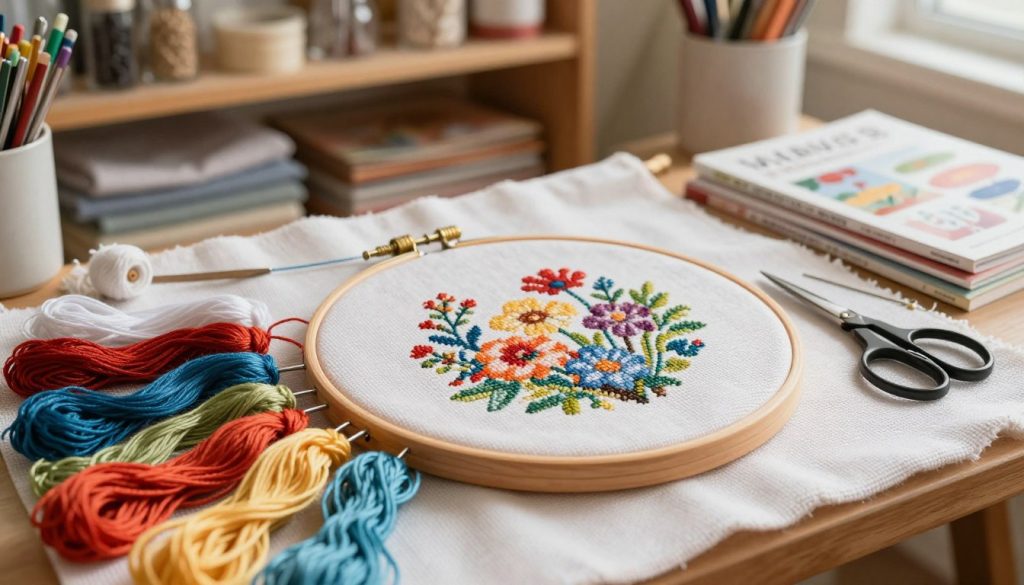
Choosing the right hoop or frame is key for comfort and quality. A 5–8″ hoop is perfect for handheld stitching. Make sure it’s 1″ larger than your design area.
For big designs, use Q-Snaps or snap frames. They let you stitch wide areas without stretching the fabric.
If your hoop can’t cover the whole design, recenter the fabric as you go. Remove it from the hoop between sessions to avoid creases. Loosen the hoop for ongoing projects to prevent marks and stress on the fabric.
How big should your hoop or frame be for cross stitch projects
Hoop sizes range from 3″ to 12″ and more for quilting. Choose a hoop an inch larger than your pattern area. A larger hoop, like a Q-Snap, helps with multi-color and complex patterns.
For linen or fine evenweave, use a gripper hoop or stretcher. This keeps tension strong without crushing threads. Heavy threads or wool blends need non-slip frames to avoid sliding.
Tension techniques and tools for neater crosses
Strive for “tight as a drum” tension. Tap the fabric to check its firmness. Pull the fabric evenly to avoid warping.
Use a small screwdriver or foam grip for extra torque. On wooden hoops, bind the inner hoop with cotton twill tape. This increases friction and prevents crushed stitches.
For plastic snap frames and Q-Snaps, turn tension knobs or twist clamps evenly. Re-adjust tension often because plastic parts can shift. Aida fabric needs moderate tension, while linen and dark fabrics require stronger tension for visibility and uniform stitches.
Protecting fabric and finished stitches
Loosen hoops when stopping to avoid hoop marks and flattened crosses. If fabric must stay under a tightened frame, reduce clamping pressure. Place a thin felt strip between the hoop and stitched area to protect threads.
Use twill tape, felt pads, or silicone hoop huggers under frame edges to cushion the fabric. For delicate fabrics, wrap inner hoops in webbing or twill tape. These steps prevent crushed stitches and creases.
Cross stitch-specific accessories and organization hacks
Organize threads with DMC floss organizers and labeled bobbins. Use water-soluble pens for cross stitch gridding to mark blocks and reduce counting mistakes. Gridding speeds up work on dense charts and supports accurate placement for backstitching techniques and detailed finishes.
Carry a small screwdriver, thread conditioner, and silicone hoop huggers in your project bag for quick fixes. For large pieces, consider removing the fabric between sessions or using a Q-Snap. Good organization makes cross stitch therapy relaxing and keeps your projects tidy.
Troubleshooting common problems and avoiding cross stitch mistakes
Most issues with tension, edges, and tools can be fixed with simple checks. First, look over your hoop, fabric, and work area. Making small adjustments now can save time and keep your project looking great.
Fabric dips, puckering, and sagging in the center
If your fabric dips, check the tension first. Tighten the screw or clamps and re-center the fabric. For big pieces, try a smaller hoop or use Q-Snaps to support the fabric better. Keep tightening as you work to avoid uneven slack.
To fix wooden hoops, wrap the inner hoop with cotton twill tape for grip. With snap frames, retwist the clamps and pull the fabric evenly. These steps prevent sagging before it’s too late.
Edge interference, crushed stitches, and hoop marks
Edge interference occurs when extra fabric gets caught. Roll or fold the edges and use clips to keep them in place. Silicone hoop huggers can also help keep fabric away from the hoop.
Crushed stitches and hoop marks come from tight hoops or fabric left in place too long. Loosen the hoop during breaks. Add padding like felt or twill tape to protect threads. These habits prevent common mistakes.
Issues specific to punch needle and heavy yarn
Punch needle work needs a firmer grip than basic cross stitch. Wooden hoops often sag with repeated punches. Use glue, gripper hoops, or stretcher bars with staples for steady tension.
Gripper strip frames and Morgan no-slip hoops keep tension without constant tightening. For big pieces, staple or tack fabric to stretcher bars. Cover gripper strip teeth to avoid injury. These tips help keep pile and prevent distortion.
Choosing the right hoop to prevent long-term mistakes
Avoid cheap, splintering wood hoops. Opt for quality beechwood or trusted brands like Hardwicke Manor and Elbesee for smooth edges. For large projects, use stretcher bars or scroll frames to avoid edge distortion.
If you travel or rework often, invest in Q-Snaps or modular snap frames. Check tools regularly and replace worn hoops to prevent creasing and distorted stitching. Good techniques and organization help avoid repeat errors and keep projects ready for display.
Conclusion
Choose the hoop or frame that fits the work you love. For counted cross stitch patterns, Q-Snaps or a slightly larger beechwood hoop such as Hardwicke Manor work well. They provide steady tension and a clear view.
For punch needle or large embroidery pieces, gripper strip frames or stretcher bars are best. They offer a flat, taut surface. Make sure to match the material and mechanism to your fabric, thread weight, and project size. This helps avoid puckering and stretched threads.
Remember some practical rules: aim for a hoop about one inch larger than the design when possible. Tighten it to a drum-tight feel. Use twill tape or felt to protect delicate cloth.
Loosen hoops between sessions to prevent permanent creases. For heavy, small work, consider Morgan no-slip gripper hoops. They reduce slipping and maintain uniform stitch tension.
Experiment with different cross stitch tools to find what works best for you. Trying a few options will refine your technique. It will also improve stitch uniformity and fuel your embroidery inspiration.
Whether you’re exploring cross stitch ideas, using cross stitch therapy to unwind, or tackling advanced counted cross stitch projects, the right hoop or frame is key. It supports better results and makes the process more satisfying.
FAQ
How do I choose the right hoop or frame for my cross stitch or other needlework?
Should I change hoops mid-project if tension or comfort becomes an issue?
Wood or plastic—which is better for my stitching?
When should I use a hoop versus a stretcher bar or scroll frame?
How big should my hoop or frame be for a counted cross stitch project?
How tight should the fabric be in the hoop or frame?
Does fabric type affect hoop choice?
What hoop should I use for punch needle or rug hooking?
How do I prevent fabric dips, puckering, or sagging in the center?
How can I avoid hoop marks, crushed stitches, and edge interference?
What are useful accessories and organization hacks for cross stitchers?
Are there specific tools recommended for specialty threads and dark fabric?
What should I avoid when buying a hoop or frame?
Which brands and tools are trusted choices for cross stitch and heavier work?
How do I choose between portability and tension stability?
Any simple rules to remember when picking a hoop or frame?
This post contains affiliate links. If you click on a link and make a purchase, I may earn a small commission — at no extra cost to you. Thank you for supporting this blog and helping me keep the patterns free! Read the full Affiliate Disclosure & Transparency.