
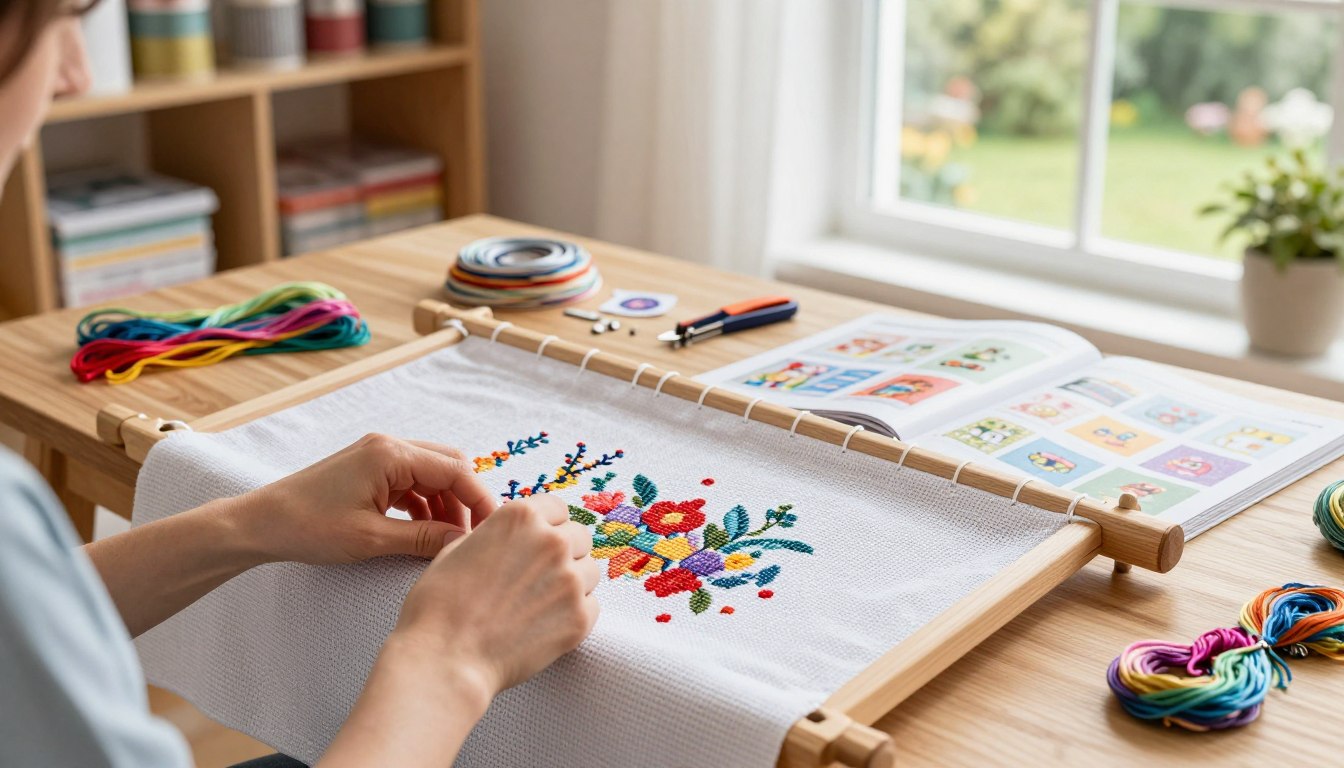
When you see a mistake in your cross stitch, it’s natural to feel worried. But remember, even pros make errors. Taking a deep breath and stepping back can help. You might just need to fix a small part or blend the mistake into the design.
This guide will show you how to fix mistakes without starting over. You’ll learn how to handle single-stitch errors and how to unpick safely. It also covers creative ways to fix issues without redoing the whole piece.
It’s filled with helpful tips: when to unpick, when to fix a design, and when a small mistake can be cute. You’ll also find links to videos that make fixing your work easy. Remember, every stitcher has been in your shoes before. You can fix most problems and keep moving forward.
Key Takeaways
- Mistakes are normal; pause and assess before acting.
- Many errors can be fixed with simple cross stitch tips without starting over.
- Frogging is an option, but creative fixes or fudging often save time.
- Prevent problems by shading pattern overlaps and marking charts as you go.
- Use tutorials and videos for visual help on unpicking and repairs.
Why CROSS STITCH Mistakes Happen and How to Stay Calm
Before you act, take a breath and step back. Making cross stitch mistakes is normal. Knowing why they happen helps you stay calm and enjoy your project.
Common causes: miscounting, wrong colors, distractions, and confusing cross stitch patterns
Miscounting is a big one. Losing your place or a small error can mess up a whole section. Bad lighting and similar shades can lead to picking the wrong colors. Daily distractions, like phone calls, can also cause mistakes.
Beginner kits can help avoid some mistakes. They often have clear charts and labeled floss. This makes it easier to avoid miscounting and picking wrong colors.
How to assess the severity of a mistake before acting
First, ask yourself a few questions. When did you notice the mistake? Does it affect a key area? Will it mess up the alignment?
Check if the mistake is in a border or a main part. If it’s in a border, it might not be as bad. But if it’s in a main area, it could be more noticeable.
When it’s okay to ignore a tiny error or embrace imperfection
Not every small mistake needs fixing. Tiny errors in foliage or backgrounds might not be noticeable from far away. If a single wrong-color stitch blends in, you might choose to leave it or make it a design choice.
If you want perfection, unpicking early is best. But if you’re okay with a bit of imperfection, you can turn a mistake into a creative choice. It all depends on your project and what you want to achieve.
| Issue | Typical Cause | Quick Action |
|---|---|---|
| Shifted motif | Miscounting across pages or lines | Pause, recount from a known gridline, re-grid if needed |
| Single wrong color | Poor lighting or similar floss shades | Replace stitch, blend nearby colors, or accept if subtle |
| Repeated errors | Distractions during stitching | Take a break, use a highlighter on the chart, return fresh |
| Confusing chart section | Complex cross stitch patterns or unclear symbols | Print overlapping pages, consult kit instructions, mark symbols |
Quick fixes for single-stitch problems using cross stitch tips
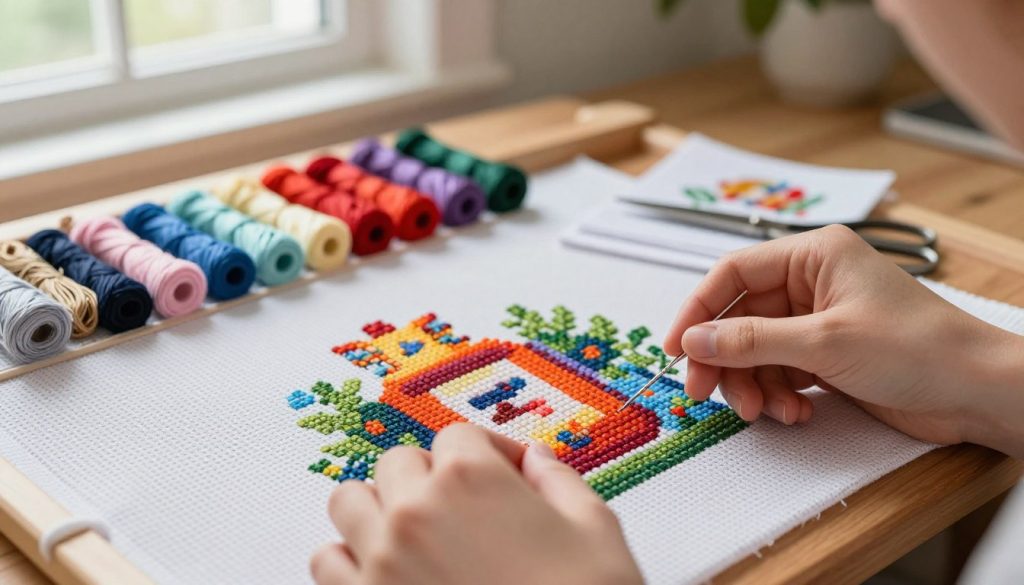
Spotting a missed stitch or wrong color? Small repairs keep your project moving. Use good lighting, a magnifier, and a short needle for neat fixes. For beginners, quick fixes boost confidence without undoing big areas.
Filling in a missed stitch
To fill a stitch cleanly, start with a short tail and match the tension. Bring the needle up at the lower corner, then drop the first half-cross. Finish the top leg so the X sits evenly. If you prefer to unpick, remove only the thread that blocks access, then restitch the square.
Covering a wrong-color stitch
For a single wrong-color stitch, switch to a closer shade from your DMC floss stash. Stitch over the mistake with one or two strands. You can blend by using one strand of the original plus one of the closer shade before switching fully. Use backstitching techniques around the area to turn the fix into intentional outlining.
When to disguise instead of undo
In foliage or multi-shade zones, you can “fudge” a missed stitch by altering nearby stitches. Small edits and careful color blending often hide a repair better than ripping out a block of work. This approach saves time and preserves fabric integrity.
| Issue | Tool | Quick fix | Best tip |
|---|---|---|---|
| Missed stitch | Short needle, magnifier | Fill a stitch with short tail; match tension | Bring needle up at lower corner, complete both legs |
| Wrong single color | DMC floss match, tweezer | Stitch over with closer DMC floss or blend strands | Compare colors in natural light before stitching |
| Visible edge or outline | Fine embroidery needle, floss | Use backstitching techniques to disguise edges | Plan outline to look intentional with pattern |
| Multi-shade area | Magnifier, extra shades of DMC floss | Rework nearby stitches or blend shades | Adjust one stitch at a time to keep flow |
How to unpick and “frog” stitches safely using cross stitch tools
When you find an error, stay calm and plan your next steps. Frogging means ripping out stitches. You can fix cross stitch mistakes safely with the right tools and a steady hand.
Selecting the right tools
Choose sharp small scissors for embroidery, fine tweezers, and a needle that fits your fabric. Small scissors help you cut single threads. Tweezers let you remove loops without pulling other stitches. Keep a seam ripper handy, but use scissors and tweezers for better precision.
Step-by-step unpicking method
- Work backward from the mistake to remove only the wrong stitches.
- Use tweezers to lift top loops gently, showing the crossed threads.
- Snip each cross in the center with small scissors, not across a row.
- Pull out freed strands slowly with tweezers to avoid stretching the fabric.
- Re-grid the area if your guideline lines were disturbed before restitching.
Protecting the fabric
Support your work in a hoop or frame while unpicking to avoid distortion. Don’t pull too hard, as it can widen holes in Aida or linen. If threads look weak, a tiny dab of Fray Check on the back will help.
Handling knots and tails on the back
- For small knots, use shorter thread next time to avoid bulk.
- Pull the knot toward the hoop side and tighten surrounding threads to seat it flat.
- If a knot can’t be smoothed, cut only the involved strands with small scissors and leave as much tail as possible for tucking.
- Tuck leftover tails under new stitches or secure them with a few tiny stitches using a matching needle.
Restitching tips
After frogging, pick a needle that fits your fabric well. Use short floss lengths to avoid knots. Use tweezers to place thread ends and keep tension even as you rebuild the area.
Repairing damage
If a hole or weakened area appears, stabilize the back with a small patch or a dot of fray preventative. For bigger damage, consider an appliqué patch; that method is covered later in the guide.
Smart pattern-editing and “whiteout” techniques for cross stitch patterns
When you find a counting or color mistake, stop and think. You might ignore it, fix it, or change the whole area. Use pattern-editing for small errors in busy parts of the design. This saves time and keeps your project going.
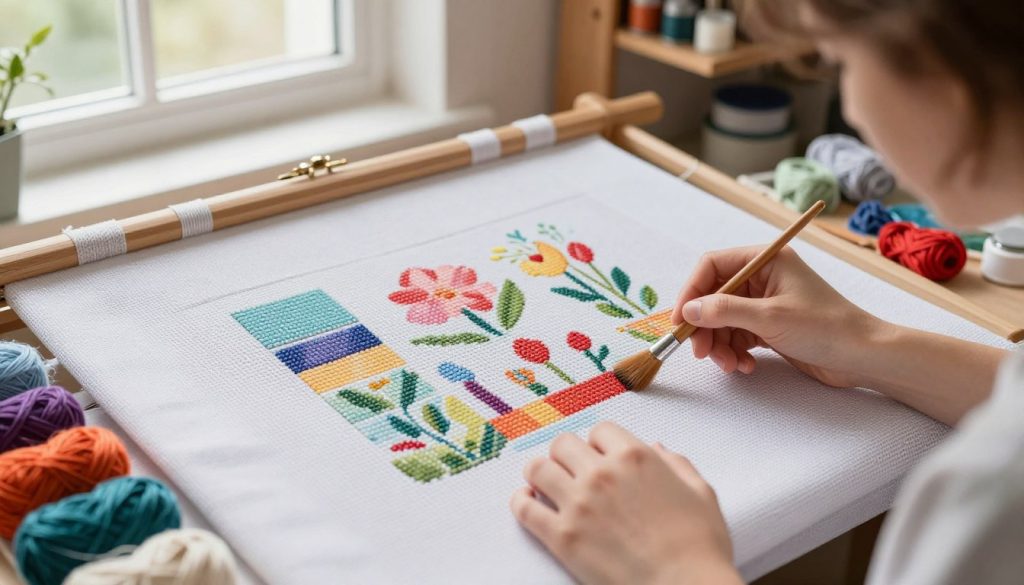
When to redesign a section instead of ripping it out
If a mistake is in a key part of the design, you should fix it. But for small errors in backgrounds, you might just adjust them. Changing colors or moving small parts can fix the issue without a big redo.
Using pattern marking and highlighters to prevent repeat mistakes
Highlight completed parts of your chart to see your progress. Note any changes you make so you can remember them. Use temporary markers on your fabric to match the chart’s squares.
How to print and overlap pattern pages to avoid page-matching errors
When working with many pages, print them with shaded borders. This shows where the patterns overlap. Trim the edges and tape the pages together to ensure they match.
For mistakes near joins, use whiteout to erase and redraw. This way, you can fix the issue without having to redo a lot of work. Always note any big changes you make so you can do them again if needed.
Repairing large-area mistakes without restarting using embroidery hacks
Big errors in cross stitch projects can feel overwhelming. But, there are ways to fix them without starting over. You can try targeted repairs to see if they work.
For big mistakes, patching Aida or appliqué might be the quickest fix. Cut a matching piece of Aida and stitch it in place. Use small stitches or a satin-stitched border to secure it.
Re-gridding is useful when blocks are off after joining pages or changing patterns. Use a marker or removable thread grid to mark correct blocks. Then, start stitching again from a verified point to fix the area.
Blending transitions in foliage or multi-shade areas can make repairs look intentional. Mix DMC floss colors across the seam. Add short stitches and accents to blend the colors smoothly.
Plan your approach before cutting or removing fabric. Test patches on scraps to match tension and density. For re-gridding, choose a stable anchor point. For blending, lay out color mixes on a card to find the best progression.
These tips can help you keep your project on track. Match fabric count and weave, and secure edges neatly. With careful patching, precise re-gridding, and thoughtful blending, you can fix big mistakes and finish your project beautifully.
Prevention strategies: cross stitch organization and tools to avoid future errors
Good habits can prevent many stitching mistakes. Use simple systems to keep colors clear, rest your eyes, and count accurately. A few small changes can make cross stitch therapy more enjoyable.
Thread labeling, DMC floss organization, and spool systems for color accuracy
Labeling saves time and stops color mix-ups. Write DMC numbers on bobbins or use preprinted DMC card boxes. This way, you’ll never guess a shade.
For similar tones, separate them into labeled bags or a spool system. This prevents accidental swaps.
Keep a thread map for complex projects. Note where each DMC floss number appears on the chart. Shorten thread lengths to about a lower arm’s length to cut knots and tangles.
Using magnifiers, better lighting, and cross stitch lamps to reduce eye strain
Bright, even light reduces miscounts and wrong-color stitches. Position cross stitch lamps over your work to remove shadows. Use magnifiers for fine detail, especially with high-count fabrics.
Ergonomic lighting and a magnifier cut eye fatigue. When your eyes feel tired, you’ll make fewer mistakes and enjoy longer sessions of cross stitch therapy.
Marking progress on charts, taking breaks, and using gridding techniques
Mark completed areas on charts with a highlighter to track progress and avoid repeat stitching. Print overlapping pattern pages or use software to keep alignment when designs span multiple pages.
Cross stitch gridding with removable thread or a water-soluble pen makes recounting faster after interruptions. Take regular breaks, rest your eyes, and return to stitching with fresh focus.
Small routines—thread labeling, neat DMC floss storage, magnifiers, cross stitch lamps, and consistent gridding—build a system that prevents common errors and keeps projects moving forward.
Finishing and hiding repairs with backstitching techniques and framing tips
You can make repaired cross stitch look intentional with careful finishing methods. Start by planning how backstitching techniques will flow through the design. Small outlines, extra detail lines, or a slightly darker thread can blend a repaired area into surrounding stitches and hide repairs without changing the original pattern’s spirit.
Using backstitching to disguise small alignment or color fixes
When a stitched area is slightly off, outline shapes with a thin backstitch in a complementary color. A darker shade can reframe an edge so a miscount is no longer obvious. You may add decorative lines inside petals or along borders to shift attention from a single errant stitch. Test threads like DMC 310 or 3371 to see what blends best with your palette.
Blocking, washing, and pressing repaired areas safely (what to avoid before finishing)
After repairs, treat the piece gently during blocking washing pressing. Use cool or lukewarm water and a mild soap such as Woolite or a pH-neutral soap. Rinse thoroughly until water runs clear. Avoid hot water, bleach, or harsh detergents that can alter fabric or dye.
Press by sandwiching the damp work between clean towels to remove excess water. If you must iron, place a clean cotton cloth over the back and press on low heat. Do not iron directly over repaired stitches. Wait until the piece is fully dry before doing any final mounting or trimming.
Choosing cross stitch frames and finishing methods that minimize visible repairs
Select cross stitch frames and mounting choices that reduce tension on repaired spots. Use an acid-free backing board and even lacing or mounting to keep the fabric flat without stretching any single area. A deeper rabbet or wide mat can draw the viewer’s eye to the center and away from small repair zones.
When framing, consider floating the piece on the backing instead of stretching it tight. This finishing method keeps repaired seams relaxed and reduces puckering. If a repair still shows, a well-chosen mat or a subtle decorative frame will guide attention to your design’s strong points rather than to hidden fixes.
Conclusion
Mistakes in CROSS STITCH are normal and rarely fatal. When you pause, assess the error, and choose the least destructive fix, you save time and preserve the mood of your piece. Use tutorials and trusted resources to learn cross stitch techniques like frogging, re-gridding, and selective color blending before deciding to unpick large areas.
Your mindset matters as much as your tools. You can insist on chart-perfect results and unpick every stitch, or you can redesign a non-focal area, such as foliage, to make the change intentional. Preventive habits—marking charts with highlighters, printing overlapped pattern pages, and labeling DMC floss—cut down repeat mistakes on future cross stitch projects.
Practical remedies exist for knots, spills, missed stitches, and broad errors. From careful unpicking to appliqué patching and subtle backstitching, embroidery hacks let you save work without starting over. Combine good lighting, a clear organization system, and methodical gridding to reduce frustration and speed fixes.
Use the tools, pattern-editing strategies, and finishing tips covered here. With patience and reliable cross stitch techniques you can turn setbacks into polished results. Your cross stitch projects can still be beautiful and satisfying when you apply smart repairs, thoughtful edits, and the right embroidery hacks.
FAQ
Why do cross stitch mistakes happen and what should I do first?
How do I assess whether to ignore, fix, or rip out a mistake?
What’s the easiest fix for a single missed stitch?
How can I fix a stitch made in the wrong color?
What tools and techniques help when “frogging” (unpicking) stitches?
What’s a safe step-by-step unpicking method?
How do I handle knots and tangles on the back of the work?
When should I redesign a section instead of ripping it out?
How can pattern marking and gridding reduce repeat mistakes?
What’s the best way to print and overlap multi-page patterns to avoid misalignment?
How can I repair a large misaligned area without restarting the whole project?
What are good blending techniques for foliage or multi-shade repairs?
How do I patch a badly damaged or irreparable spot?
What thread organization and DMC floss tips prevent color mistakes?
Which lighting and magnifying tools help reduce miscounts and color errors?
How should I wash, block, and finish a piece that’s been repaired?
Can backstitching hide repairs and how should I use it?
What framing and finishing choices minimize visible repairs?
When is it best to start over?
Where can I find tutorials to learn these repair techniques?
This post contains affiliate links. If you click on a link and make a purchase, I may earn a small commission — at no extra cost to you. Thank you for supporting this blog and helping me keep the patterns free! Read the full Affiliate Disclosure & Transparency.