
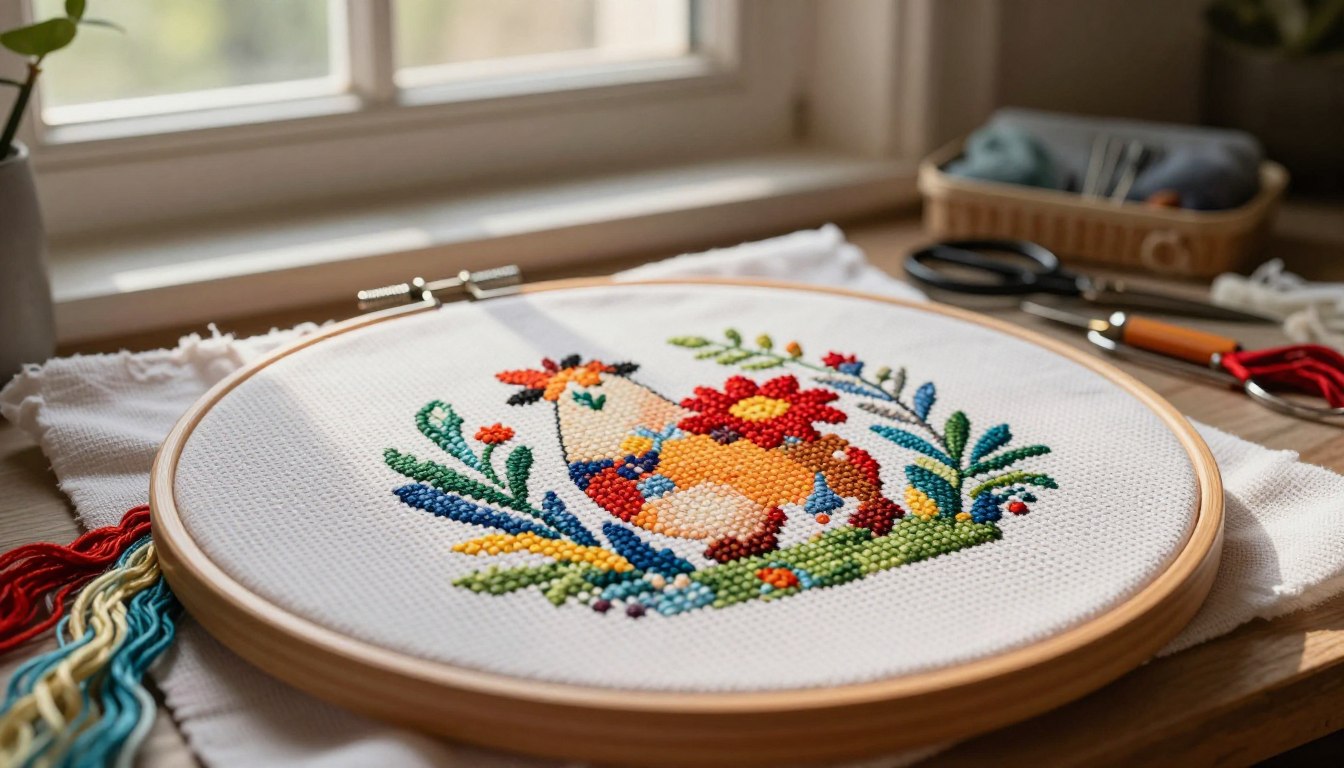
When you start with a needle and Aida fabric, you enter a world of creativity and calm. CROSS STITCH is more than a hobby; it’s a way to express yourself. It slows your mind and lets you create something you can keep or share.
Every choice you make with your hands is unique. Even with special threads from DMC or double-eye needles, machines can’t replicate your personal touches. Unlike machine-made embroidery, your hand-made piece has a story behind it.
Cross stitch is a form of therapy. It helps you focus and lowers stress. The finished piece becomes a keepsake. In World War II, stitchers used samplers to hide messages, showing the craft’s power.
Starting with cross stitch is easy, yet it can be complex. You can begin with simple designs and grow to more intricate ones. There’s always something new to learn, thanks to books, online communities, and brands like DMC and Anchor.
Key Takeaways
- CROSS STITCH combines creative expression with calming, focused activity.
- Human-made choices give each project a unique, personal value.
- Cross stitch therapy supports stress relief and a sense of purpose.
- Cross stitch for beginners is accessible and offers room to advance.
- Historical examples show how stitchers embed stories and meaning.
- Embroidery inspiration is abundant from threads to pattern sources.
What CROSS STITCH Means to You: The Craft Beyond the Stitches
Counted cross stitch is more than just following charts. Every choice you make, from thread to fabric, turns a piece into something special. It’s a craft that values your attention and creativity, offering a personal touch that machines can’t match.
Human touch versus machine production
Machines can make things fast and with perfect precision. But, they can’t match the unique touch of handmade items. You’ll see the small, personal touches in every stitch.
Threads and fibers add new possibilities to cross stitch. But, it’s your choices that keep the human element alive in your work.
Stories stitched into fabric
Cross stitch has always been a way to tell stories. From historical samplers to modern pieces, it carries messages and memories.
Your sampler can hold secrets, celebrate milestones, or keep memories alive. It adds a layer of meaning to cross stitch, turning fabric into a personal journal.
How your choices make each piece unique
The thread you choose sets the tone of your piece. Changing the fabric’s count changes the size and detail. Making small changes becomes your own personal design.
When you edit patterns, you become the creator. Your changes, like color swaps or motif sizes, make your piece unique. Machines may follow charts, but your choices make it yours.
How Cross Stitch Improves Your Well-being: Cross Stitch Therapy and Mindfulness
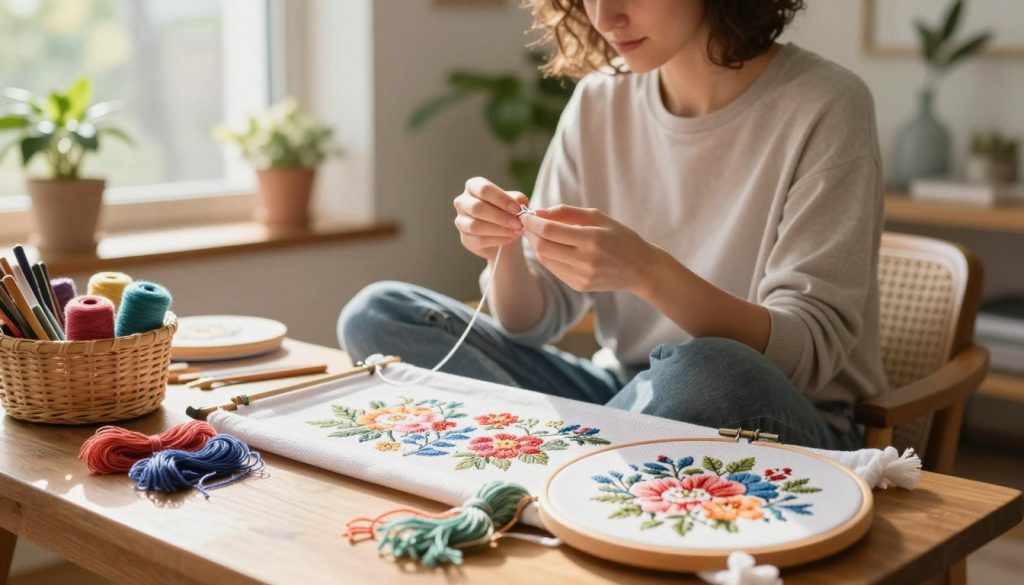
Cross stitch can change how you manage stress and restore calm. The steady rhythm of needle and thread draws your attention to the present moment. This focus supports mindfulness and makes the craft a form of cross stitch therapy that helps reduce stress and anxiety.
Mindful repetition and flow
The act of making X-shaped stitches creates a gentle, repetitive motion. This repetition encourages flow, a state where your thoughts slow and concentration deepens. Counting stitches and following patterns anchors your mind, similar to breathing exercises used in mindfulness practice.
Cross stitch also works as a digital detox. You do not need screens or wifi, so stitching before bed can improve sleep. A short evening project becomes a screen-free ritual that helps reduce stress and anxiety and signals your body it is time to wind down.
Sense of achievement and its emotional benefits
Small completed sections give clear visual progress. Seeing rows fill and motifs appear boosts confidence and rewards patience. Each finished piece, even a tiny one, delivers a tangible result that supports self-esteem.
Building projects stitch by stitch teaches perseverance. Those skills carry into daily life, helping you tackle long-term tasks with calmer focus. These cross stitch benefits reach beyond the craft and improve emotional resilience.
Social connection and community support
You can join local stitch-and-chat groups or active communities on Instagram and Facebook. Those spaces offer tips, pattern swaps, and honest feedback. Sharing your work brings encouragement and a sense of belonging.
Community support makes projects more fun and keeps motivation high. Whether you meet in person or online, the social side of stitching strengthens mental well-being and adds to the practical cross stitch benefits you feel day to day.
Getting Started: Practical How-to Tips for Beginner Cross Stitch
Starting cross stitch can feel overwhelming. Keep your first steps simple. Gather a few reliable supplies and practice a few basic techniques. Small, focused projects help you build confidence fast.
Essential cross stitch tools and materials
Begin with a basic kit: tapestry needles with blunt tips, DMC floss or an equivalent stranded cotton, Aida cross stitch fabric in 14- or 16-count, an embroidery hoop or frame, and small sharp scissors. A printed pattern or digital chart finishes the list.
Consider helpful extras: a needle minder, bobbins or floss organizers, a highlighter for chart marking, a gridding pen or water-soluble marker, and a bright lamp or magnifier for fine work. These cross stitch tools keep your project neat and reduce frustration.
Basic counted cross stitch techniques
Learn the X-stitch construction by making consistent bottom stitches and consistent top stitches across your work. This creates a uniform look that makes patterns pop.
Always find the center of your pattern and the center of your fabric before you begin. Counting from the center prevents placement errors and wasted fabric. Work with two strands of DMC floss on 14-count Aida unless a pattern specifies otherwise. Separate the strands to reduce twist and knots.
Use backstitch to outline and define shapes after you complete the crosses. Keep even tension and smooth paths for crisp lines that enhance details.
Starter project ideas for immediate success
Choose small samplers or motifs—hearts, initials, or simple flowers—to practice uniform Xs and backstitching. These give fast wins and teach counted cross stitch fundamentals.
Pre-printed beginner kits that include DMC floss, Aida cross stitch fabric, needles, and instructions are excellent for cross stitch for beginners. They remove guesswork and help you focus on technique.
Try portable projects like hoop bookmarks or small ornaments. They let you pick up and put down your work easily while you build skill and enjoy progress.
Level Up: Techniques, Tips, and Embroidery Hacks
Take your stitching to the next level with focused practice and smart habits. Small changes in technique and workflow can lead to cleaner results, faster progress, and more joy. Below, you’ll find practical tips to sharpen your craft, speed up your work, and keep your supplies tidy.
Advanced stitches can add realism and polish to your work. Try fractional stitches like quarter and three-quarter for smoother curves. Use French knots for eyes and floral centers. Blend two thread colors for soft shading.
Apply backstitching techniques sparingly to define faces, lettering, and fine details. For cross stitch finishing, wash only when materials allow, block gently, iron on the wrong side with a towel, then mount in a hoop or frame for a crisp look.
Advanced stitching techniques and finishing touches
Work small areas with specialty stitches to avoid crowding the fabric. For portraits or florals, layer half-stitches then use backstitching techniques for outlines. Keep tension even; inconsistent pull shows in the final piece.
When preparing for cross stitch finishing, trim excess fabric, attach a backing if needed, and consider museum board and acid-free mats for long-term preservation.
Embroidery hacks to speed up and improve results
Use cross stitch gridding to cut counting errors. A temporary thread grid or a light water-soluble pen will save time on complex charts. Organize floss on numbered bobbins labeled with DMC numbers and pre-cut manageable lengths to reduce tangles.
Work by color blocks when patterns allow; this reduces thread starts, lowers loose ends, and speeds stitching.
Embrace gadgets that help. A needle threader saves minutes and reduces eye strain. Double-eye needles speed multi-strand work. A magnetic needle minder prevents lost needles in the middle of a session. Keep a small snip and a thread conditioner like Thread Heaven within reach for smooth stitching.
Organizing your workflow and supplies
Set up project folders that include chart copies, start date, and a labeled color list. Mark progress with a highlighter or a digital tracker to keep momentum. Plan short, achievable goals such as one small motif per week to maintain steady progress without burnout.
Choose storage that fits your space and budget. Clear plastic drawers, Plano tackle boxes, or stackable Sterilite bins work well for floss, fabric, and tools. Label drawers by function—threads, needles, hoops—to find items quickly. Good cross stitch organization reduces time wasted and keeps projects tidy.
| Focus Area | Quick Action | Benefit |
|---|---|---|
| Stitch Variety | Practice quarter and three-quarter stitches | Smoother curves and more natural shapes |
| Detailing | Use French knots and selective backstitching techniques | Clearer facial features and crisp lettering |
| Speed | Grid fabric with temporary thread or pen | Fewer counting mistakes, faster progress |
| Thread Management | Label bobbins with DMC numbers and pre-cut lengths | Less tangling and waste |
| Tools | Use needle threader, double-eye needles, needle minder | Less frustration, faster setup |
| Finishing | Wash if allowed, block, iron on wrong side, frame | Professional cross stitch finishing and longevity |
| Workflow | Create project folder and set weekly goals | Consistent momentum and reduced burnout |
| Storage | Use clear drawers or tackle boxes and label | Easy access and improved cross stitch organization |
Creative Inspiration: Patterns, Projects, and Personal Expression
Discover new embroidery ideas to keep your work exciting and personal. Look at pattern books, XStitch Magazine, Etsy, and independent sites for a variety of cross stitch designs. Mix modern themes like pop culture and classic florals to create pieces that reflect your personality.
You can make found charts your own by changing colors, swapping motifs, or adjusting the fabric size. Try combining two small charts to create something unique. Small changes can make common patterns feel special and add to your collection of cross stitch projects.
Choose projects that match your skill level and keep you excited. Beginners can start with small samplers, initials, or simple ornaments. These help you practice counted stitching and backstitching.
Intermediate stitchers can try multi-color patterns, small portraits, or charts with fractional stitches. Advanced stitchers often prefer large counted work, photo-realistic charts, or pieces that use specialty threads and complex finishing.
When designing patterns, start with a simple sketch on graph paper or use design software like PCStitch alternatives. Test color choices against a DMC floss chart and make tiny samples to refine blends. Plan for fabric count early to ensure your sizing is accurate and your backstitching and fractional stitches are smooth.
Use a checklist when turning an idea into a finished project: pick a focal motif, choose a fabric count, select a limited palette, and decide where backstitching will define shapes. These steps help you design patterns and turn a vague idea into a satisfying cross stitch project.
Keep a folder of cross stitch ideas and reference images. Rotate themes between seasonal gifts, home decor, and wearable pieces to practice different techniques. This habit keeps your creativity flowing and builds a collection of patterns you can reuse, adapt, and gift to friends and family.
Common Mistakes and How to Avoid Them: Cross Stitch Mistakes and Fixes
Small mistakes can make a fun stitching session into a big repair job. To avoid many issues, start with simple habits and tools. Here are tips for common problems stitchers face.
Counting and alignment errors
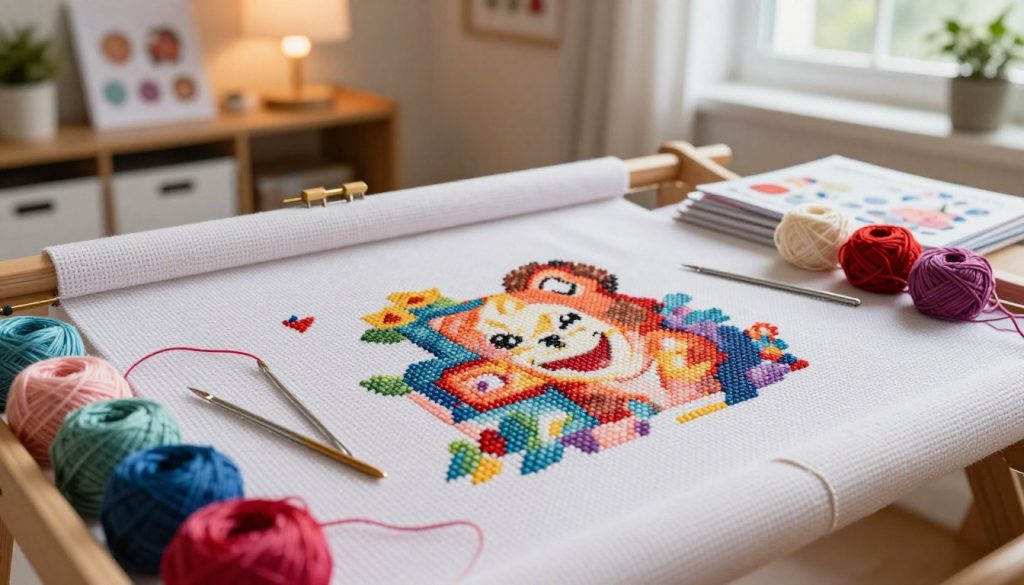
Always start by finding the fabric’s center and your pattern’s center. This helps avoid counting mistakes and keeps designs in place.
Use a water-soluble pen or removable thread to mark important points. Check your work against the chart after each few rows. Fix any miscounts right away to prevent bigger problems later.
Many stitchers mark off finished areas on charts or use apps to track progress. This habit helps avoid skipped areas and keeps designs aligned.
Tension, thread management, and frogging
Keep your stitches even. Stitches that are too tight can warp the fabric. Stitches that are too loose can look messy and catch on frames.
Separate floss strands before threading to avoid twist. Use short lengths of floss to reduce tangles. Floss bobbins, labeled skeins, and small project boxes help manage threads when you travel or stitch with others.
Frogging, or removing stitches, is common. Work row by row and use small scissors or a seam ripper carefully. Test a small area first with expensive threads to avoid waste if frogging is needed.
Finishing problems and how to fix them
Common finishing problems include puckering, misaligned motifs in frames, and uneven edges. Steam-pressing from the back with a towel can fix puckering.
Re-stretch fabric in a hoop or professional stretcher bars for even tension before framing. Use acid-free backing and proper mounting to avoid sagging over time.
If a big mistake shows up late, consider creative cropping, re-framing, or adding backstitching and small embellishments. Professional framers at places like Michaels or Framebridge can help with matting and mounting to keep things aligned.
| Problem | Quick Fix | Preventive Habit |
|---|---|---|
| Counting errors | Unpick nearby stitches and recount from a marked center | Grid fabric and highlight chart progress |
| Tension inconsistency | Re-stitch affected area with even pull; block finished piece | Practice uniform stitch direction and use same-length threads |
| Thread tangles | Carefully untwist or replace with a fresh pre-cut length | Use floss bobbins and separate strands before threading |
| Frogging damage | Unpick one row at a time and trim loose ends safely | Test specialty threads on a scrap before major coverage |
| Cross stitch finishing problems | Steam-press from the back and re-stretch, consult framer | Mount in a hoop or stretcher bars and use acid-free materials |
Conclusion
Your journey with cross stitch is both creative and beneficial. It improves your fine motor skills and helps you focus. Plus, you create special keepsakes that tell your story.
Learning needlework secrets makes your work look better. It keeps the process fun. Start with simple projects to build your confidence.
Use tips like marking the center and working in neat rows. This helps avoid mistakes. Joining a guild or online group offers support and inspiration.
Remember, handmade items have their own charm. Your unique touches make each piece special. Keep trying new things and let your projects become meaningful gifts.
FAQ
Why is cross stitch more than just a hobby?
How does the human touch in cross stitch differ from machine-produced embroidery?
Can cross stitch be used to tell stories or hide messages?
How do my choices make each cross stitch piece unique?
What mental health benefits does cross stitch offer?
How does cross stitch build patience and perseverance?
Where can I find community and support as a stitcher?
What tools and materials are essential for beginners?
Which fabric should I start with and why?
What are the basic counted cross stitch techniques I need to learn first?
What are good starter project ideas for immediate success?
Which advanced techniques should I learn next?
What embroidery hacks speed up progress and improve results?
How should I organize workflow and supplies for larger projects?
Where do I find patterns and how do I customize them?
What project ideas suit different skill levels?
How do I start designing my own cross stitch patterns?
What are the most common counting and alignment mistakes and how do I avoid them?
How do I manage tension, thread handling, and frogging?
What finishing problems happen most and how can I fix them?
How does cross stitch compare to machine embroidery when it comes to authenticity?
What practical next steps should I take to get started or improve?
This post contains affiliate links. If you click on a link and make a purchase, I may earn a small commission — at no extra cost to you. Thank you for supporting this blog and helping me keep the patterns free! Read the full Affiliate Disclosure & Transparency.