
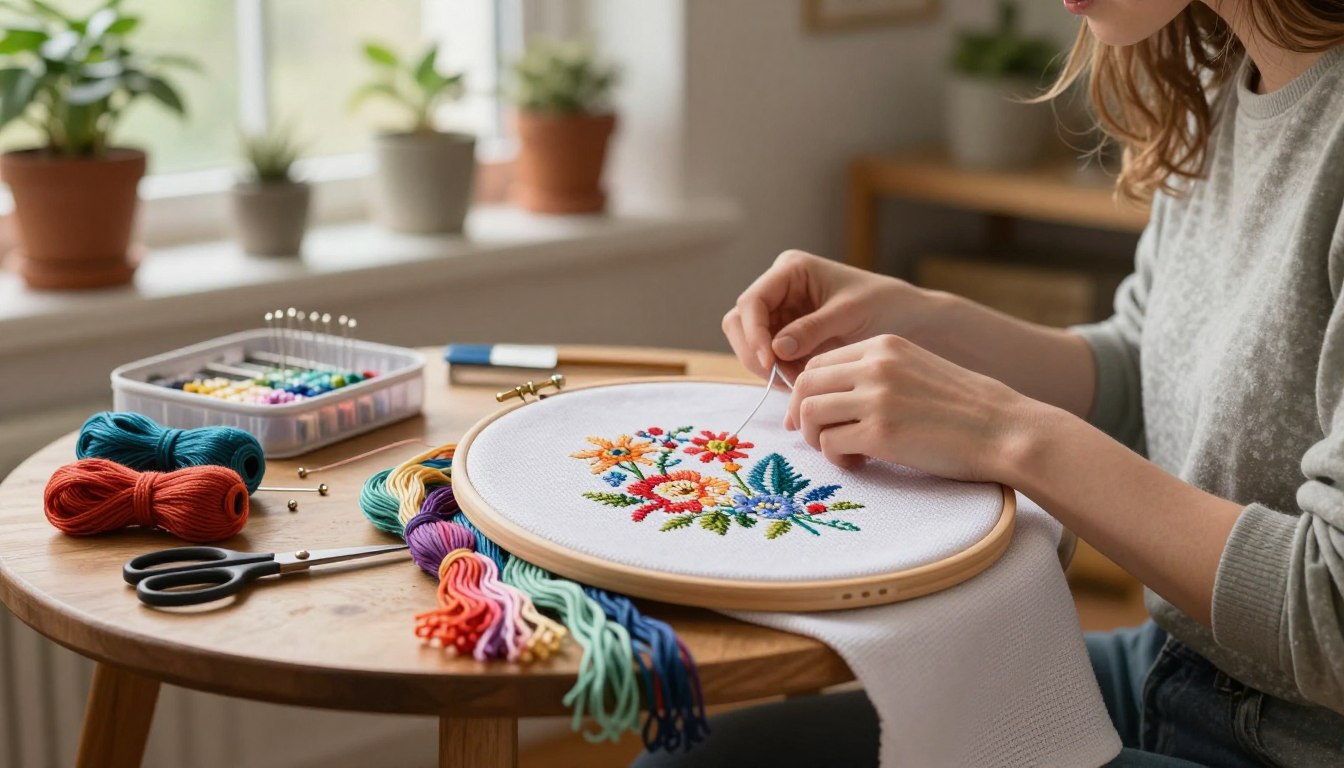
Using cross stitch is a simple way to lower daily stress. It involves counting stitches, following a pattern, and threading a needle. These activities help you focus and take a break from screens and alerts.
As a form of therapy, cross stitch’s repetitive motion and tactile feedback help you stay in the moment. This steady rhythm supports mindful crafting. It gives you a calming task when things get chaotic.
For beginners, small kits or patterns offer quick wins. These wins boost serotonin and dopamine, lifting your mood and reducing cortisol over time.
Regular stitching also sharpens fine motor skills and concentration. The mix of craft, routine, and community makes cross stitch a lasting stress relief activity.
Key Takeaways
- Cross stitch draws your attention away from digital noise and into a focused, hands-on practice.
- Repetition and pattern work make cross stitch therapy easy to adopt and calming to repeat.
- Beginner-friendly kits offer quick satisfaction and support mindful crafting habits.
- Small achievements in stitching boost mood and help lower stress hormones.
- Portable and social, cross stitch serves as both solo stress relief and a way to connect with others.
Why Cross Stitch Works as a Natural Stress Reliever
When you pick up a needle, it’s like a mini-vacation from stress. The pattern guides your hands, focusing your mind. This calm focus helps quiet your thoughts.
Mindfulness through focused, repetitive motion
Stitching is like a calming dance. Each X-shaped stitch is a step towards peace. It’s like mindful breathing, but with your hands.
How repetition lowers cortisol and promotes calm
Stitching’s rhythm triggers a calm response in your body. It slows your heart and breath, lowering stress hormones. Just a few minutes can make you feel more relaxed.
The neuroscience behind hand-eye coordination and relaxation
Stitching sharpens your focus and keeps your brain active. It’s like a workout for your hands and eyes. This activity strengthens your mind and helps you relax.
For the best experience, use cross stitch tips like timed sessions and good lighting. A comfortable setup helps you stay focused and calm.
| Element | Practical Effect | Why It Helps |
|---|---|---|
| Focused counting | Short bursts of attention | Blocks intrusive thoughts and builds present awareness |
| Repetitive X-stitch | Calming motor rhythm | Triggers relaxation response and aids cortisol reduction |
| Hand-eye coordination | Neural stimulation | Supports concentration and cognitive resilience |
| Simple cross stitch techniques | Manageable progress | Boosts motivation and reduces frustration |
| Short, timed sessions | Easy habit formation | Creates consistent relaxation effects over time |
CROSS STITCH as a meditative craft for daily calm
Cross stitch can be a quiet ritual that slows your breath and clears your mind. You don’t need to stitch for hours to feel calm. Short, focused moments offer the same benefits as breath work.
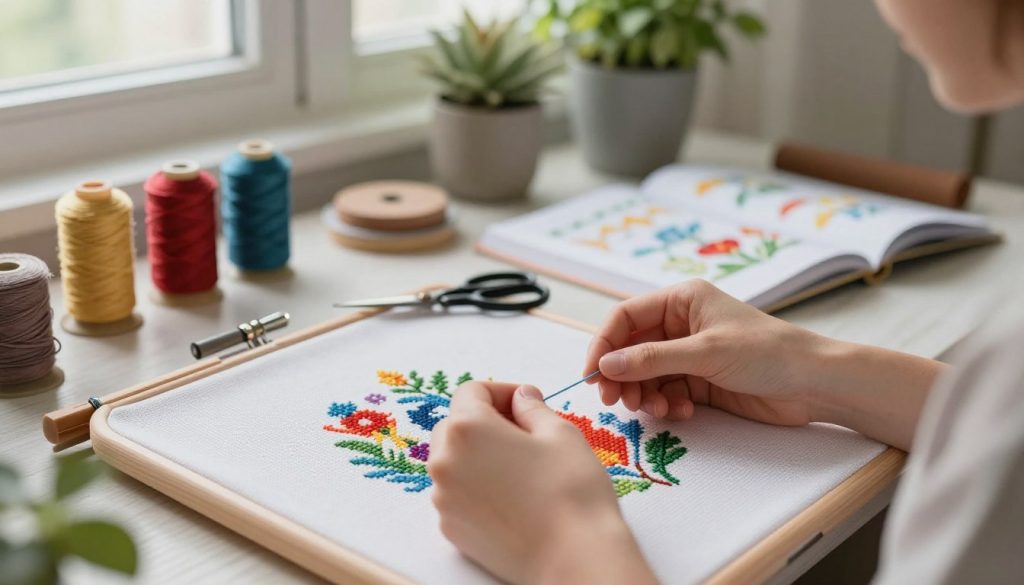
Comparing stitching to breathing exercises and meditation
Stitching and breathing exercises both use rhythm and focus. When you stitch, your hands follow a steady pattern. This pattern helps quiet your mind and slow your breath.
This makes cross stitch a great alternative to formal meditation. It’s easier to sit still for a few minutes of stitching.
How paying attention to each stitch builds present-moment awareness
Focus on one stitch at a time to stay in the present. The count, thread, and motion give your mind a simple task. This practice trains your awareness, just like breath-focused practices.
It deepens the calm you feel from stitching.
Practical tips for turning short stitching sessions into micro-meditation breaks
- Keep a small project in your bag for 10–15 minute breaks. This encourages micro-meditation rather than long, sporadic sessions.
- Set a timer and match one stitch to one breath for steady pacing. That pairing reinforces calm and focus.
- Choose simple counted designs or tiny motifs to avoid cognitive overload and to see quick results.
- Use cross stitch tips like pre-sorting short lengths of DMC floss and using a hoop to reduce fidgeting and maintain flow.
- Turn completed motifs into bookmarks or small gifts. Visible progress gives you embroidery inspiration and encourages regular practice.
Practical beginner cross stitch guidance to reduce stress
Starting a new hobby should feel welcoming. Choose a beginner cross stitch kit with Aida fabric, clear symbols, and contrasting thread colors. A compact kit means less setup time, so you can start stitching quickly.
Choosing a starter kit: fabric, DMC floss, needle, and pattern
When shopping for cross stitch fabric, look for Aida cloth that’s 14-count or 16-count. These counts are great for beginners because they make each square easy to see.
Most starter kits come with DMC floss, a blunt tapestry needle, a simple pattern, and an embroidery hoop. DMC floss ensures your finished piece matches the sample perfectly.
Simple counted cross stitch patterns that promote quick wins
Choose patterns with large color blocks or repeating motifs. Small affirmation designs, simple florals, or geometric motifs help you see progress fast.
Short projects boost your confidence. Finishing a motif in one evening can reset your stress levels and give you a visible reward for your effort.
Cross stitch tools and organization hacks to remove friction
Keep all your cross stitch tools in one kit bag for easy transport. Use bobbins, a floss organizer box, or labeled zip-top bags to keep DMC floss colors separate and avoid tangles.
Pre-grid fabric with a water-soluble pen or buy pre-counted fabric to reduce counting errors. Add a small pair of snips, a needle threader, and an erasable fabric pen to make your sessions smoother and keep your workspace calm.
Creative benefits: turning stress into accomplishment and joy
Stitching each row feels like moving forward. Seeing progress on fabric boosts your mood and makes stress seem less. This steady progress releases dopamine, which rewards your focus and brings joy to your projects.
Choose cross stitch ideas that match your mood. Opt for calming motifs or simple affirmations. A thoughtful adult cross stitch kit with a meaningful design helps you achieve milestones faster.
How small, visible progress boosts dopamine and mood
Watching a motif grow stitch by stitch boosts your sense of accomplishment. Finishing a section gives you instant satisfaction and helps you feel less helpless. Every session shows real progress, keeping your motivation and mood high.
Selecting cross stitch patterns that match your goals
Match pattern size to your available time. Choose bold, low-count charts for quick wins or muted palettes for calming focus. If you aim for décor, select framed-ready designs. For relaxation, pick small motifs to finish in one sitting.
Using backstitching techniques and embroidery hacks to personalize projects
Backstitching adds definition and crisp outlines to your work. Use a limited palette and simple embroidery hacks, like French knots or satin stitch accents, to add charm without stress.
Keep your projects small and displayable. A hoop on the wall or a stitched card reminds you of your accomplishments daily. These choices turn a simple craft into lasting joy and creative ownership.
Community and social connection through needlework
Joining a cross stitch community can make solo stitching a group activity. You get support, tips, and a push to keep stitching. There are meetups, Instagram groups, and forums for all skill levels.
Joining stitch-alongs, online groups, and local meetups for emotional support
Find a stitch-along that fits your speed. It keeps you focused and helps with workday loneliness. Online groups offer quick help, while local nights let you share techniques face-to-face.
Sharing finished projects to build belonging and reduce isolation
Sharing your work gets you positive feedback and a sense of pride. It inspires others and boosts your next project. It also shows newbies different ways to use cross stitch, boosting their confidence.
How group feedback and pattern swaps inspire continued practice
Swapping patterns and getting feedback opens up new design ideas. Friends share tips on organizing floss and frames, making stitching more enjoyable. Regular meetings keep you motivated to stitch, try new things, and enjoy it as a calming activity.
Common cross stitch mistakes and tips to keep stitching relaxing
Small errors can turn a soothing stitch session into a frustrating ordeal. Simple habits can help keep your calm and projects moving. Here are practical steps for counting, repairs, and workspace order to focus on the craft.
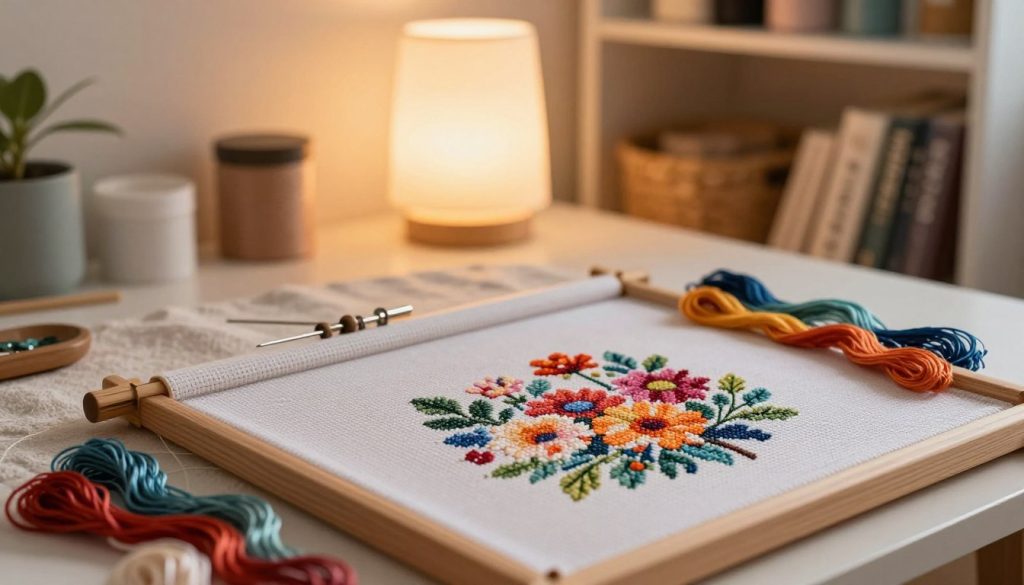
How to avoid counting errors and gridding mistakes
Counting errors often start when you rush. Work from the center outward. Mark every tenth stitch on paper patterns with a highlighter. Or try pre-gridded Aida cloth to cut guesswork.
Pause and double-check counts before stitching large blocks of color. This step reduces stress and prevents common cross stitch mistakes.
Simple fixes: rethreading, dealing with knots, and correcting mis-stitched areas
When you spot a mistake, remove it gently. Use a small pair of scissors or a sewing awl to free mis-stitched threads without damaging fabric. Cut close to the fabric, then tidy the tail before re-placing stitches.
Practice clean rethreading to avoid frayed floss. Run thread conditioner on slippery strands to reduce tangles. If a knot forms, loosen it carefully and trim with snips rather than yanking, which creates new problems.
Organization tips for floss, frames, and fabric to maintain a calm workspace
Good cross stitch organization keeps your mind clear. Use labeled floss bobbins or a Granary-style organizer to store DMC numbers in order. Small projects belong in zip-top bags or project pouches so supplies stay compact and portable.
Choose an ergonomic hoop or cross stitch frame to reduce hand and wrist strain during long sessions. Bright, even lighting and a small stitching tray will prevent scattered supplies and preserve the meditative flow of your work.
Conclusion
Cross stitch is a great way to relax, even when you’re busy. Start with a simple kit and a counted pattern. This way, you can enjoy quick successes.
Doing small sessions regularly helps lower stress and improves focus. You can also use short meditation breaks while stitching. This makes it easier to keep up with.
Following basic tips keeps your stitching calm and rewarding. Seeing your work grow boosts your confidence. This helps you relax more over time.
Stitching also improves your fine motor skills and concentration. It teaches patience too. Joining groups or online events makes it more fun and social.
With these habits, cross stitch becomes a reliable way to take care of your mind. You can come back to it every day.
FAQ
How does cross stitch help reduce daily stress naturally?
Why does focused, repetitive motion in stitching feel like a mindfulness practice?
How does repetition in cross stitch lower cortisol and promote calm?
What does neuroscience say about hand-eye coordination and relaxation from stitching?
How is stitching similar to breathing exercises or meditation?
How can I turn short stitching sessions into effective micro-meditation breaks?
What should be in a beginner cross stitch kit to reduce start-up anxiety?
Which simple counted cross stitch patterns give quick wins and sustain motivation?
What cross stitch tools and organization hacks remove friction from stitching?
How does visible progress in cross stitch boost mood?
How do I pick cross stitch ideas and patterns that support my emotional goals?
How can backstitching techniques and embroidery hacks personalize my work without creating stress?
How can I find community through cross stitch to reduce isolation?
What are the benefits of sharing finished projects or joining stitch-alongs?
How do I avoid counting errors and gridding mistakes that cause frustration?
What quick fixes help when I mis-stitch or knot my floss?
How should I organize floss, frames, and fabric to keep my workspace calm?
This post contains affiliate links. If you click on a link and make a purchase, I may earn a small commission — at no extra cost to you. Thank you for supporting this blog and helping me keep the patterns free! Read the full Affiliate Disclosure & Transparency.