

You want your cross stitch to be clear, not a mess of colors. This guide helps you pick colors that make your work pop. You’ll learn how to choose colors that show off your style or the person you’re making it for.
Here, you’ll learn about color basics and how to apply simple color theory. We’ll show you how to change threads and deal with fabric and lighting. You’ll also find out about tools like DMC floss cards and Stitchpalettes.
By following these tips, your cross stitch will have better contrast and clearer designs. You’ll avoid mistakes and make your work look great. It’s perfect for gifts, home decor, or wedding colors, and it’s easy on your budget.
Key Takeaways
- Good color choices make counted cross stitch read clearly and avoid muddy areas.
- Use value (light vs. dark) and undertones to maintain contrast and depth.
- Test colors on fabric using small swatches before committing to a full project.
- Tools like DMC floss cards, PCStitch, Stitchpalettes, and FabricViewer speed accurate conversions.
- These cross stitch tips suit cross stitch for beginners as well as hobbyists refining their palette.
Understanding Color Basics for Cross Stitch: color wheel, value, and undertones
Knowing the basics of color can help you make better choices. This guide covers the color wheel, value, and undertones. These concepts will make your cross stitch patterns look better. Keep your tools ready as you test colors on fabric.
What the color wheel tells you about harmony and contrast
The color wheel shows how colors work together. It groups primary colors like red, blue, and yellow with secondary colors like green and purple. This helps you pick colors that work well together.
Use the color wheel to find colors that blend smoothly or contrast strongly. When stitching, check how colors will look together with a color wheel or Palette Scout.
Value (lightness/darkness) and why it prevents muddy-looking stitching
Value is how light or dark a color seems. Colors with similar value can look flat together. Choose threads with clear light and dark steps to add depth.
You can change value by adding white, black, or gray to colors. Or, use light, medium, and dark DMC floss to build depth.
Warm vs cool undertones and how they affect perceived depth
Undertone is whether a color leans warm (like reds) or cool (like blues). Warm colors pull the eye, while cool colors recede. This helps create depth in your design.
When choosing colors, consider both value and undertone. Use DMC floss and tools like Palette Scout to test your choices.
Keep track of your color changes. Note where you need contrast and where you want smooth transitions. This helps avoid mistakes and saves time.
Using Color Theory to Improve Your Cross Stitch Projects
Learning about color relationships helps you control the mood and focus of your stitching. First, decide on a mood, like cheerful or vintage. Then, pick a key color you love or that fits the recipient. Use the color wheel and value thinking to create a palette that supports your design and avoids muddy colors.
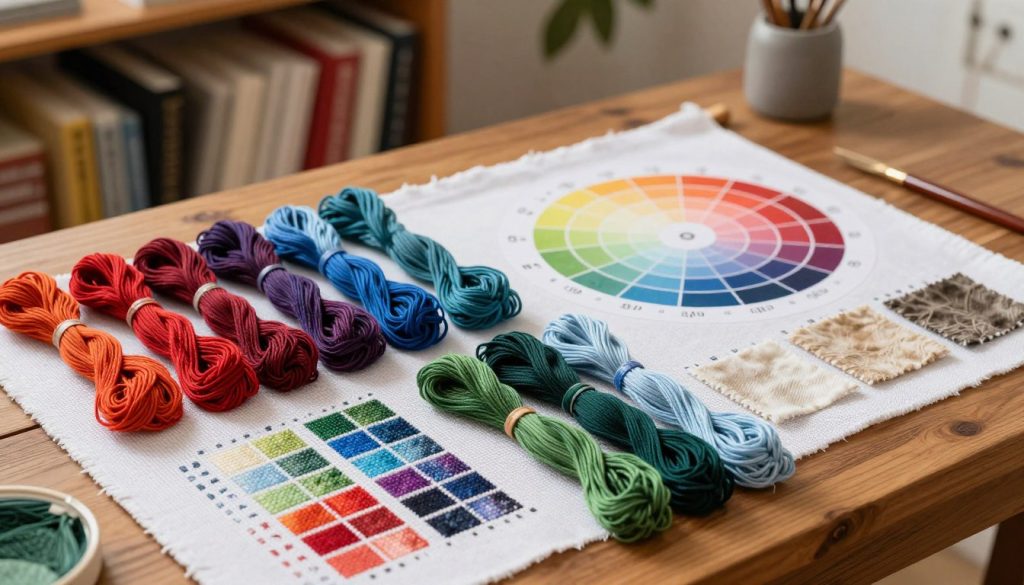
Monochromatic palettes
Monochromatic cross stitch uses one color in different values for elegance and unity. For a soft floral piece, use light, medium, and dark DMC values. Choose threads like 819, 963, 3326 or 899, 335 for subtle shading without clashing colors.
Go for monochrome when you want calm pieces or to highlight backstitching. This method gives you control over contrast and keeps the design simple and classy.
Analogous color transitions
An analogous color palette picks colors next to each other on the wheel for smooth transitions. Use blue to blue-green to green for landscapes and organic motifs. This method is great for leaves, skies, and soft backgrounds where you want gradual shifts.
For fantasy or romantic themes, use purples and blues for depth and a dreamy feel. This choice adds gentle variety while staying harmonious.
Complementary and related schemes
Complementary colors sit opposite on the wheel and make focal elements pop through high contrast. Try yellow against purple for floral centers or a central motif that must stand out. Split-complementary reduces tension by using two adjacent complements, giving more options without harsh clashes.
Triadic schemes use three evenly spaced hues for lively balance. Use triadic schemes when you want vibrant energy across a piece, such as playful nursery designs or bold folk-art cross stitch ideas.
For complex patterns, expand into tetrad or double split-complementary sets to add interest without randomness. Always check values so the foreground reads clearly against the background. Use DMC cards or Palette Scout to match floss codes and keep values consistent as you build your embroidery inspiration.
Practical Steps to Convert or Swap Colors in Patterns
Color swapping and conversions help you make cross stitch patterns fit your stash, taste, or fabric. Begin with a solid plan to keep changes consistent and the design’s depth and contrast intact.
Step 1: Identify scope. Decide if you’ll change one motif or the whole palette. Count the values in each area: single color, two-tone, or triad. This count helps you swap colors without losing detail.
Step 2: Note what stays. Record colors you won’t change. If most colors are warm, choose warm replacements for harmony.
Step 3: Assign roles. Label each replacement as foreground or background. Foregrounds need contrast, while backgrounds should recede. Match value over exact hue to avoid losing elements or overpowering the piece.
Use these methods and tools to test your choices. Work with a DMC floss card and skeins for true hue and value. Try digital mockups in PCStitch or Winstitch for previews without stitching. Print black-and-white copies and shade colors by pencil for a quick check.
Bring bobbins to a craft store under real lighting when possible. Seeing threads in different light helps spot metamerism or wrong-value matches. Keep a short list of backups and photograph thread samples in your stitching area for reference.
Practical workflow you can follow:
- Pull the original palette and group colors by value.
- Choose replacements that match each value and role.
- Create small stitched swatches to verify how colors read together.
- Refine choices, then apply the conversion across the pattern.
Extra embroidery hacks: note discontinued DMC numbers and consult substitution guides when needed. Use variegated, metallic, or glow threads as accents rather than main shades unless you test them first. Keep a labeled conversion sheet for future projects.
Suggested cross stitch tools to keep handy: a DMC floss card for physical matching, PCStitch or Winstitch for digital previews, printed swatches for quick comparisons, and a set of pre-made bobbins for in-store checks. These tools make cross stitch conversions faster and more reliable.
CROSS STITCH: fabric, lighting, and how fabric choice changes color perception
Your fabric choice is like another thread color. A light evenweave makes motifs stand out. Dark or cool grounds make elements fade and soften contrast. Think of cross stitch fabric as part of your color palette when planning.
How fabric color acts like another thread color—choose for contrast and mood
Choose fabric color for contrast between foreground and background. For sharp edges, pick a ground that contrasts in value with your main threads. For softer scenes, match fabric undertones to your palette for a smooth blend.
Consider counted cross stitch fabric types. Aida, linen, and evenweave each change how stitches catch light. Your choice affects perceived saturation and sharpness more than you expect.
Hand-dyed and mottled fabrics: when they help or hurt your palette
Hand-dyed fabric adds depth with subtle variegation. This effect can enhance landscapes and portraits. Use hand-dyed fabric for texture without extra stitches.
Busy mottling can compete with detailed backstitch or small motifs. For intricate patterns, prefer solid or lightly variegated tones. Reserve heavily mottled cloth for looser, painterly charts where blending is acceptable.
Testing colors on fabric with small swatches before committing
Always stitch small swatches on your chosen cloth rather than relying on bobbins. Stitches reflect light in three dimensions and neighbors alter perceived hue. Stitch a few squares including adjacent threads to check value and undertone interaction.
View swatches under the same cross stitch lighting you expect for display. Fluorescent bulbs and natural daylight can change how reds, blues, and greens read once framed. Inspect pieces in your intended room before finishing in cross stitch frames.
| Test | What to do | Why it matters |
|---|---|---|
| Value check | Stitch a 10×10 section with darkest and lightest threads | Ensures foreground pops against fabric color |
| Undertone check | Place warm and cool threads side by side on fabric | Reveals subtle shifts in hue caused by the ground |
| Mottling test | Stitch pattern detail on hand-dyed fabric | Shows whether mottling supports or hides fine work |
| Lighting review | Inspect stitched swatches under natural and artificial light | Confirms final appearance where the piece will hang |
| Digital preview | Use FabricViewer or pattern preview tools where available | Quickly visualizes changes, but verify with real swatches |
Stash-friendly strategies and designer etiquette: using what you have and asking permission
Begin by checking out your collection. Good organization saves time and money. Sort threads by brand, color, and value. Look for any unknown skeins or partial bobbins for stash busting.
For discontinued shades, find DMC substitutes that match value and color. Use DMC color cards and online charts to compare. Test these on fabric before stitching a whole section.
Variegated and metallic floss are great for accents. Use them for borders, small motifs, or details. Test them on fabric to see how they look.
When swapping, keep a detailed record. List the original codes and your choices. This helps explain your work when sharing photos.
Many designers are okay with substitutions. Check pattern PDFs and listings for notes. Some, like NightSpiritStudio and UrbanStitches, encourage swaps.
If unsure, contact designers politely. Share the pattern name, your substitutions, and a photo of your threads. They might offer advice or services.
Work from vintage or inherited patterns without asking if for personal use. But, don’t sell pieces made from modern designers’ patterns without permission. Always respect requests not to modify or resell.
Keep your swaps organized with a chart, labeled bag, and swatches. This helps with efficient stash busting and smart substitutions.
Testing and refining palettes: swatches, mockups, and color-mapping techniques
Before starting a big project, do quick tests to see how colors work on fabric. Test swatches show how threads look, how light affects stitches, and if colors stay clear. A few stitches in key spots save time and avoid mistakes.
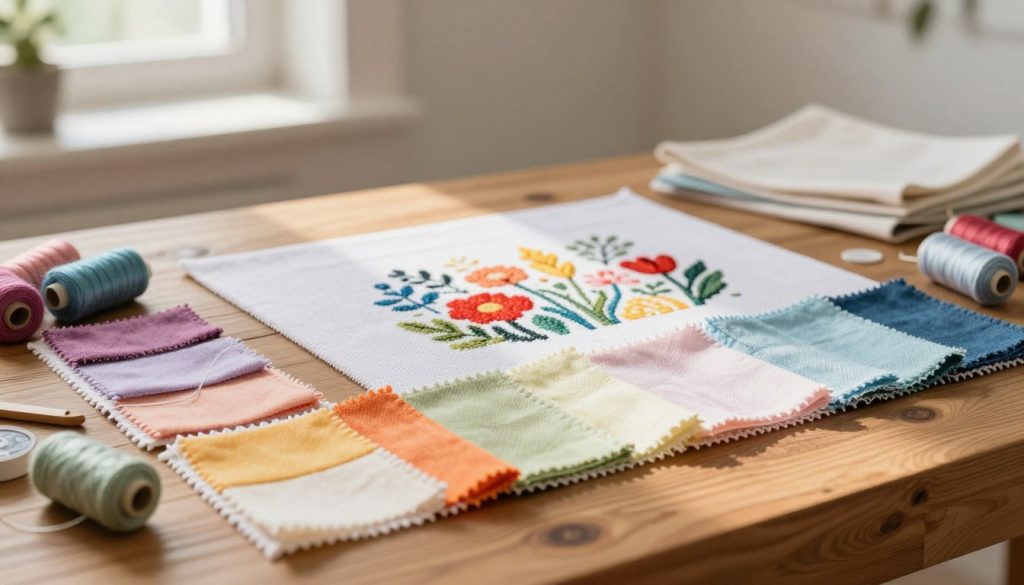
Bobbins help sort colors, but stitched samples prove everything. Look at value contrast, undertones, and how backstitching looks against filled areas. Use cross stitch gridding to check small motifs before expanding the design.
Mockups help make fast decisions when you can’t stitch every option. Digital previews from Stitchpalettes, FabricViewer, and Palette Scout let you create palettes and map colors. But remember, stitched thread looks different from pixels.
For real testing, map each pattern color to two or three possible replacements. Make small stitched samples for key areas, take photos under the light you’ll display it in, and note which combos work best. Keep a simple record of thread lists and why you chose each swap.
Be prepared to try again. Make second and third options, then compare them. If a choice doesn’t work, be ready to frog and restitch. Many stitchers see ripping out as part of the process, not failure.
Follow a consistent process: list replacements, make stitched swatches, evaluate them under the display light, and finalize conversions. Tools like Stitchpalettes and Palette Scout help translate palettes, while FabricViewer shows how they look on different fabrics.
Keep a record of the final conversion with DMC codes and notes on interactions. This makes future swaps easier and helps explain your choices. Regular testing and careful mockups reduce surprises and ensure your finished piece matches your vision.
Conclusion
You now know the basics of color theory. You understand how the color wheel, value, and undertones guide your choices. You also know how to use palettes like monochromatic and complementary in your cross stitch projects.
Tools like DMC floss cards and software like PCStitch help you apply what you’ve learned. Apps like Stitchpalettes and FabricViewer let you preview your work. This way, you can move from theory to practice with confidence.
Don’t be afraid to try new things. Swap colors and test small swatches on your fabric. Make quick mockups before you decide for sure. These tips and techniques help you improve contrast and depth in your work.
Remember, swatching and trying again often leads to better results. It makes your finished pieces more personal and meaningful.
Always respect the designers of your patterns. If you plan to sell something based on their work, contact them first. Otherwise, just use common sense for personal projects.
Keep your cross stitch organized. Document your DMC floss list and note the fabric you use. Save your mockups for future reference.
Before starting, follow this checklist: pick your main color or mood, use the color wheel, and match values and roles. Test swatches on fabric, refine with mockups and tools, and record your DMC floss list.
Use the tools and resources recommended to improve your skills. Enjoy the calming rhythm of needlework as your beginner skills grow into more advanced projects.
FAQ
How do I choose colors that make my counted cross stitch stand out?
What does the color wheel tell me about harmony and contrast?
What is value and why does it prevent my stitching from looking muddy?
How do warm and cool undertones affect my cross stitch?
When should I use a monochromatic palette in cross stitch?
What are the benefits of analogous palettes for cross stitch projects?
How do I choose replacements that match value and role (foreground vs background)?
What tools and methods should I use for color conversions?
How does fabric color change my thread choices?
Should I use hand-dyed or mottled fabrics for detailed patterns?
How do I test colors on fabric before I stitch the whole piece?
How can I use my stash and handle discontinued DMC colors?
How should I use variegated and metallic threads?
How do I check designer etiquette about making color substitutions?
When is it okay to proceed with conversions without asking the designer?
How do I make quick test swatches and what should I evaluate?
What mockup and palette generator tools are most useful?
How many iterations should I plan when refining a palette?
What is a practical workflow for converting colors from a pattern?
What final checklist should I use before starting to stitch?
Where can I find resources to practice and learn more about color conversions?
This post contains affiliate links. If you click on a link and make a purchase, I may earn a small commission — at no extra cost to you. Thank you for supporting this blog and helping me keep the patterns free! Read the full Affiliate Disclosure & Transparency.