
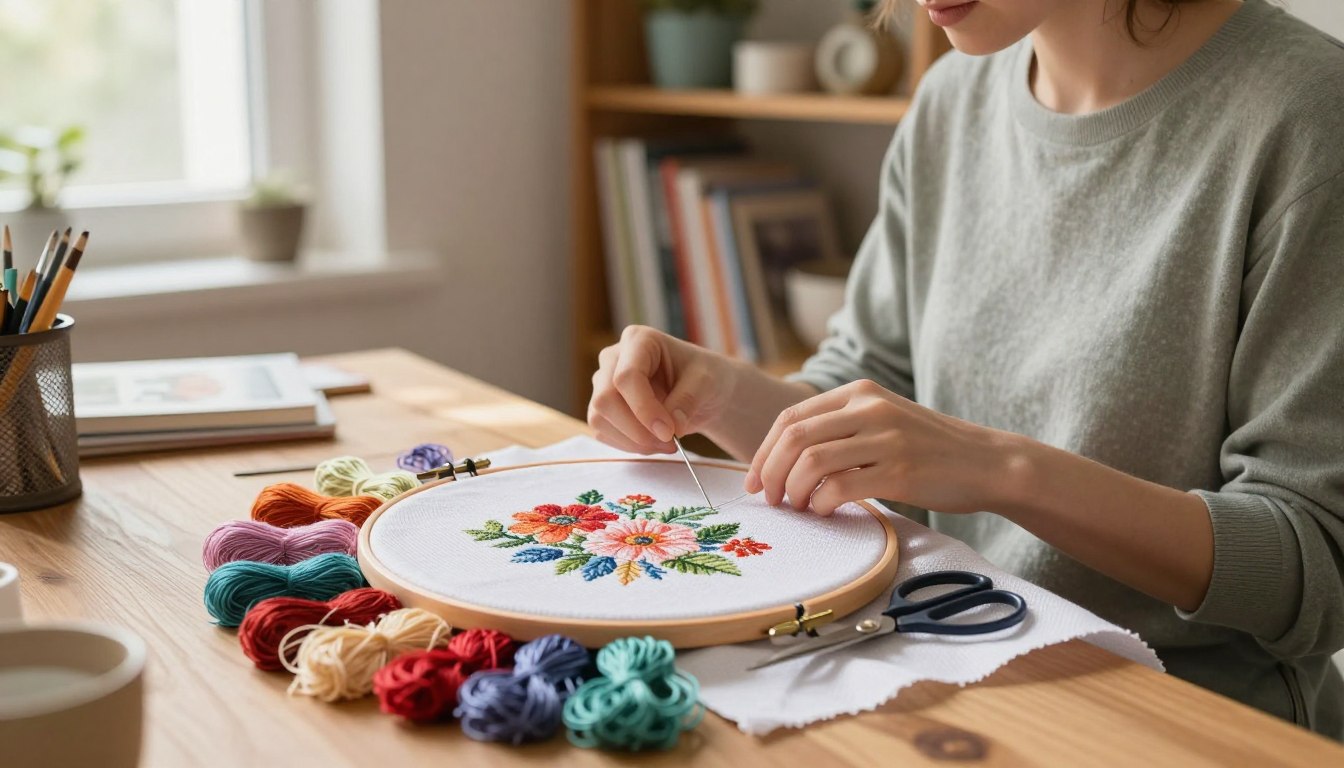
Cross stitch is a calming craft that helps you slow down and focus. It’s about making small X’s that build up to a big picture. This process teaches patience by showing the value of steady effort.
Stitching also has mental perks. It can lower stress and boost happy feelings. As you stitch, you enter a flow state that clears your mind and sharpens your focus.
Starting is simple. A basic kit has everything you need: Aida fabric, DMC floss, a needle, a hoop, and a pattern. These tools help you practice counting, reading, and fine motor skills. These skills are useful in everyday life and help with hand injury recovery.
Being part of a community is important too. Online groups, local guilds, and forums offer support and ideas. This keeps you interested in cross stitch projects for a long time. The support from others helps make stitching a regular habit.
Key Takeaways
- Counted cross stitch trains patience by breaking work into small, repeatable steps.
- Stitching supports concentration and can reduce stress while improving mood.
- Beginner cross stitch kits make the craft accessible and teach pattern reading.
- Fine motor gains from stitching help daily dexterity and rehabilitation.
- Community support sustains motivation and encourages regular practice.
Why Cross Stitch Works as a Mindful Practice
As you stitch, the needle’s movement becomes your focus. This steady rhythm calms your mind. Many find peace in this repetitive motion, similar to slow breathing.
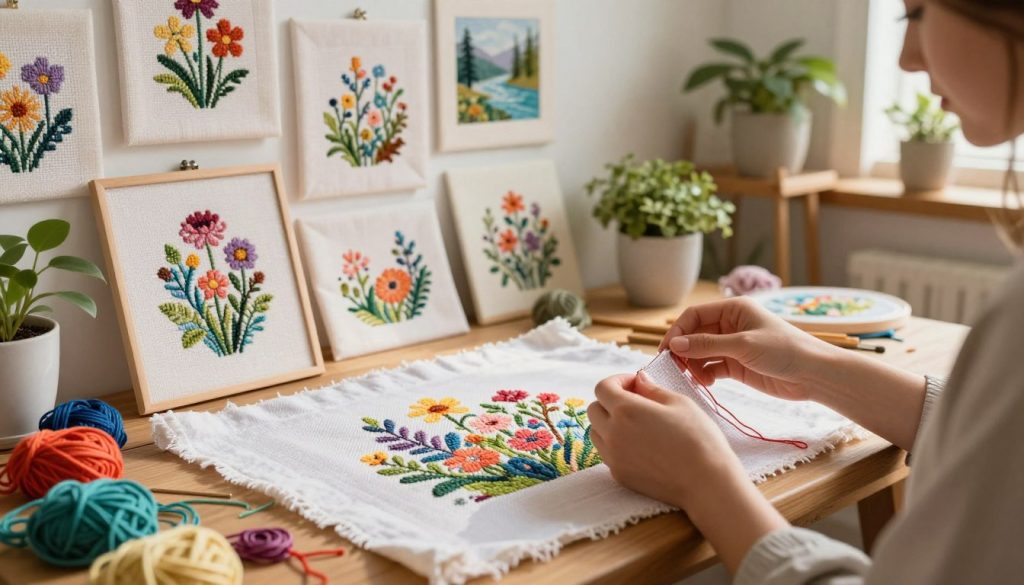
Counted cross stitch requires you to follow a grid and mark each square. This act keeps you in the present. When you make a mistake or change colors, you practice focusing without judgment.
How repetitive stitching creates a meditative rhythm
The X-shaped motion creates a loop of hand, eye, and stitch. This loop quiets your mind and lowers stress. As you stitch, you feel a sense of calm and patience grow.
Counting, focus, and present-moment awareness
Working from a pattern trains your attention. You learn to notice and correct mistakes quickly. This builds resilience and sharpens your focus.
Analog activity versus screen time for mental reset
Cross stitch offers a break from screens. It reduces blue light exposure and information overload. This break can improve sleep and focus, leaving you refreshed.
| Practice | Mental Effect | Practical Tip |
|---|---|---|
| Counted cross stitch | Sharpens sustained attention and pattern recognition | Use high-contrast fabric to make squares easier to count |
| Repetitive stitching | Induces calm, lowers stress markers | Set a slow, steady tempo and focus on breathing |
| Screen-free stitching sessions | Improves sleep quality and mental recovery | Replace evening screen time with a 30-minute stitch break |
| Small project rotation | Maintains motivation through frequent rewards | Pick simple cross stitch ideas that finish in one sitting |
| Using tools and hacks | Reduces friction and frustration | Try embroidery hoops, magnifiers, or minimal embroidery hacks |
Try cross stitch tips and pick a simple pattern. Notice how your focus changes. Regular practice offers a low-tech way to reset your mind and improve concentration.
CROSS STITCH: Practical Ways It Builds Patience and Concentration
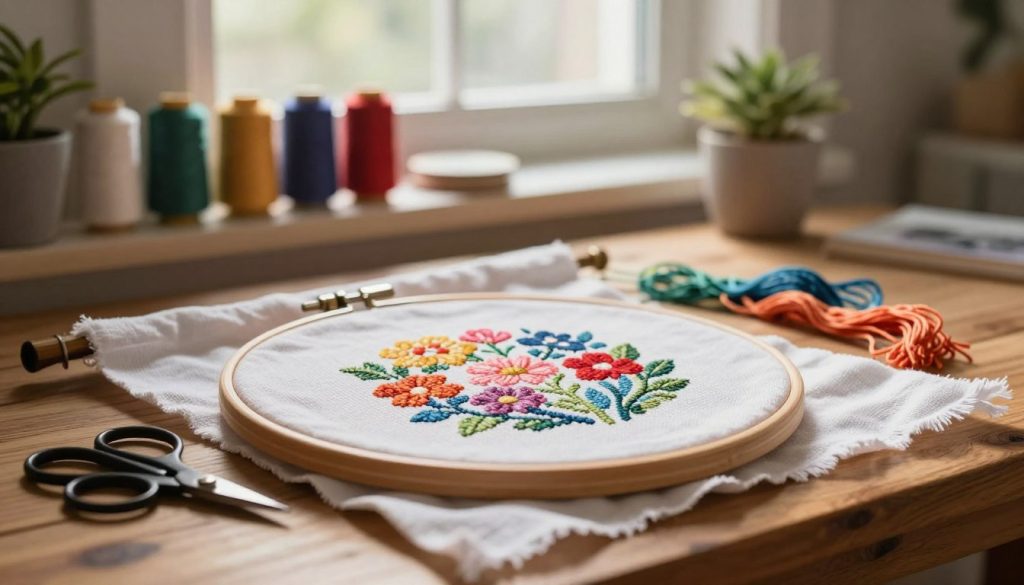
Start with a small project to focus better. Pick a beginner kit with clear steps and DMC floss numbers. Work in short, 15–20 minute sessions to build a routine without feeling stressed.
Mark your fabric and count each stitch to stay on track. This method helps you focus and avoid mistakes.
Work slowly to improve patience. Count each stitch twice and use simple patterns. This approach helps you make steady progress and avoid rushing.
Practice basic stitches to control your work better. Aim for even stitches and consistent tension. Learning backstitching helps create clean lines.
Use tools to keep your work smooth and your mind clear. An embroidery hoop keeps fabric taut. Needle minders and bobbins keep threads organized. These tools save time and let you focus on stitching.
Organize your cross stitch space to work more efficiently. Label floss and pre-thread needles. Use a daylight lamp for better light. A small planner helps you stay on track and extend your stitching time.
Use tricks to stay focused. Grid your fabric with a marker to avoid counting mistakes. Sort your materials before starting. These tips help you stay in the zone and build patience and focus.
Skill Development and Cognitive Benefits From Regular Stitching
Stitching regularly trains both your hands and mind. It involves working with patterns, counting stitches, and changing colors. This strengthens your focus and builds reliable habits.
Using trusted supplies like DMC floss on quality cross stitch fabric helps you focus on the craft. You don’t have to worry about fixing mistakes.
Improving fine motor skills and hand-eye coordination
Needle insertions and thread handling work the small muscles in your fingers. Each session improves your hand control and speed. This is especially true when following complex designs.
Trying different cross stitch techniques, like fractional stitches or backstitching, boosts your dexterity. It also enhances hand-eye coordination.
Long-term cognitive gains and reduced cognitive decline risk
Reading patterns, keeping counts, and switching colors challenge your working memory and visual-spatial skills. This mental workout supports brain flexibility. It can also lower the risk of age-related memory loss.
Researchers and therapists suggest crafts as part of cognitive maintenance. Sequencing tasks engage multiple brain networks at once.
Emotional reinforcement that sustains practice
Seeing your progress motivates you. The filled blocks and finished motifs give you a sense of accomplishment. This boosts your confidence and makes you want to stitch more.
Sharing your finished pieces with friends or local stitch groups adds social reinforcement. It keeps the habit alive and helps turn short sessions into lasting routines.
How to Turn Cross Stitch Into a Focus-Building Routine
Begin with a simple goal: short, focused sessions that sharpen your attention without stress. Choose cross stitch projects that match your current skill level. Start with small, simple pieces for quick practice.
Opt for patterns with clear symbols and good contrast to ease eye strain. Using frames keeps your work organized and saves time. Alternate between easy and challenging projects to balance fun with skill improvement.
Establish a regular schedule. Begin with 15–30 minute sessions and use a timer to keep them consistent. Create a clean workspace with good lighting, a supportive chair, and all your tools within reach. These steps help maintain focus and reduce distractions.
Prevent mistakes by gridding fabric and marking completed areas. Use high-contrast thread labels for clear color identification. Fix errors immediately to keep your project manageable and your focus sharp.
Have extras ready to avoid interruptions: extra needles, floss, and small storage for supplies. A tidy tray for your tools reduces the chance of losing items. Use a needle minder to prevent dropped needles from breaking your flow.
Stay motivated by joining stitch-alongs and local guilds. Try subscription kits or pattern bundles for new ideas. Rotate projects to avoid burnout and to practice new techniques.
For beginners, start with simple patterns and follow key habits: grid fabric, short sessions, and a checklist of supplies. As you improve, increase the complexity of your projects and session length. Sharing your work on Instagram or gifting it can boost motivation and create a sense of accomplishment.
Conclusion
Cross stitch therapy is a low-cost, portable way to calm your mind and build useful skills. It uses simple patterns and basic tools like DMC-labeled floss and a frame. This helps you make steady progress, reducing stress and improving sleep.
The craft makes you more patient by letting you see slow but sure progress. It also sharpens your concentration by making you count and follow patterns. Regular stitching boosts your fine motor skills, supports brain health, and may lower the risk of cognitive decline.
Use cross stitch tips like gridding, short timed sessions, and quick fixes for mistakes to stay focused. Pair your embroidery with community support and small, consistent projects to keep motivated. Needlework secrets like tidy organization and project rotation make it fun.
Varying your cross stitch ideas keeps you engaged. With a few tools and a daily habit, needlework becomes a reliable way to improve patience, attention, and emotional well-being.
FAQ
What is counted cross stitch and why is it good for building patience?
How does repetitive stitching create a meditative rhythm?
Can cross stitch actually reduce stress and improve mood?
What beginner cross stitch habits help strengthen attention?
Which basic techniques teach careful, deliberate work?
What tools and organization methods reduce frustration and interruptions?
How does cross stitch improve fine motor skills and hand-eye coordination?
Are there long-term cognitive benefits and could cross stitch reduce cognitive decline risk?
How does emotional reinforcement help sustain a stitching habit?
How do I choose patterns to match my attention goals?
What practical routine helps make cross stitch a reliable focus-building habit?
What common cross stitch mistakes break concentration and how do I prevent them?
How can I maintain motivation over long projects?
Is cross stitch accessible and affordable as a therapeutic hobby?
Can cross stitch be used in rehabilitation or cognitive therapy?
What practical embroidery hacks speed up workflow and protect focus?
Which tools should I buy first as a beginner?
How quickly will I see benefits for concentration and patience?
This post contains affiliate links. If you click on a link and make a purchase, I may earn a small commission — at no extra cost to you. Thank you for supporting this blog and helping me keep the patterns free! Read the full Affiliate Disclosure & Transparency.